Selah Meaning: The Word Nobody's Completely Sure About
Selah is a Hebrew word that appears 74 times in the Psalms and three times in the book of Habakkuk. Its precise meaning is uncertain, with scholars proposing three main interpretations: a musical pause or interlude, a signal to lift the voice in praise, or an instruction to stop and meditate on what was just said. In every context, selah functions as a deliberate interruption — inserted at moments of significant theological or emotional weight in the text.

Author
Shafraz Jeal
Read Time
6
min
Updated
You've probably read past it dozens of times. It appears mid-psalm, often at the most intense moment — right after something devastating has been confessed or something astonishing about God has been declared — and then: Selah.
Most people skip it. It feels like a footnote. But selah appears 74 times in the Psalms, more than almost any other single word. The people who wrote these songs didn't put it there accidentally. They put it there at the moments they most wanted you to stop.
What Scholars Actually Think It Means
Here's the honest answer: nobody is completely certain. Selah is one of the few Hebrew words in the Bible whose meaning has not been definitively settled. There are three main theories.
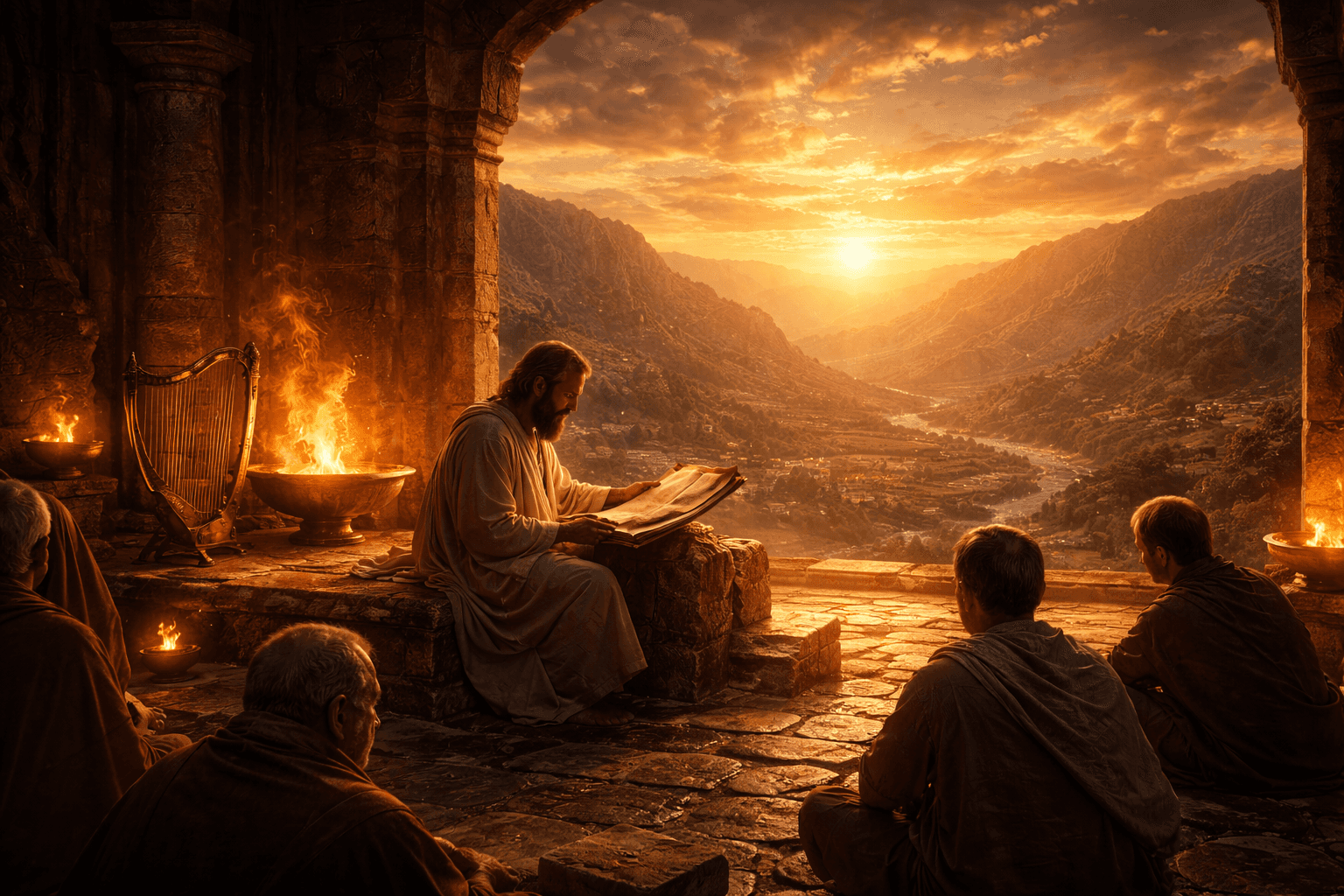
Theory 1: Musical pause. Many scholars believe selah was a performance instruction — a signal to the musicians to pause, to let an instrumental interlude play, or to change the dynamic of the music. The Psalms were songs, not just poems, and musical notation in the ancient world was often embedded directly in the text.
Theory 2: Lift up or exalt. Some derive it from the Hebrew root salal, meaning to lift up. On this reading, selah could be an instruction to raise the voice or increase the musical intensity — almost the opposite of a pause. A moment of crescendo rather than silence.
Theory 3: Stop and think about that. A smaller group of scholars connect it to the idea of meditation — an instruction embedded in the text for the reader to pause, reflect, and let what was just said sink in. This is how many people instinctively use it now.
What all three theories agree on: selah marks a significant moment. Whether it means pause, lift, or reflect — it signals that what just happened in the text matters enough to interrupt the flow.
Where Selah Appears — and Why Those Moments Matter
Look at some of the specific places selah lands in the Psalms.
Psalm 3 is David's psalm written when he fled from his own son Absalom — one of the most personal betrayals in Scripture. The word selah appears three times. The first comes after: "Many are they who rise up against me. Many are they who say of me, 'There is no help for him in God.'" (Psalm 3:1-2, NKJV). Selah. Stop there. Feel that for a moment before moving on.
Psalm 46 — the psalm that contains "be still and know that I am God" — uses selah three times. Each time it follows a declaration about God's character and power. It's placed exactly where you need to breathe before reading on.
That's not an accident of formatting. The psalmists knew what they were doing. They were writing songs to be sung in grief, in exile, in battle, in wonder — and they built the pauses in at the moments when the human heart needs to stop running and actually absorb what was just said about God.
What Selah Means for How We Read the Bible
We live in a culture that is deeply uncomfortable with silence. We fill every gap. We scroll past pauses. We skip the part of a voice note where someone's gathering their thoughts.
Selah is ancient resistance to that. It's a word built into the text of the Psalms that says: don't keep moving yet. Whatever you just read about God — His power, His faithfulness, His nearness to the suffering — don't pass over it on the way to the next verse.
Whether it was originally a musical instruction or a meditation prompt, that is what selah does in practice. It creates a moment of weight. And that's exactly what most of our Bible reading is missing.
The Honest Invitation
The fact that selah's exact meaning is uncertain doesn't make it less useful — it might actually make it more so. You don't have to know whether it means pause or lift or reflect. You just have to treat it as what every theory agrees it is: a moment the text is telling you not to skip.
Next time you read a psalm and hit selah, try something simple. Stop. Read the verse before it again. Sit with what was just said about God for ten seconds before reading on. That practice alone changes how the Psalms feel.
The psalmists wrote these words in the worst moments of their lives. They built the pauses in on purpose. We could at least honour that.
FAQS
What does selah mean in the Bible?
How do you pronounce selah?
Why is selah in the Psalms?
Does selah mean "pause and calmly think about that"?
How many times does selah appear in the Bible?
Author
Shafraz Jeal
Shafraz Jeal is the founder of By Design Ministry, created to help people discover Jesus, understand the Bible, and grow in faith. After encountering Christ in 2016, his life was radically changed, and that journey continues to shape everything he shares.
You may also like these
Related Post