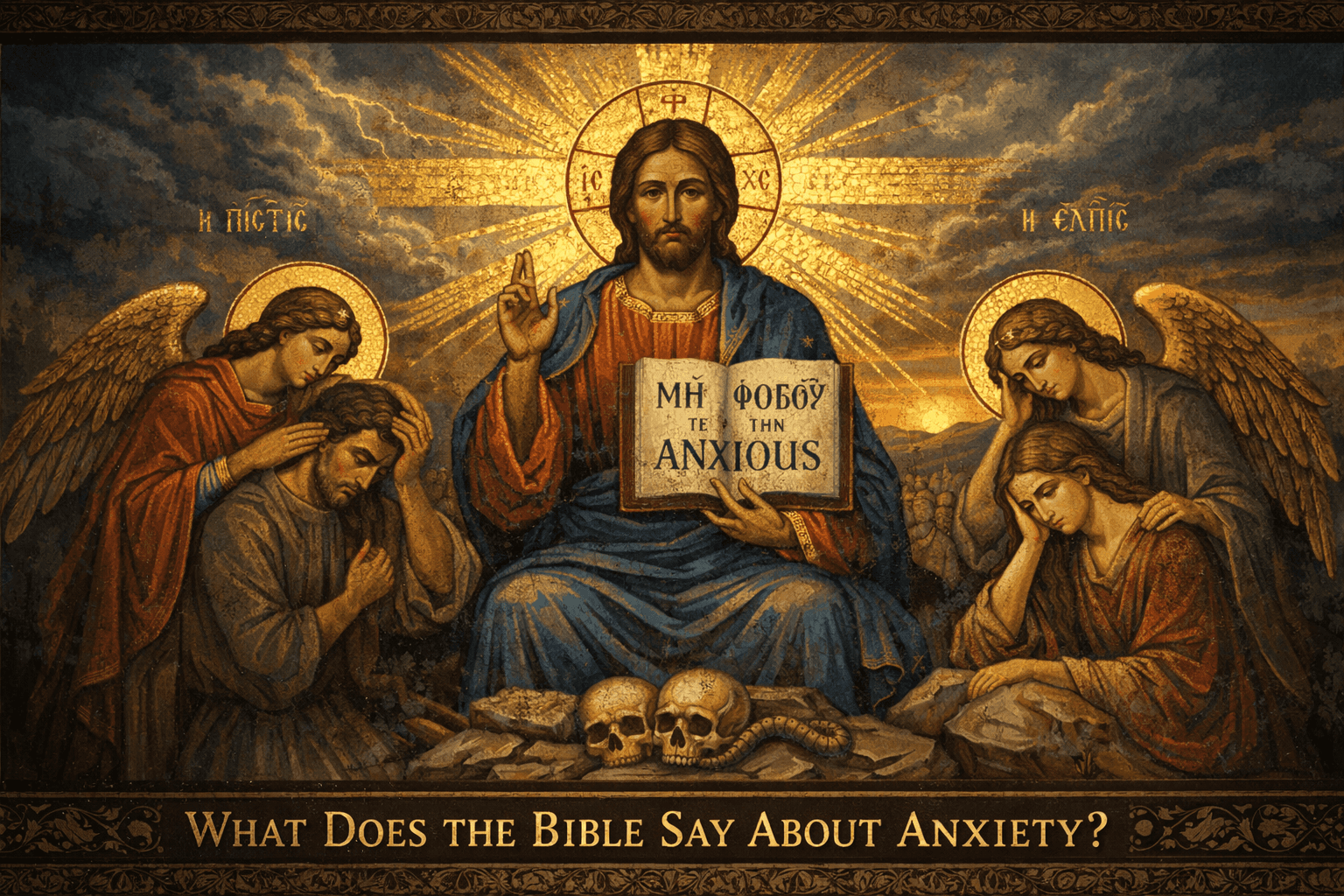
What Does the Bible Say About Anxiety?
The Bible addresses anxiety directly in passages like Philippians 4:6-7, 1 Peter 5:7, and Matthew 6:25-34. Rather than dismissing anxious feelings, Scripture acknowledges them while pointing to God's peace, presence, and provision as the foundation for a calmer mind and heart.
Most of us know the feeling. It's 2am and your mind won't stop. The same thought loops, the same fears, the same what-ifs spinning on repeat. Anxiety isn't a modern invention — it's been part of the human experience since the beginning. And the Bible, written across thousands of years of human struggle, speaks directly into it.
Not to dismiss it. Not to tell you to just pray harder and get over it. But to give you something solid to hold onto when everything else feels shaky.
God Doesn't Tell You to Stop Feeling — He Tells You Where to Take It
The most quoted verse on anxiety in the Bible is Philippians 4:6-7 (NKJV):
"Be anxious for nothing, but in everything by prayer and supplication, with thanksgiving, let your requests be made known to God; and the peace of God, which surpasses all understanding, will guard your hearts and minds through Christ Jesus."
Here's what that verse is not saying: it's not saying "never feel anxious." It's saying — when anxiety shows up, here's what to do with it. Bring it to God. All of it. The specific fear, the specific worry, the specific what-if.
Notice the structure: prayer, supplication (asking), and thanksgiving. That last one matters. Gratitude isn't denial — it's anchoring yourself to what's true about God before you rehearse what's frightening you.
You Can Cast It — Which Means You Don't Have to Carry It
1 Peter 5:7 (NKJV) says: "casting all your care upon Him, for He cares for you."
The word "casting" is active. It's not passively hoping God notices — it's a deliberate transfer. Like throwing a bag down after carrying it too long. The reason you can do it? Not because the worry isn't real. But because God actually cares about you. Not about your performance. About you.
That's the foundation. Anxiety often lies to us and says we're alone in it. Scripture says the opposite.
Jesus Speaks Directly to Anxious Minds
In Matthew 6:25-34, Jesus addresses worry at length — which tells you something. This wasn't a throwaway comment. He was speaking to people with real pressures: food, clothing, tomorrow. He doesn't say their concerns are invalid. He points their attention somewhere else.
"Therefore do not worry about tomorrow, for tomorrow will worry about its own things. Sufficient for the day is its own trouble." (Matthew 6:34, NKJV)
This is practical wisdom, not spiritual bypassing. He's not saying nothing bad will happen. He's saying your worry about tomorrow doesn't change tomorrow — it just steals today.
He also points to God's track record with creation: birds fed, flowers clothed. If God sustains those, what does that say about His posture toward you?
What About When It Doesn't Lift?
This is the question nobody in a sermon usually asks. You've prayed. You've cast your cares. The anxiety is still there in the morning.
Psalm 34:18 (NKJV) says: "The Lord is near to those who have a broken heart, and saves such as have a contrite spirit."
Nearness — not removal — is sometimes the promise. God with you in it, not always lifting you out of it immediately. Isaiah 41:10 says "Fear not, for I am with you" — the comfort isn't the absence of the hard thing. It's the presence of God in it.
And 2 Timothy 1:7 (NKJV) reminds us: "For God has not given us a spirit of fear, but of power and of love and of a sound mind." Fear and anxiety don't originate with God. That doesn't mean they're your fault — it means they don't have the final word.
What This Looks Like in Practice
Bringing Scripture into anxiety isn't about reading a verse and instantly feeling better. It's about slowly recalibrating what your mind returns to when the spiral starts. A few practical things rooted in what the Bible actually teaches:
Name it specifically in prayer. Philippians 4:6 says "let your requests be made known" — not vague feelings, but specific fears. Tell God exactly what you're afraid of.
Add thanksgiving deliberately. Not because everything is fine, but because gratitude to God interrupts the loop. What is true about God right now, regardless of how you feel?
Sit with Psalm 23. Read it slowly. The whole point of the psalm is God's presence in the dark valley — not absence of the valley.
Don't confuse spiritual anxiety with clinical anxiety. The Bible speaks to both the spiritual and the emotional reality of anxiety — but severe anxiety can also have physiological components. Seeking help from a doctor or counsellor isn't a lack of faith. It's wisdom.
The Bottom Line
The Bible takes anxiety seriously. It doesn't dismiss it, shame it, or pretend it isn't real. It gives you a God who knows the feeling of being in the middle of something overwhelming — and who invites you to bring all of it to Him.
If anxiety is heavy for you right now, you don't have to sort it out alone before you come to God. You come as you are, with everything you're carrying, and you let Him be what He says He is.
If you'd like someone to pray with you, you can submit a prayer request here. We read every one.
Key Bible Verses
Philippians 4:6-7, 1 Peter 5:7, Matthew 6:25-34, Psalm 34:18, Isaiah 41:10, John 14:27, Romans 8:28, Psalm 23:4, 2 Timothy 1:7, Proverbs 12:25

Author
Shafraz Jeal
Shafraz Jeal is a Christian writer, evangelist, and ministry leader with a passion for seeing lives transformed by the gospel. Formerly a Muslim, Shafraz encountered Jesus Christ in 2016, a turning point that reshaped every part of his life. Since then, he has served in church leadership, led evangelism initiatives, and ministered in deliverance and healing. Shafraz combines biblical depth with a heart for practical discipleship, equipping believers to live boldly for Christ and inviting seekers to discover the truth of the gospel.
FAQS
Does the Bible say anxiety is a sin?
No — the Bible never labels anxiety itself as a sin. Philippians 4:6 says "be anxious for nothing" as an invitation, not a condemnation. Jesus acknowledges worry as a human reality in Matthew 6. What the Bible warns against is letting anxiety drive us away from God rather than toward Him.