Grace vs Mercy: What's the Difference?
Grace and mercy are distinct but related concepts in the Bible. Mercy is God not giving us what we deserve — withholding the punishment that sin earns. Grace is God giving us what we do not deserve — extending favour, blessing, and salvation that we have no right to claim. The classic distinction is: mercy is not getting the punishment; grace is getting the gift. Both flow from God's character, both are unearned, and both are fully expressed in the person and work of Jesus Christ.

The two words travel together so often that most people treat them as near-synonyms — two ways of saying "God is kind." But they're not the same thing, and the distinction between them is not a theological technicality. It's the difference between being let off and being welcomed in. Between a sentence suspended and a seat at the table.
When you understand the difference, both become more extraordinary. And how you receive them — and extend them to others — changes.
The Classic Distinction
The simplest way to hold the two apart: mercy is not getting what you deserve. Grace is getting what you don't deserve.
Mercy deals with the negative — the punishment, the consequence, the penalty that was rightfully owed. When a judge shows mercy, he withholds the sentence the law demands. When God shows mercy, He does not treat us as our sins deserve (Psalm 103:10, NKJV). The debt exists. Mercy doesn't deny it — it absorbs it.
Grace deals with the positive — the gift, the favour, the blessing that was in no way earned or merited. When God shows grace, He doesn't merely withhold punishment. He actively gives good things to people who had no claim on them. Ephesians 2:8-9 (NKJV): "For by grace you have been saved through faith, and that not of yourselves; it is the gift of God, not of works, lest anyone should boast." Salvation is not mercy minus punishment. It is grace plus inheritance — being made children, heirs, fully welcomed into the family.
The distinction holds in everyday experience too. A parent shows mercy when they don't punish a child who deserved it. They show grace when they give that same child an unexpected gift, a celebration, an honour they didn't earn. Mercy stops something bad. Grace starts something good.
How Both Appear in Scripture
The Hebrew word most often translated "mercy" in the Old Testament is hesed — steadfast love, covenant faithfulness, loyal kindness. It carries relational weight: the mercy of God is not reluctant tolerance but the expression of His committed love toward His people. Lamentations 3:22-23 (NKJV): "Through the Lord's mercies we are not consumed, because His compassions fail not. They are new every morning; great is Your faithfulness."
The Hebrew word for grace is chen — favour shown to someone who has no claim on it. It appears in phrases like "Noah found grace in the eyes of the Lord" (Genesis 6:8) — not because Noah was perfect but because God extended unmerited favour toward him in a situation that called for judgment.
In the New Testament, the Greek word for grace is charis — a gift freely given, unearned favour, generosity that asks nothing in return. Paul uses it extensively to describe the entire framework of salvation: not moral achievement, not religious performance, but sheer gift. Romans 6:23 (NKJV): "For the wages of sin is death, but the gift of God is eternal life in Christ Jesus our Lord." Wages are earned. Gifts are given. The contrast is deliberate.
Both Are Fully Expressed at the Cross
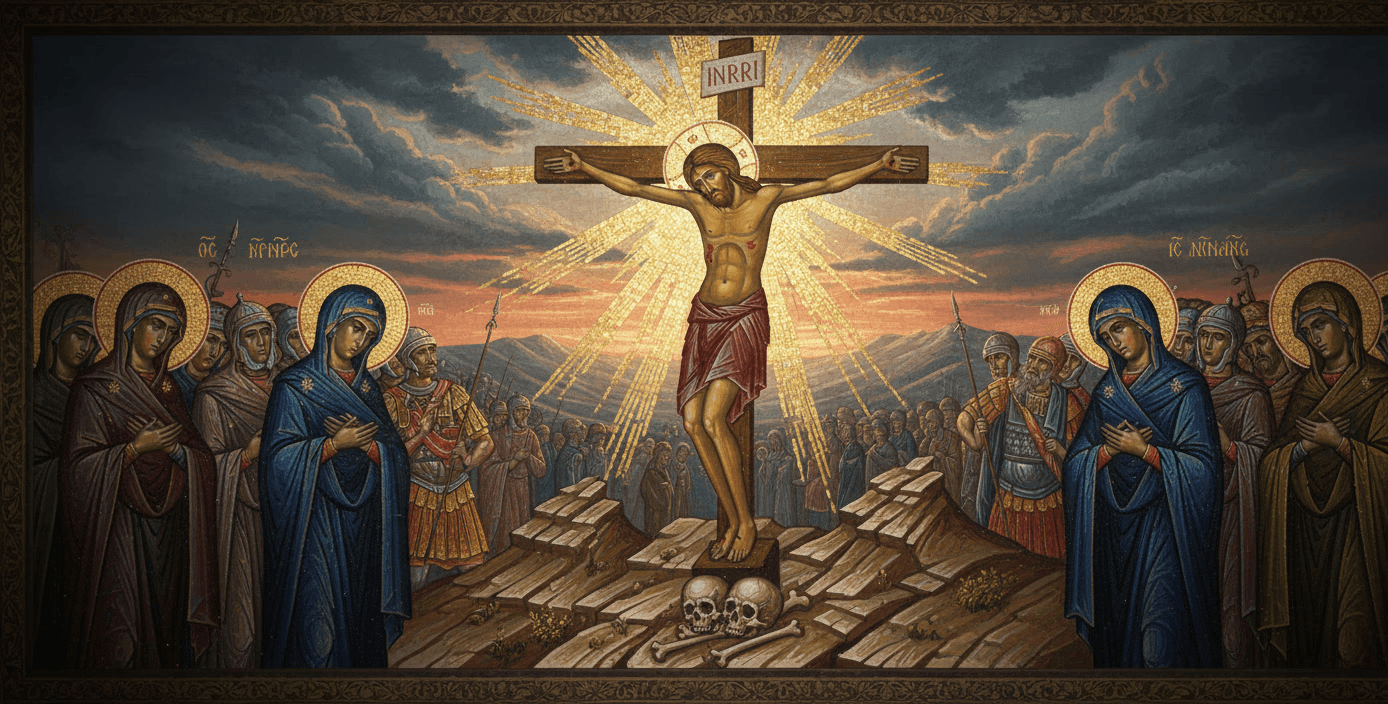
The cross is where mercy and grace meet most visibly. At Calvary, God's mercy absorbs the penalty of sin — death, the rightful consequence, falls on Jesus rather than on those who deserved it. At the same time, God's grace makes available something entirely unearned — forgiveness, righteousness, adoption, eternal life — given freely to those who had earned none of it.
Romans 5:8 (NKJV): "But God demonstrates His own love toward us, in that while we were still sinners, Christ died for us." While we were still sinners. Not after we cleaned up. Not in response to improved behaviour. The mercy and grace arrived before any qualifying condition was met. That's what makes it both.
Hebrews 4:16 (NKJV) brings both words into a single sentence: "Let us therefore come boldly to the throne of grace, that we may obtain mercy and find grace to help in time of need." The throne is described as a throne of grace — the place where unmerited favour governs. And at that throne, you obtain mercy (the withholding of judgment) and find grace (the giving of help). Both, simultaneously, available to anyone who comes.
What This Changes in Practice
If you think God has only shown you mercy — spared you from what you deserved — you may come to Him tentatively, as someone still essentially on probation. Grateful for what was withheld, but unsure whether you're truly welcome.
Understanding grace changes the posture entirely. You are not merely unpunished. You have been given something. Not just freed from debt but invited to the table. Not just pardoned but made a child. 2 Corinthians 12:9 (NKJV): "My grace is sufficient for you, for My strength is made perfect in weakness." Grace is not a one-time event at conversion. It is an ongoing supply — sufficient for whatever the present moment requires.
Two Words That Describe One Character
Mercy and grace are distinct but they come from the same source — the character of a God who, when He looked at the condition of humanity, did not give us what we had earned and did give us what we could never earn. Micah 6:8 (NKJV) calls us to "love mercy." Ephesians 4:7 (NKJV) says "to each one of us grace was given." Both are worth receiving fully — not just as theological categories but as realities to stand in.
You're not on probation. You're not a guest on sufferance. That's mercy already received. What grace says is something more: you are welcome, you are wanted, and the supply of what you need in this moment is not running low.
FAQS
What is the difference between grace and mercy in the Bible?
Can you have grace without mercy?
What does grace mean in the Bible?
What does mercy mean in the Bible?
Does God's grace and mercy run out?
Author
Shafraz Jeal
Shafraz Jeal is the founder of By Design Ministry, created to help people discover Jesus, understand the Bible, and grow in faith. After encountering Christ in 2016, his life was radically changed, and that journey continues to shape everything he shares.
You may also like these
Related Post