Hosanna: What the Word Actually Means
Hosanna is a Hebrew phrase meaning "save now" or "save, please." It comes from Psalm 118:25, where it appears as hoshi'a na — a direct cry to God for deliverance. By the time of Jesus, hosanna had evolved through centuries of Passover use into an acclamation — still carrying its original meaning of plea and praise together. When the crowd shouted it at Jesus entering Jerusalem on Palm Sunday, they were using a word that meant both "rescue us" and "blessed is the one who comes to do it."

Author
Shafraz Jeal
Read Time
7
min
Updated
Most people who use the word hosanna treat it as a synonym for hallelujah — a shout of praise, a joyful religious exclamation. It is joyful. But it doesn't mean praise.
It means: save us.
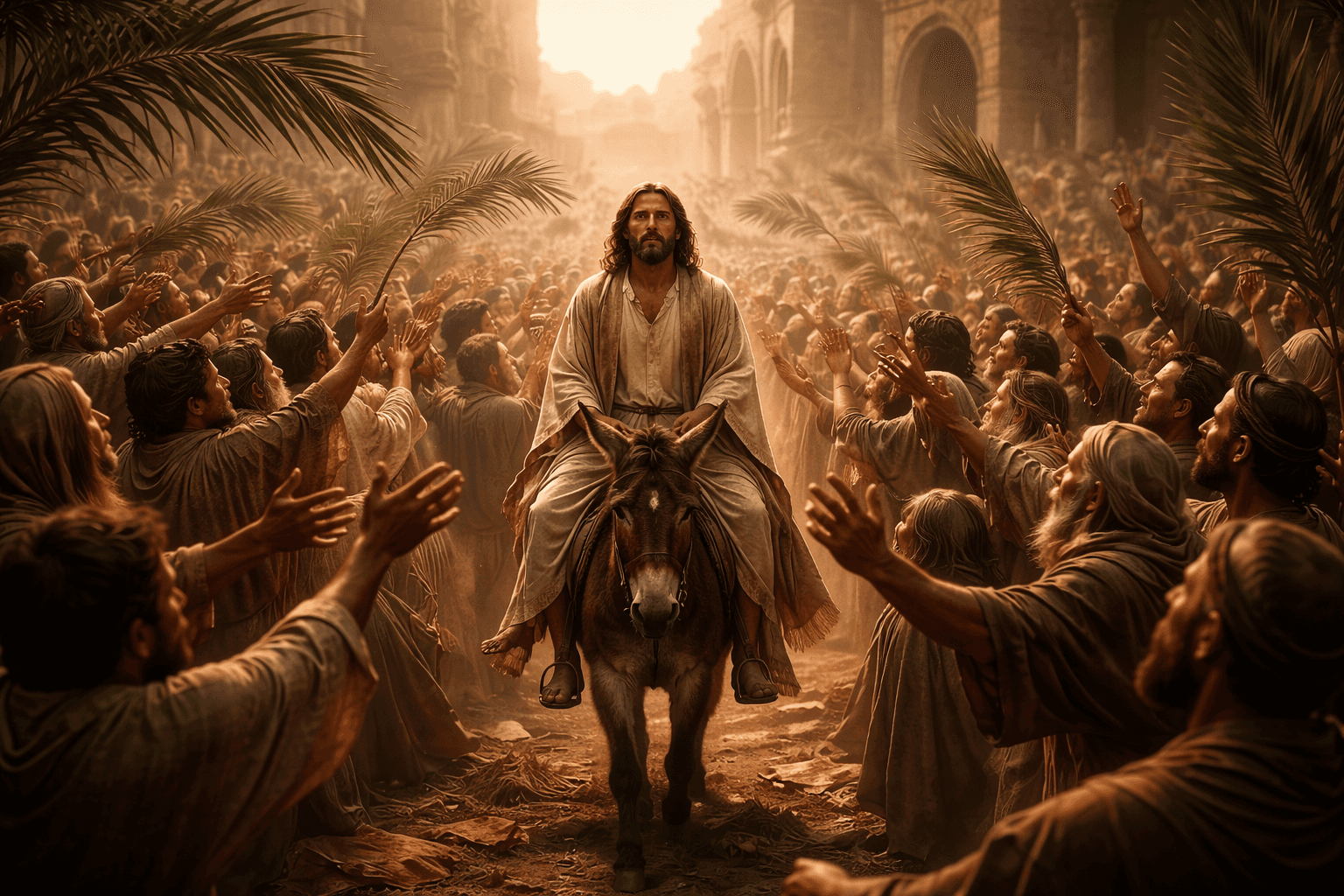
Which changes the entire Palm Sunday scene if you sit with it. A crowd lining the road into Jerusalem, waving palm branches, shouting "save us now" at a man on a donkey — and five days later, to a different crowd, shouting "crucify him." The same city. The same week. A completely different demand.
Where Hosanna Comes From
The word traces back to Psalm 118:25 — a psalm sung at every major Jewish festival, particularly Passover. The Hebrew is hoshi'a na: hoshi'a from the verb yasha (to save, to deliver) and na meaning "please" or "now." It's a direct cry to God for rescue: "Save now, I pray, O Lord." (Psalm 118:25, NKJV).
The very next verse is: "Blessed is he who comes in the name of the Lord!" (Psalm 118:26, NKJV). This is the verse the crowd at Palm Sunday quotes directly. They're quoting a psalm they knew by heart — one that moved from "save us" to "blessed is the one coming to save us" in a single breath.
By the first century, after centuries of use at Passover, hosanna had shifted somewhat in tone. It was still a plea, but it had taken on the quality of an acclamation — the way words do when they're repeated in ritual long enough. When the crowd shouted it at Jesus, they were using it with all its history attached: a cry for deliverance, a recognition that here was someone sent from God, and a joyful welcome all at once.
What the Crowd Wanted When They Shouted It
The context of Palm Sunday is crucial. Israel was under Roman occupation. Passover was the season when Jewish national feeling ran highest — it was the feast that commemorated God delivering Israel from slavery in Egypt. Crowds were gathering in Jerusalem from across the region. The political temperature was always elevated at this time of year, and the Romans always stationed extra troops in the city because of it.
Into this walks Jesus, fulfilling Zechariah 9:9 exactly: "Behold, your King is coming to you; He is just and having salvation, lowly and riding on a donkey." (NKJV). The crowd recognises the symbolism. This is a messianic entry. They are welcoming their king.
"Hosanna to the Son of David! Blessed is He who comes in the name of the Lord! Hosanna in the highest!" (Matthew 21:9, NKJV)
"Son of David" is a royal title. They're not just greeting a rabbi. They are welcoming someone they believe is about to do what God did through Moses — deliver them from the power oppressing them. Save us now. The Roman kind of saving. A political kingdom, restored sovereignty, freedom from the occupier.
The Rescue They Didn't Expect
Jesus wept over Jerusalem as He approached it (Luke 19:41). The disciples didn't understand why at the time — John 12:16 says the significance of what was happening only became clear to them after the resurrection. But Jesus knew what the crowd was asking for and He knew what He had come to give — and the two things were not the same.
The crowd wanted rescue from Rome. Jesus had come to rescue them from something Rome had no power to fix. The hosannas were right — He was the one coming in God's name, He was the Son of David, He was the King arriving. Everything they shouted was theologically accurate. What they got wrong was what salvation was going to look like.
Five days later, the city that shouted "save us" would shout "crucify him." Not necessarily the same individuals — Jerusalem was full of Passover pilgrims and the dynamics of crowds are complicated. But the same city, the same week, the same question underneath: is this the one who will do what we need done? And when it became clear He wasn't going to do it their way, the mood turned.
Matthew 21:15 records that children in the temple courts were still crying hosanna — still saying it after the adults had begun their manoeuvring. Jesus quotes Psalm 8:2 in response: "Out of the mouth of babes and nursing infants You have perfected praise." The children were the ones still saying the right thing about the right person, without needing it to mean what they wanted it to mean.
What Hosanna Means Now
Hosanna survived into Christian worship but lost most of its urgency in the process. It became a word of celebration rather than a word of need — which is a loss, because the original cry was honest in a way that pure celebration isn't.
"Save us now" is a prayer that still makes sense. The world still needs what only Jesus can provide. The honest version of Palm Sunday worship is not a triumphal parade but a genuine cry addressed to someone with the actual power to do what we're asking — acknowledging that His way of doing it may not look like what we pictured, and meaning it anyway.
The Right Word for the Right Person
The crowd on Palm Sunday got the word right. They got the person right. They got the need right. What they didn't get right was the shape of the answer — and that's a failure of imagination that's easy to repeat.
Hosanna is the prayer of people who know they need rescue and believe someone has arrived who can provide it. As a prayer rather than a performance, it's still the most accurate thing to say about what Jesus came to do. Save us. Please. Now.
FAQS
What does hosanna mean?
Where does hosanna come from in the Bible?
Why did the crowd shout hosanna on Palm Sunday?
Is hosanna a Hebrew or Greek word?
What is the difference between hosanna and hallelujah?
Author
Shafraz Jeal
Shafraz Jeal is the founder of By Design Ministry, created to help people discover Jesus, understand the Bible, and grow in faith. After encountering Christ in 2016, his life was radically changed, and that journey continues to shape everything he shares.
You may also like these
Related Post