"I Am the Way, the Truth, and the Life" — What Jesus Actually Claimed
"I am the way, the truth, and the life. No one comes to the Father except through Me" (John 14:6, NKJV) is one of the seven "I Am" statements of Jesus recorded in the Gospel of John. Jesus spoke these words to His disciples the night before His crucifixion, in response to Thomas asking how they could know the way to where He was going. The statement is a direct claim to be the singular path to God — not one option among many but the defining route of access to the Father.

The night before He was crucified, Jesus gathered with His disciples and told them He was leaving. Thomas asked the question anyone would ask: "Lord, we do not know where You are going, and how can we know the way?" (John 14:5, NKJV). It was an honest question, possibly a desperate one. And Jesus answered it with one of the most absolute statements in all of Scripture.
The statement has made people uncomfortable for two thousand years. Not because it's hard to understand — it's remarkably clear — but because of what it requires you to do with it. Either He meant it, in which case it changes everything. Or He didn't, in which case you have a significant problem with the reliability of the person saying it.
What "I Am" Means Before You Get to the Rest
John 14:6 begins with "I am" — and in John's Gospel, those two words carry a specific weight that a reader in the first century would have recognised immediately.
Throughout John, Jesus makes seven "I Am" statements: the bread of life, the light of the world, the door of the sheep, the good shepherd, the resurrection and the life, the way the truth and the life, and the true vine. Each one is a deliberate echo of Exodus 3:14 — where God tells Moses His name is "I AM WHO I AM." In John 8:58, Jesus makes the connection explicit: "Before Abraham was, I AM." The Pharisees understood exactly what He was claiming and picked up stones to throw at Him.
So when Jesus says "I am the way, the truth, and the life," He is not making a modest claim about His teaching being helpful. He is using the divine name and applying it to Himself. The statement comes from someone who is claiming to be God — and it needs to be evaluated on those terms.
What Each Part of the Statement Means
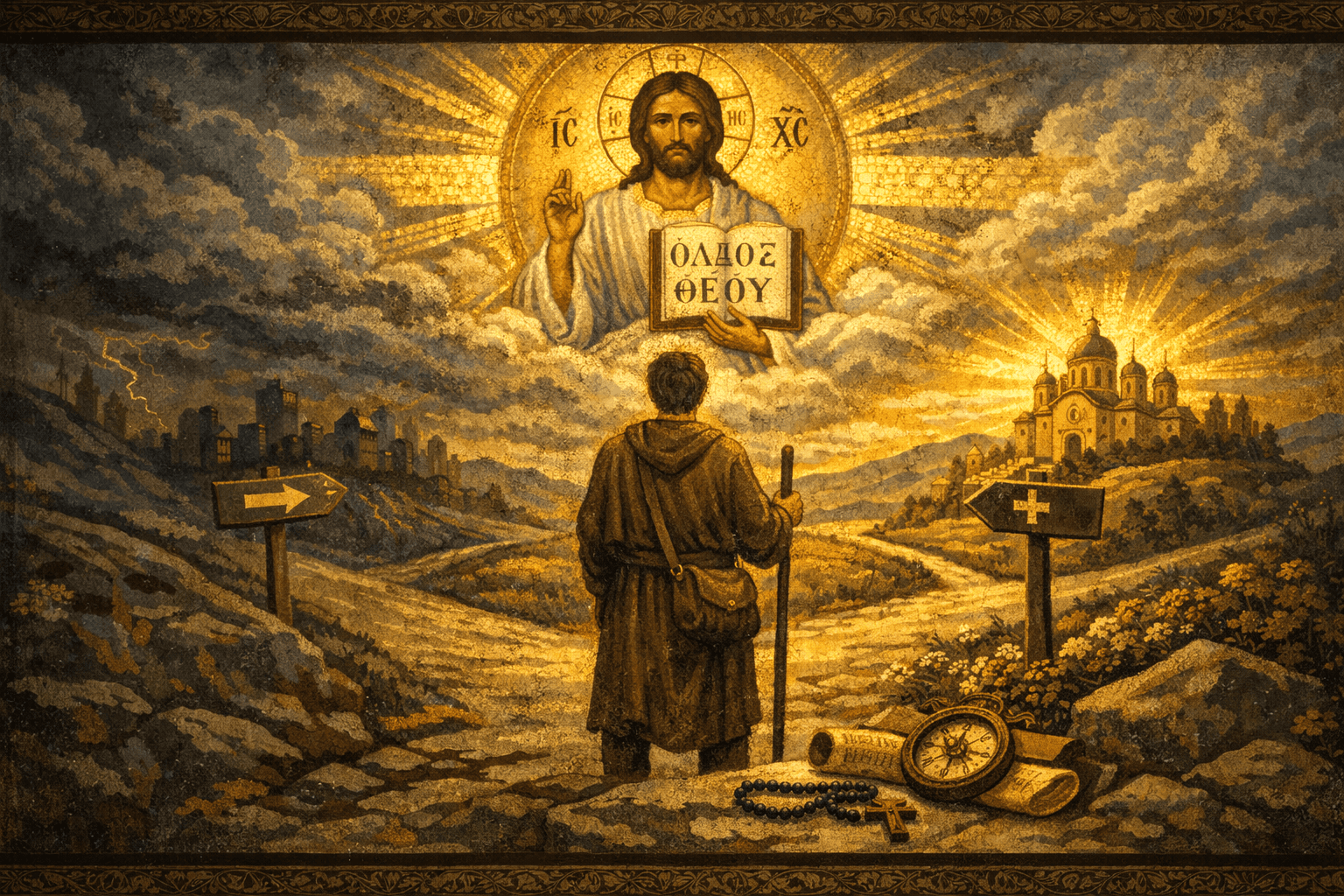
"I am the way." Not a way. The way. The Greek is hē hodos — with the definite article. Jesus is not presenting Himself as one spiritual path among many with the same destination. He is claiming to be the singular route of access to the Father. Hebrews 10:19-20 (NKJV) picks this up directly — describing the new and living way into God's presence opened through Jesus. The way was not available before Him and is not accessible around Him.
"I am the truth." Not a teacher of truth. Not someone who conveys accurate information. The truth itself — the full disclosure of what God is, what humanity is, and what reality fundamentally consists of. Colossians 2:9 (NKJV): "For in Him dwells all the fullness of the Godhead bodily." John 1:14 (NKJV): "the Word became flesh and dwelt among us, and we beheld His glory, the glory as of the only begotten of the Father, full of grace and truth." Jesus is the event in which truth became visible and tangible in human history.
"I am the life." John's Gospel opens with this: "In Him was life, and the life was the light of men" (John 1:4, NKJV). Jesus is not offering spiritual improvement or extended moral existence. He is claiming to be the source of life itself — the kind of life that death cannot permanently interrupt. John 11:25 (NKJV): "I am the resurrection and the life. He who believes in Me, though he may die, he shall live."
The Second Half of the Verse — and Why the Exclusivity Matters
"No one comes to the Father except through Me."
This is the sentence most people struggle with. In a pluralist culture, the claim that there is only one route to God sounds arrogant at best and dangerous at worst. It needs engaging honestly rather than softening.
First: exclusivity is not the same as cruelty. A bridge that is the only crossing point over a particular river is exclusive — but it's the bridge that makes crossing possible at all. Without it there is no crossing, not more options. Jesus's claim is not that God is reluctant and narrow — it's that He has provided a specific, accessible way that was not previously available.
Second: the exclusivity flows directly from the diagnosis. If the problem is human sin creating a separation between humanity and God that humans cannot bridge by their own effort or moral improvement — which is the consistent teaching of both Testaments — then the solution requires something that addresses that specific problem. Acts 4:12 (NKJV): "Nor is there salvation in any other, for there is no other name under heaven given among men by which we must be saved." The exclusivity is the exclusivity of the cure, not the exclusivity of a gatekeeper enjoying his power.
Third: Jesus is speaking to people who asked where He was going and how they could follow. The answer is: through me. The statement is not primarily a judgment on other religions — it is a direct answer to a direct question from people who love Him and want to be where He is. The context is intimacy, not condemnation.
What It Means That He Said It the Night Before He Died
The timing is not incidental. Jesus spoke these words in John 14, which is part of the Upper Room Discourse — His last sustained teaching before Gethsemane, the arrest, the trial, the cross. He was about to become the way by walking it. The death and resurrection He was hours away from were precisely the mechanism by which access to the Father was opened.
When He says "No one comes to the Father except through Me," He is not describing an abstract theological principle. He is describing what He is about to do and what it will accomplish. The way is not a metaphor. It cost something — everything — to build it.
The Most Personal Claim in Scripture
Every other major world religion points beyond its founder to a system, a set of teachings, a path of practice. Jesus points to Himself. Not "follow my teachings and you'll reach God" but "I am the way." The person and the path are the same thing.
That is either the most megalomaniacal thing ever said by a human being, or it is the most important sentence ever spoken. There isn't a comfortable middle option. C.S. Lewis made this case clearly in Mere Christianity — a man who said what Jesus said is either a liar, a lunatic, or exactly who He claimed to be.
The disciples in that upper room had watched Him for three years. They were hours from watching Him die and three days from watching Him walk out of a sealed tomb. Their eventual conclusion — that He was exactly who He said He was — cost most of them their lives. That is the weight behind the verse. It's worth taking seriously.
FAQS
What does "I am the way, the truth, and the life" mean?
What does "no one comes to the Father except through Me" mean?
When did Jesus say "I am the way, the truth, and the life"?
Is John 14:6 the only verse where Jesus makes this claim?
Why do Christians say Jesus is the only way to God?
Author
Shafraz Jeal
Shafraz Jeal is the founder of By Design Ministry, created to help people discover Jesus, understand the Bible, and grow in faith. After encountering Christ in 2016, his life was radically changed, and that journey continues to shape everything he shares.
You may also like these
Related Post