Nicodemus: The Man Who Came to Jesus at Night
Nicodemus was a Pharisee and a member of the Sanhedrin — the Jewish ruling council — who appears three times in the Gospel of John. He is best known for his nighttime conversation with Jesus in John 3, during which Jesus declares "you must be born again" (John 3:7, NKJV). Nicodemus appears again in John 7 defending Jesus before the council, and finally in John 19 helping to bury Jesus after the crucifixion. His story traces a journey from secret curiosity to open devotion.

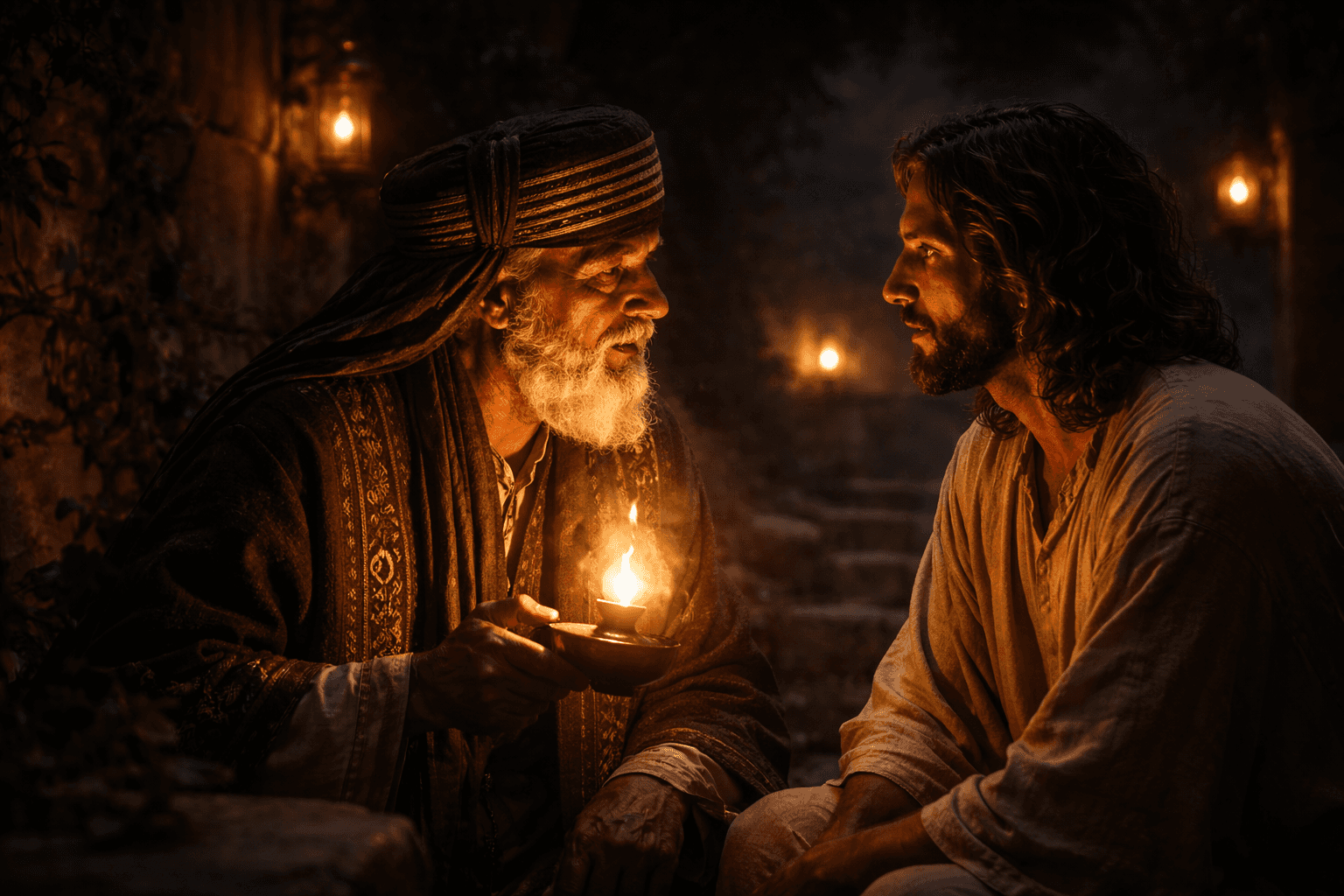
He was one of the most powerful men in Israel. A Pharisee. A member of the Sanhedrin — the 71-man council that served as the supreme religious and legal authority in Jewish life. He had spent his entire career building a reputation for knowing the law, interpreting it correctly, and being seen to do so.
And he came to Jesus at night. Quietly. Without his colleagues. Alone.
John doesn't say why he came at night. He just records the fact. And the fact carries everything: here is a man who is genuinely drawn to Jesus but cannot yet afford to be seen that way. His story is one of the most honest in the Gospels — because most of us know exactly what it feels like to believe something privately that we haven't yet found the courage to say out loud.
The Conversation That Changed Everything
Nicodemus opens carefully — diplomatically, even. He doesn't come with hostility or with a trick question. He comes with a statement that sounds like the beginning of a longer conversation: "Rabbi, we know that You are a teacher come from God; for no one can do these signs that You do unless God is with him." (John 3:2, NKJV).
He's acknowledging the miracles. He's acknowledging the divine connection. He's not ready to say more than that yet — but he's said enough to be there.
Jesus doesn't respond to the statement. He responds to what's underneath it:
"Most assuredly, I say to you, unless one is born again, he cannot see the kingdom of God." (John 3:3, NKJV)
Nicodemus asks the question anyone would ask: "How can a man be born when he is old? Can he enter a second time into his mother's womb and be born?" (John 3:4, NKJV). It sounds almost comic — and maybe Nicodemus intended it that way, deflecting with a literal reading. But Jesus doesn't let him deflect. He presses in: born of water and the Spirit. The wind blows where it will. You can't control it or predict it. That's what this new birth is like.
And then, embedded in this conversation with one man on a rooftop at night, Jesus says the verse that has become the most recognised in the entire Bible:
"For God so loved the world that He gave His only begotten Son, that whoever believes in Him should not perish but have everlasting life." (John 3:16, NKJV)
John 3:16 was not preached to a crowd. It was said to one man, in private, in the dark. A man who was not yet sure what he believed but had come close enough to ask.
The Second Appearance: A Careful Defence
Nicodemus disappears from the story for several chapters. When he reappears in John 7, the Pharisees are trying to have Jesus arrested. The temple officers have come back empty-handed — they couldn't do it. "No man ever spoke like this Man!" (John 7:46, NKJV) they say, to the fury of the council.
The Pharisees are contemptuous: does any of the authorities or Pharisees believe in Him? The crowd is accused of not knowing the law. And then Nicodemus speaks — carefully, legally, without declaring his hand:
"Does our law judge a man before it hears him and knows what he is doing?" (John 7:51, NKJV)
It is the mildest possible defence. He doesn't say he believes in Jesus. He doesn't quote the conversation on the rooftop. He simply invokes the procedure of his own law: you have to hear a man before you condemn him. He is dismissed immediately — have you not read, they say, no prophet comes from Galilee. The conversation moves on.
But Nicodemus spoke. In the room where it was dangerous to speak. He didn't go as far as he perhaps should have. But he went further than anyone else in that council did.
The Third Appearance: No Longer Hiding
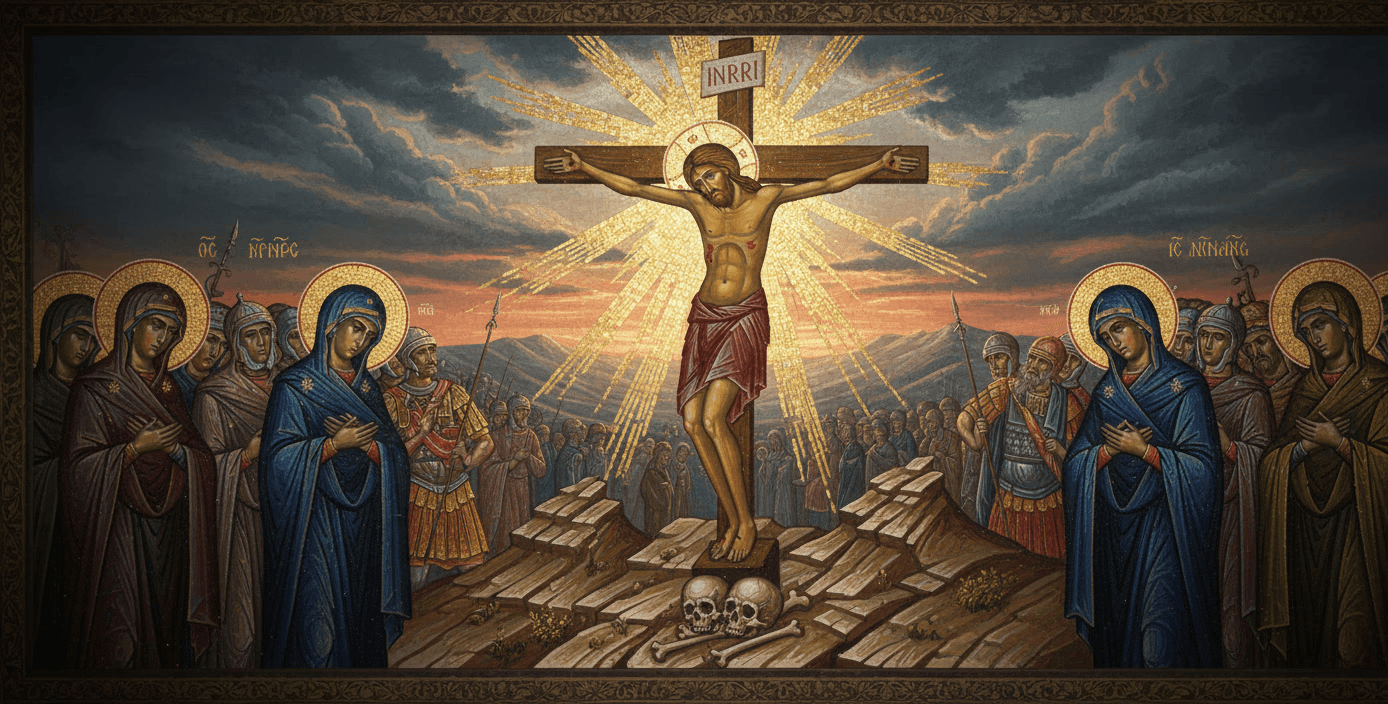
The last time Nicodemus appears is after the crucifixion. Jesus is dead. The disciples are scattered and terrified. And Nicodemus — the man who came at night, the man who offered a procedural defence and no more — arrives in broad daylight with a hundred pounds of myrrh and aloes to help bury Jesus.
"And Nicodemus, who at first came to Jesus by night, also came, bringing a mixture of myrrh and aloes, about a hundred pounds." (John 19:39, NKJV)
John makes sure you remember the night visit. He wants you to see the distance travelled. The man who came in secret, who hedged his words in the council chamber, is now publicly associating himself with a man who has just been executed as a criminal. There is no political calculation in this. There is no benefit. Jesus is dead. The movement looks finished. And Nicodemus shows up with a hundred pounds of spices and helps lay Him in a new tomb.
That's not a man who came to a philosophical conclusion. That's a man who arrived somewhere — slowly, at cost, in stages — and stayed.
The Slow Journey to the Light
What makes Nicodemus compelling is not that he got there fast. He didn't. He moved from secret curiosity to careful defence to public devotion over the course of months or years. He was not the disciple who dropped his nets and walked away from everything the same afternoon. He was the man who kept coming back — incrementally, at personal risk, until the moment when hiding was no longer something he was willing to do.
Jesus said the Spirit blows where it will and you don't know where it comes from or where it goes. The work of God in Nicodemus looked nothing like the work of God in Peter or Paul. It was slower, quieter, more contested. And it arrived at the same place: a man on his knees in front of a borrowed tomb, honouring the one he had once approached only in darkness.
If your faith feels more like Nicodemus than like the disciples at Pentecost — partial, slow, still sorting itself out — his story says that is not the end of the journey. It's the middle of it.
FAQS
Who was Nicodemus in the Bible?
Why did Nicodemus come to Jesus at night?
What did Jesus tell Nicodemus?
Did Nicodemus become a follower of Jesus?
What does Nicodemus's story mean for Christians today?
Author
Shafraz Jeal
Shafraz Jeal is the founder of By Design Ministry, created to help people discover Jesus, understand the Bible, and grow in faith. After encountering Christ in 2016, his life was radically changed, and that journey continues to shape everything he shares.
You may also like these
Related Post