The Prayer of Jabez: What It Says and What It Doesn't
The prayer of Jabez is a short prayer recorded in 1 Chronicles 4:10 (NKJV), embedded within a lengthy genealogy: "Oh, that You would bless me indeed, and enlarge my territory, that Your hand would be with me, and that You would keep me from evil, that I may not cause pain." God granted his request. The prayer became widely known through a bestselling book in 2000 and has since attracted both devotion and significant theological debate about its application.

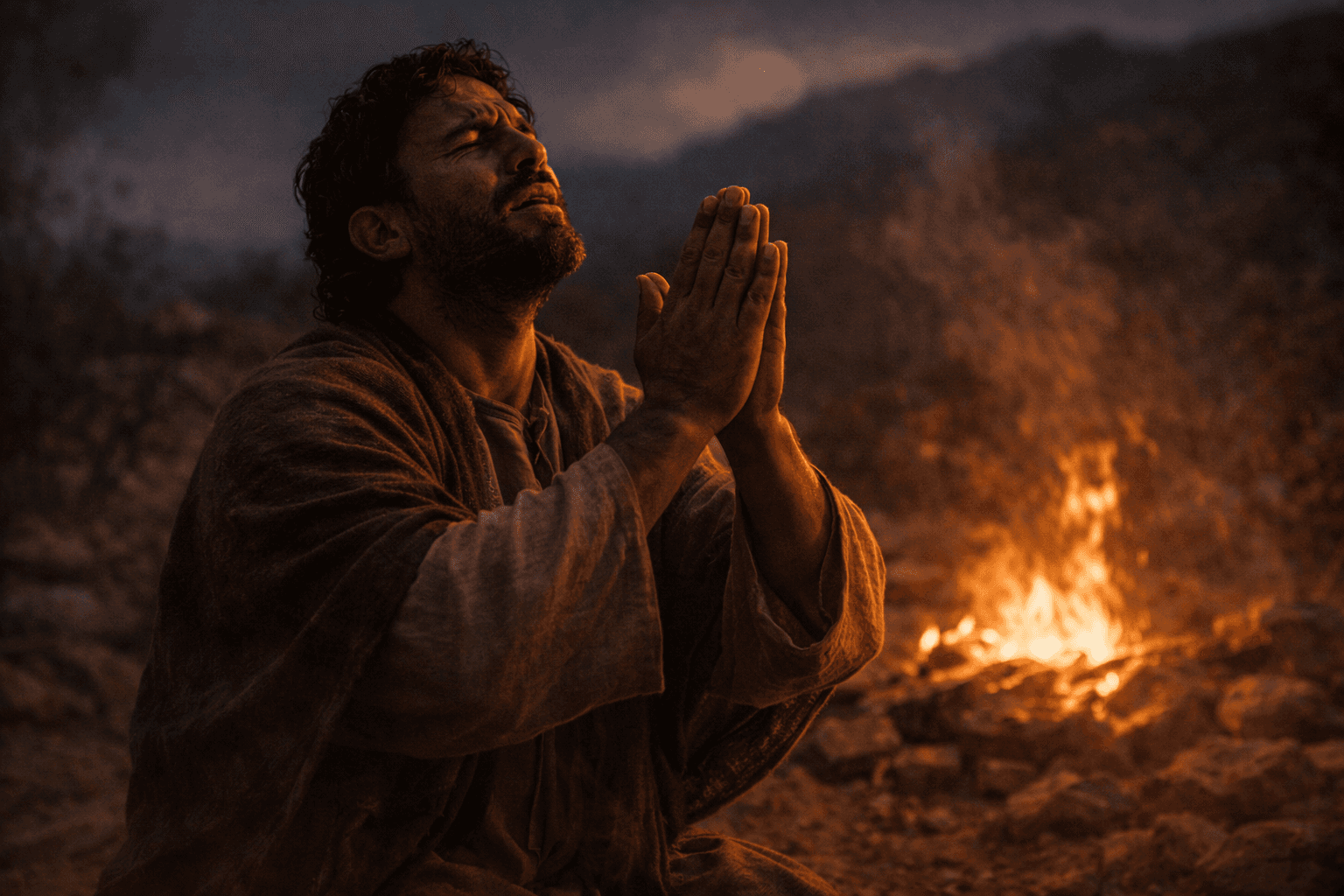
It appears in the middle of one of the driest passages in the entire Bible — nine chapters of genealogy in 1 Chronicles, name after name after name — and then suddenly, without warning, two verses that read completely differently from everything around them.
A man named Jabez. A description of his character. A prayer he prayed. And a three-word response from God: He granted his request.
That's it. No backstory beyond his name. No follow-up. The genealogy resumes on the other side of it as if nothing happened. And yet those two verses generated a cultural phenomenon in the early 2000s, have been debated by theologians ever since, and still draw people who want to understand what this prayer actually is.
What the Text Actually Says
1 Chronicles 4:9-10 (NKJV):
"Now Jabez was more honourable than his brothers, and his mother called his name Jabez, saying, 'Because I bore him in pain.' And Jabez called on the God of Israel saying, 'Oh, that You would bless me indeed, and enlarge my territory, that Your hand would be with me, and that You would keep me from evil, that I may not cause pain!' So God granted him what he requested."
The name Jabez sounds like the Hebrew word for pain — his mother named him that because his birth was painful. He grew up carrying a name that meant suffering. And his prayer, when you look at it closely, is a prayer to escape the meaning of his own name: that he would not cause pain, that blessing rather than pain would define his life.
Four things he asks for. Blessing. Enlarged territory. God's hand with him. Protection from evil so he doesn't cause pain. The last petition loops back to his name — he was named for pain, and he was asking God to make him something other than what his name said he was.
The text records that God granted the request. No details about how. No timeline. Just the plain statement: God answered.
Why the Prayer Became Controversial
In 2000, a book called The Prayer of Jabez by Bruce Wilkinson argued that Christians should pray this prayer daily as a pattern for receiving God's blessing, particularly in terms of expanded influence and opportunity. It sold over nine million copies. And then the theological pushback began.
The criticisms were substantive. Pulling two verses from a genealogy and making them a universal prayer formula ignores context — Jabez was a specific person in a specific historical covenant context, and what God did for him cannot simply be transposed into a daily practice for guaranteed blessing. The "enlarge my territory" framing, applied to modern life as a prayer for career advancement, ministry growth, or material increase, raised concerns about prosperity-gospel adjacent thinking.
There's also the James 4:3 problem: "You ask and do not receive, because you ask amiss, that you may spend it on your own pleasures." (NKJV). The motive behind a prayer matters. 1 John 5:14-15 clarifies that confident prayer is prayer aligned with God's will — not a formula that guarantees any specific outcome regardless of circumstances.
What the Prayer Is Actually Doing
The criticisms of the popular use of the prayer are valid — but they shouldn't obscure what's genuinely interesting about the passage itself.
Jabez is described as more honourable than his brothers. He was not a man praying selfishly out of greed. He was a man praying against the destiny his name had assigned him. In the ancient world, names were not just labels — they were declarations over a life. To be named Jabez was to carry the word "pain" through your existence. His prayer was a refusal to accept that as fixed: God, let my life be characterised by blessing rather than pain. Let me not become what my name says I am.
That's not a prosperity prayer. That's a prayer for redemption of identity. And God responded to it.
There is also something genuinely biblical about asking God for more — more capacity, more resource, more opportunity — when the motive is to do more good. Ephesians 3:20 (NKJV) describes God as the one "who is able to do exceedingly abundantly above all that we ask or think." The New Testament is not shy about encouraging bold requests. Jesus says in John 14:13-14 (NKJV): "And whatever you ask in My name, that I will do." The "in My name" is the qualifier — in alignment with His character, His will, His purposes. Not a blank cheque. A relationship.
The prayer of Jabez, read carefully, is exactly that kind of prayer. He's not asking for wealth. He's asking for blessing, presence, and protection from becoming harmful. That's a prayer anyone can legitimately pray.
What to Take From It — and What to Leave
Take: the principle that God can redefine what your name — your history, your family background, your own past failures — said your life would be. Jabez prayed against a name given to him in pain and God answered. That's genuinely good news.
Take: the boldness of asking God to expand your usefulness. Asking to do more good, reach more people, have more impact for the Kingdom — there's nothing wrong with that prayer when the motive is right.
Leave: the idea that praying these specific words daily functions as a spiritual formula for guaranteed increase. The Bible doesn't work that way. God responded to Jabez's prayer because of who Jabez was and what he was asking for — not because of the structure of the words.
A Man Who Refused His Name
What the writer of Chronicles was doing by inserting these two verses into a genealogy is not entirely clear. But the effect is jarring in the best way — a name appears, a prayer is prayed, and God answers. In the middle of nine chapters of names, this one man steps out of the list and does something.
He asked God to make his life mean something different from what it started as. And God did. That's the prayer. That's the answer. The rest is application — and the application belongs to you and God, not to a daily formula.
FAQS
What is the prayer of Jabez?
Who was Jabez in the Bible?
Should Christians pray the prayer of Jabez every day?
What does "enlarge my territory" mean in the prayer of Jabez?
Why is the prayer of Jabez in the middle of a genealogy?
Author
Shafraz Jeal
Shafraz Jeal is the founder of By Design Ministry, created to help people discover Jesus, understand the Bible, and grow in faith. After encountering Christ in 2016, his life was radically changed, and that journey continues to shape everything he shares.
You may also like these
Related Post