Propitiation: What the Cross Actually Accomplished
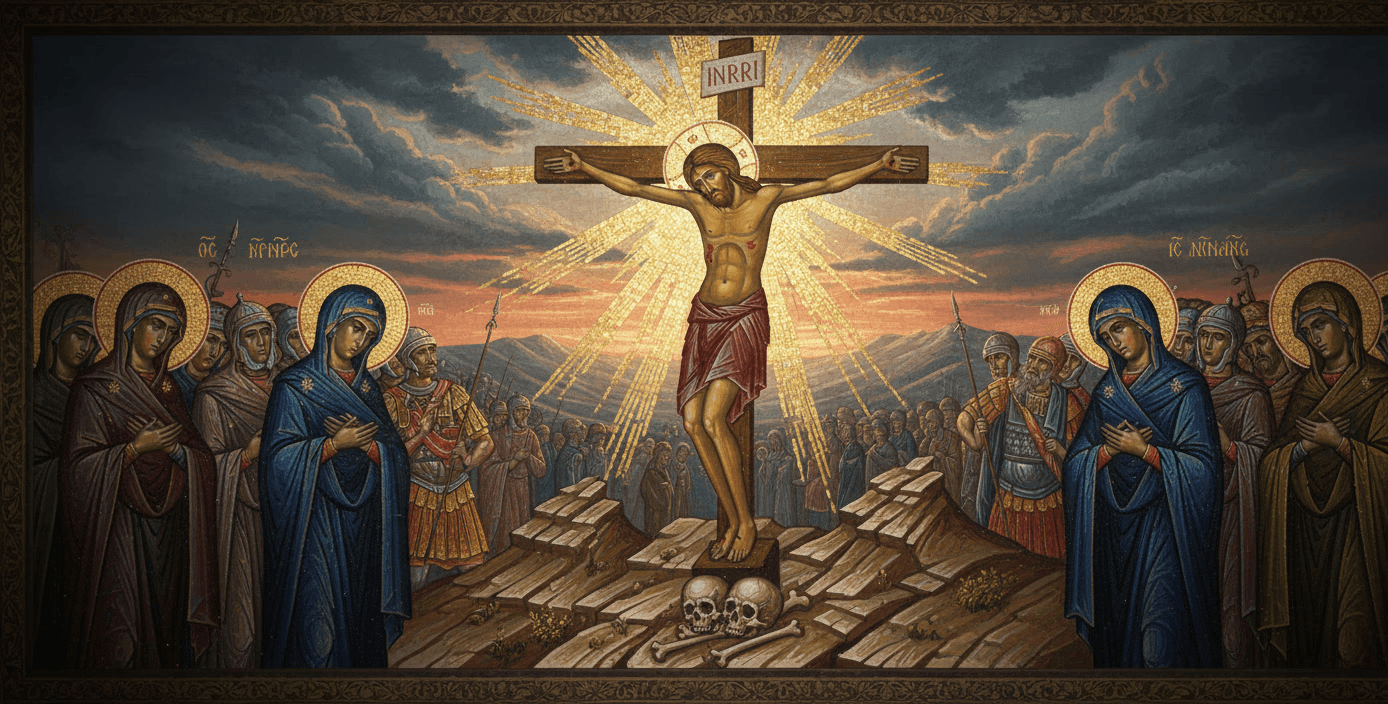
Propitiation is a theological term describing the satisfaction of God's wrath against sin through the atoning sacrifice of Jesus Christ. The Greek word hilasmos (noun) and hilasterion (related form) appear in Romans 3:25, Hebrews 2:17, 1 John 2:2, and 1 John 4:10. Propitiation differs from expiation — expiation covers or removes sin; propitiation specifically addresses the wrath of God that sin provokes. Jesus is described as the propitiation for sin — the one who bore the full weight of divine wrath against sin so that those who believe are no longer under it.

If you've grown up in church, you've heard that Jesus died for your sins. What you may not have heard is a precise account of what that means mechanically — what exactly was accomplished by His death that makes forgiveness possible. Propitiation is the word that answers that question. It's not a common word. But once you understand it, you understand the cross in a way that "Jesus died for you" alone doesn't fully capture.
The Problem That Needed Solving
To understand propitiation you have to understand what it is addressing. The problem is not merely that humans have done wrong things that need to be excused. The problem is that a perfectly holy God is — by His very nature — opposed to sin. John 3:36 (NKJV): "He who does not believe the Son shall not see life, but the wrath of God abides on him." Wrath — not disappointment, not mild displeasure. The active, righteous opposition of a holy God to everything that violates His holiness.
Romans 3:23 (NKJV): "All have sinned and fall short of the glory of God." All. The fallen short is not a minor gap — it is the gap between human moral reality and the holiness of God, which is total. Isaiah 53:6 (NKJV): "All we like sheep have gone astray; we have turned, every one, to his own way." The problem is universal and it is not self-correcting. No amount of improvement closes the gap between human sin and divine holiness.
This is the situation that propitiation addresses. Not merely sin as a record to be expunged. Sin as the object of God's wrath — the active, just divine response to the violation of His holiness. That wrath needed to be satisfied, not ignored, for forgiveness to be possible without God simply abandoning His own righteousness.
What Propitiation Means
The Greek word hilasmos (used in 1 John 2:2 and 4:10) and the related hilasterion (used in Romans 3:25) carry the sense of turning away wrath through a satisfying sacrifice. In the ancient world, the concept was used both in Greek culture (offerings to appease an offended deity) and in Hebrew worship — the kapporeth, the "mercy seat" on the ark of the covenant, was the place where the high priest sprinkled blood on the Day of Atonement. The Septuagint uses hilasterion for the mercy seat. Romans 3:25 uses the same word for Jesus. He is the mercy seat — the place where God's wrath is met with sacrifice.
1 John 4:10 (NKJV): "In this is love, not that we loved God, but that He loved us and sent His Son to be the propitiation for our sins." God did not overlook wrath. He satisfied it — through His own Son. The initiative was God's. The cost was God's. The love that sent the Son is the same love that required the propitiation — because the holiness that produces wrath and the love that provides satisfaction are both attributes of the same God.
Romans 3:25-26 (NKJV) gives the fullest explanation: God set forth Jesus "as a propitiation by His blood, through faith, to demonstrate His righteousness, because in His forbearance God had passed over the sins that were previously committed, to demonstrate at the present time His righteousness, that He might be just and the justifier of the one who has faith in Jesus."
Just and the justifier. That is the miracle propitiation accomplishes. Before the cross, it appeared that God's forgiveness of sinners required Him to compromise His justice — to let sin go unpunished. The cross demonstrates that He is both just and the one who justifies: the punishment was real, it was borne, it was satisfied in Christ. No compromise of justice. And full forgiveness available to those who trust in what Christ accomplished.
Propitiation vs Expiation
These two words are sometimes confused or used interchangeably, but the distinction matters. Expiation covers sin — it focuses on the removal of guilt from the sinner. Propitiation addresses wrath — it focuses on satisfying the righteous anger of God against sin.
An expiating sacrifice removes the stain. A propitiating sacrifice turns away the wrath. Both are involved in what Christ accomplished — sin is removed (expiation) and God's wrath is satisfied (propitiation). But propitiation is the more specific and theologically precise term for what the cross achieved in relation to God's character. Some translations (particularly the RSV and NRSV) render hilasmos as "expiation" rather than "propitiation" — a choice that has been criticised for losing the vertical dimension of the wrath of God being addressed.
Why This Changes How You Read the Cross
If the cross is only about forgiveness — about God generously deciding to let things go — then it is an act of mercy at the expense of justice. A judge who lets guilty people go free because he feels merciful is not a good judge. Propitiation changes the picture: the cross is where justice was fully executed and mercy was simultaneously made available. The wrath landed. It landed on Christ. And for those in Christ, it does not land again.
Romans 5:9 (NKJV): "Having now been justified by His blood, we shall be saved from wrath through Him." Saved from wrath — because the wrath has already been satisfied. 2 Corinthians 5:21 (NKJV): "He made Him who knew no sin to be sin for us, that we might become the righteousness of God in Him." He became what we are — sin-bearers under wrath — so that we could become what He is: righteous before God. That exchange is propitiation. And it is the reason the cross is good news rather than merely a tragedy.
FAQS
What does propitiation mean?
Where does propitiation appear in the Bible?
What is the difference between propitiation and expiation?
Why did God's wrath need to be satisfied?
What does it mean that Jesus is our propitiation?
Author
Shafraz Jeal
Shafraz Jeal is the founder of By Design Ministry, created to help people discover Jesus, understand the Bible, and grow in faith. After encountering Christ in 2016, his life was radically changed, and that journey continues to shape everything he shares.
You may also like these
Related Post