Where Was Jesus Crucified?
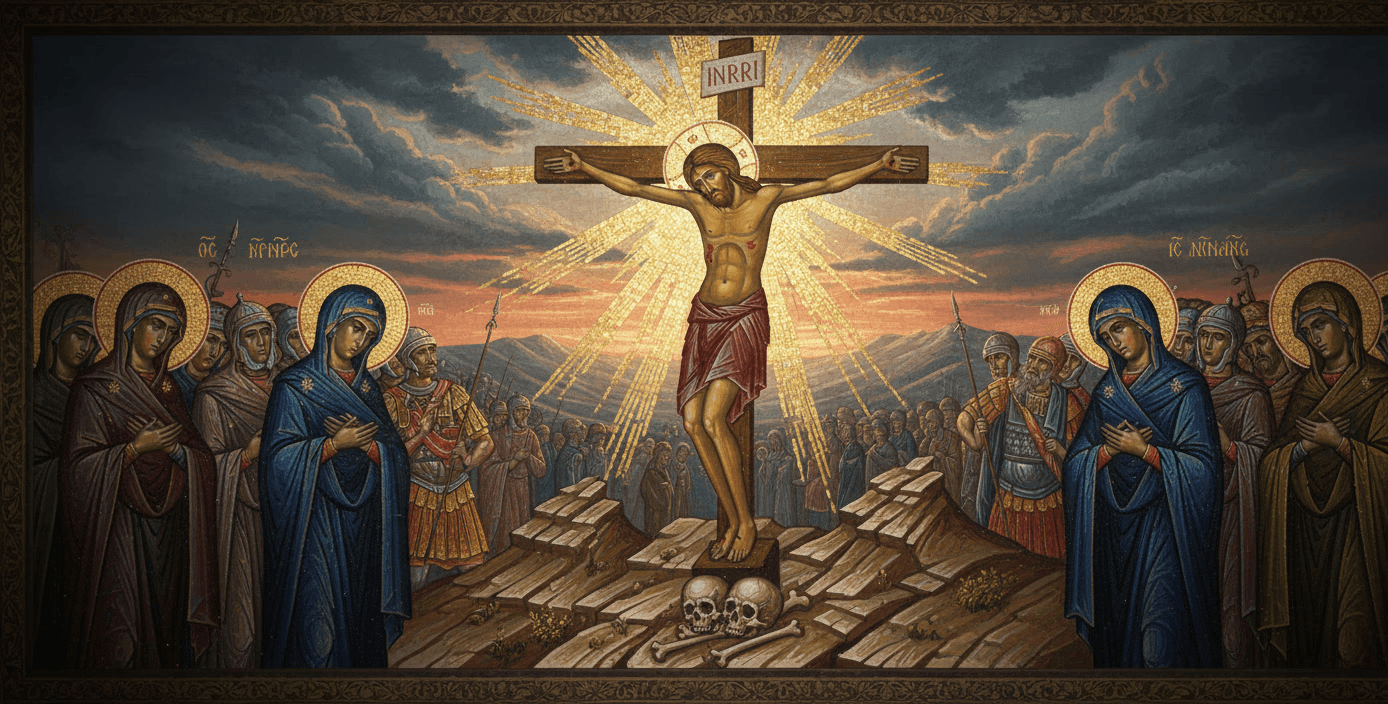
All four Gospels identify the crucifixion site as Golgotha (Matthew 27:33, Mark 15:22, Luke 23:33, John 19:17), a place "called the Place of a Skull." The name comes from the Aramaic gulgulta and the Latin Calvaria (Calvary). Two sites in Jerusalem are traditionally associated with the crucifixion: the Church of the Holy Sepulchre, venerated since the 4th century and supported by strong historical and archaeological evidence, and the Garden Tomb, identified in the 19th century and popular with Protestant visitors. Most historians and archaeologists favour the Church of the Holy Sepulchre as the more historically credible location.

Of all the questions you can ask about the crucifixion, "where exactly did it happen?" might seem like the least important. The theological weight of what happened there — what it accomplished, who died, what it means — does not depend on a GPS coordinate. And yet the question matters, for the same reason all historical details of the Gospel matter: because this was not mythology. It happened in a specific place, on a specific day, to a specific person. History is the point.
The Gospels name the place. Archaeology has been looking for it for centuries. And the story of what two sites have been competing to be Golgotha is itself worth knowing.
What the Bible Says About the Location
All four Gospel writers name the site consistently. Matthew 27:33 (NKJV): "And when they had come to a place called Golgotha, that is to say, Place of a Skull." Mark 15:22, Luke 23:33, and John 19:17 all confirm the same name. John's account adds a detail that matters for the historical investigation: "Now in the place where He was crucified there was a garden, and in the garden a new tomb in which no one had yet been laid." (John 19:41, NKJV). The tomb was close to the crucifixion site — within the same garden area.
The Gospels also establish what Golgotha was not: it was outside the city walls of Jerusalem (Hebrews 13:12 confirms Jesus "suffered outside the gate"), but close enough to the city that passersby could see what was happening (Matthew 27:39). Crucifixion was always public — a deterrent and a humiliation — so the site would have been on a well-travelled road, visible, and accessible. This narrows the archaeological search considerably.
The name Golgotha — "place of a skull" — has been interpreted in several ways: a rocky outcrop shaped like a skull, a site used for executions where skulls were left, or simply a rounded hillock that resembled a human head in profile. The exact origin of the name is not stated in the Gospels.
The Two Competing Sites
The Church of the Holy Sepulchre
This site, inside what is now the Old City of Jerusalem, has been venerated as the location of both the crucifixion and the burial of Jesus since at least the 4th century. The Emperor Constantine commissioned the first church here around AD 326, after Helena, his mother, identified the site during a pilgrimage to Jerusalem.
The historical evidence for this location is significant. At the time of the crucifixion, the area now covered by the church was outside the city walls — consistent with the Gospel requirement. Archaeological evidence has confirmed a rock-cut tomb at the site dating to the first century, and there is evidence of a significant rocky outcrop that would fit the description of Golgotha. The continuity of veneration from the early Christian community in Jerusalem — who would have had living memory of the events — adds weight to its credibility.
The main objection to this site is psychological rather than historical: it is now deep inside the city, surrounded by buildings, crowded, and looks nothing like what most people imagine when they picture the crucifixion. But first-century Jerusalem's walls ran differently from the current Old City walls, and what is now inside was, in AD 30-33, demonstrably outside.
The Garden Tomb
The Garden Tomb, located north of Damascus Gate, was identified in 1883 by General Charles Gordon as a possible alternative site. It features a rock face that some interpret as skull-shaped, a garden, and a nearby tomb cut from the rock. It became popular particularly among Protestant visitors who found the peace of the garden more conducive to reflection than the busy, ornate Church of the Holy Sepulchre.
However, the archaeological evidence for the Garden Tomb is weaker. The tomb at the site has been dated to the Iron Age — significantly earlier than the first century. Most archaeologists do not consider it a credible candidate for the burial site of Jesus, though it remains a meaningful place of reflection for many pilgrims. Its identification with Golgotha has more to do with 19th-century sensibility than with historical evidence.
What the Location Tells Us
The strongest historical case favours the Church of the Holy Sepulchre. What matters theologically is not which of the two sites is correct but what the location represents: a public execution on a road outside a city gate, witnessed by crowds, designed to humiliate and deter. Crucifixion was the Roman Empire's most degrading form of capital punishment — reserved for the lowest of criminals, slaves, and enemies of the state.
Hebrews 13:12-13 (NKJV) draws a deliberate theological point from the location: "Therefore Jesus also, that He might sanctify the people with His own blood, suffered outside the gate. Therefore let us go forth to Him, outside the camp, bearing His reproach." Outside the gate — where the unclean went, where the rejected were sent. The location was not incidental. It was where Jesus chose to be found by the people that the system had placed outside.
The Site and the Event
Whether you stand at the Church of the Holy Sepulchre or the Garden Tomb, what happened at Golgotha is the same. A man who had healed the sick, raised the dead, and spoken with authority that left the religious establishment furious — was handed over, stripped, nailed to a cross, and left to die in public view. Rome's most efficient method of execution, applied to someone who had done nothing it could credibly charge.
1 Corinthians 15:3-4 (NKJV) gives the early church's summary: "Christ died for our sins according to the Scriptures, and... He was buried, and... He rose again the third day according to the Scriptures." The place is real. The death was real. And according to the same witnesses, what happened three days later was real too. The location of Golgotha matters because the event that happened there was not symbolic. It was historical. And historical events happen somewhere.
FAQS
Where was Jesus crucified?
What does Golgotha mean?
Is the Church of the Holy Sepulchre the real site of the crucifixion?
What is the Garden Tomb?
Why did the crucifixion happen outside Jerusalem's walls?
Author
Shafraz Jeal
Shafraz Jeal is the founder of By Design Ministry, created to help people discover Jesus, understand the Bible, and grow in faith. After encountering Christ in 2016, his life was radically changed, and that journey continues to shape everything he shares.
You may also like these
Related Post