Be Still and Know That I Am God
Be still and know that I am God" comes from Psalm 46:10 (NKJV). The Hebrew word translated "be still" is raphah — meaning to let go, to cease striving, to release your grip. It is not a call to silence or meditation. It is God's declaration of sovereignty in the middle of crisis, commanding His people to stop fighting what He is already governing. The verse appears in a psalm written against the backdrop of earthquakes, floods, and collapsing nations.

Author
Read Time
Updated
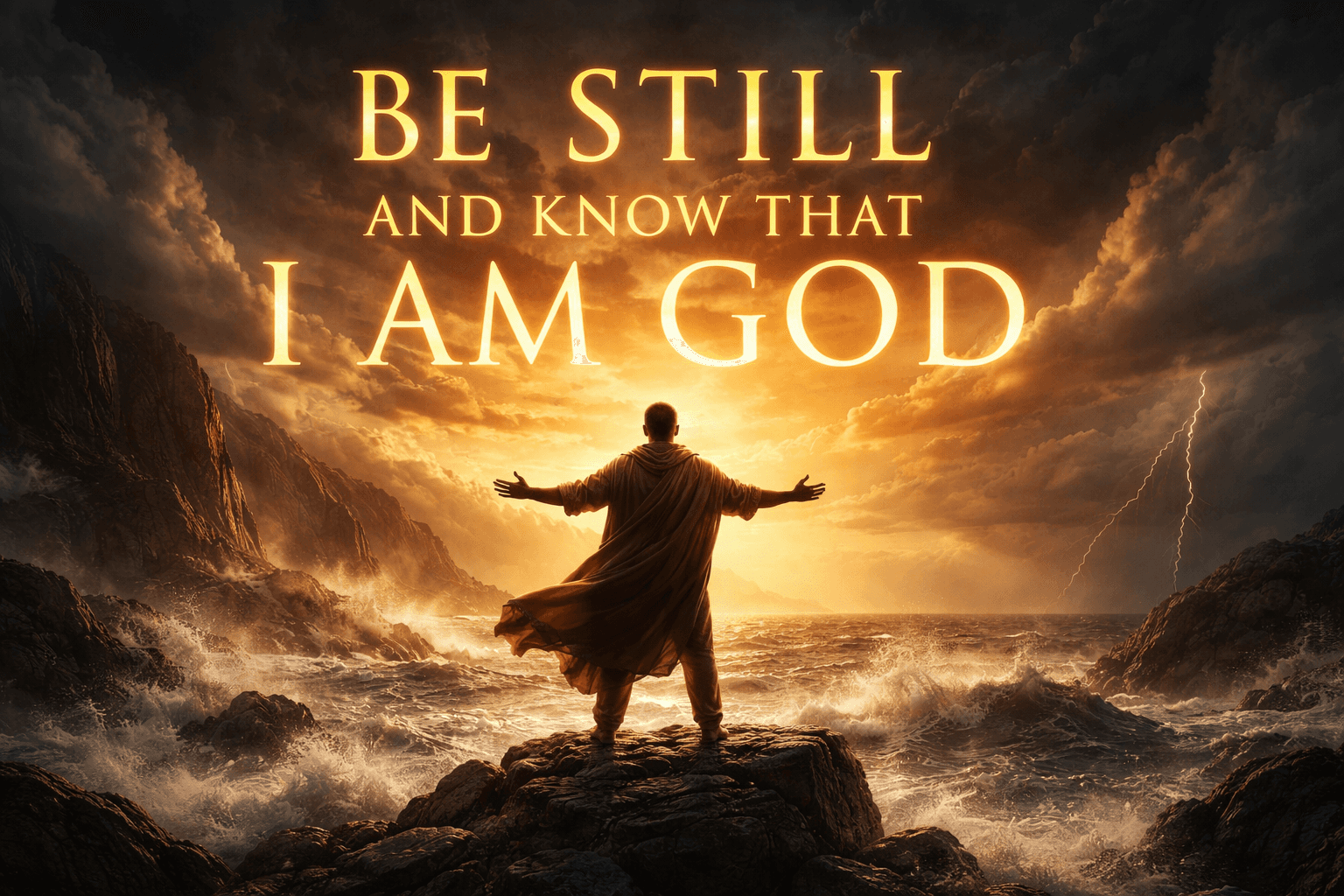
There are moments when everything breaks at once. The situation you can't fix. The diagnosis that came back wrong. The relationship that collapsed without warning. And someone, meaning well, quotes you this verse.
Most of the time it lands like a suggestion to calm down. But when you go back to where it actually comes from — the middle of Psalm 46, which opens with earthquakes and nations falling — you realise it's something else entirely. It's not advice. It's God speaking.
The Psalm Nobody Reads the Context Of
Psalm 46:10 doesn't sit in a peaceful garden. It sits in a psalm that opens like this:
"God is our refuge and strength, a very present help in trouble. Therefore we will not fear, even though the earth be removed, and though the mountains be carried into the midst of the sea; though its waters roar and be troubled, though the mountains shake with its swelling." (Psalm 46:1-3, NKJV)
That's not metaphor. That's a full-scale geological catastrophe. Mountains falling into the ocean. The earth literally being removed. And then, in the middle of all of that, God speaks:
"Be still, and know that I am God." (Psalm 46:10, NKJV)
Context changes everything. This verse isn't telling you to find a quiet moment. It's being spoken into chaos. And that makes it far more powerful than most people realise.
What "Be Still" Actually Means in Hebrew
The Hebrew word behind "be still" is raphah. It means to let go. To release your grip. To stop striving against something.
In Exodus 14:14, when Israel stood trapped at the Red Sea with Pharaoh's army behind them, Moses says: "The Lord will fight for you, and you shall hold your peace." The same idea. Stop your frantic effort to solve what only God can solve.
This is not a call to emotional numbness or spiritual passivity. It's a call to stop wrestling for control of a situation that was never in your hands in the first place. Raphah is surrender — but it's surrender to someone stronger, not abandonment to chaos.
What "Know That I Am God" Is Actually Saying
The second half of the verse is often treated as a gentle reminder. It's not. In Hebrew, "know" — yada — means intimate, experiential knowledge. Not information. Recognition.
God isn't saying: remember that I exist. He's saying: in this moment, in the shaking, in the chaos you cannot control — know who I am. Let that recognition be what anchors you.
What He's claiming to be in this psalm is specific. Not just powerful in the abstract. He is our refuge. He is present — "a very present help" (v.1). He is the one who makes wars cease (v.9). He's not watching from a distance. He's already in the situation you're trying to manage alone.
Why This Hits Differently When You're Anxious
Anxiety does a particular thing: it tells you that you are responsible for outcomes you can't control. That if you think hard enough, worry thoroughly enough, prepare for every possibility — maybe you can stop the worst from happening.
Psalm 46:10 cuts right through that. Not by dismissing the fear. Not by promising nothing hard will happen. But by redirecting your attention from the problem to the Person who governs it.
Proverbs 3:5-6 (NKJV): "Trust in the Lord with all your heart, and lean not on your own understanding; in all your ways acknowledge Him, and He shall direct your paths." The instruction isn't to understand the situation better. It's to stop leaning on your own understanding.
Isaiah 41:10 (NKJV): "Fear not, for I am with you; be not dismayed, for I am your God." The comfort isn't the removal of the hard thing. It's the presence of God inside it.
What This Looks Like on a Tuesday
Being still before God isn't a spiritual discipline reserved for people who have quiet lives. It's a decision — in the middle of the noise, the deadline, the diagnosis, the argument — to stop treating God as a last resort and start treating Him as what He actually is: the one already holding the situation together.
You don't have to feel calm to be still. You just have to let go of the thing you've been gripping. Bring it to Him in prayer (Philippians 4:6-7). Name the specific fear. Then leave it there rather than picking it back up on the way out.
That's what this verse is asking. Not serenity. Just surrender to the right Person.
FAQS
What does "be still and know that I am God" mean?
Where does "be still and know that I am God" come from?
What does "be still" mean in Hebrew?
Is "be still and know that I am God" a promise or a command?
How do you be still before God when anxiety is overwhelming?
Author
Shafraz Jeal
Shafraz Jeal is the founder of By Design Ministry, created to help people discover Jesus, understand the Bible, and grow in faith. After encountering Christ in 2016, his life was radically changed, and that journey continues to shape everything he shares.
You may also like these
Related Post