How to Trust in God When It's Genuinely Hard
Trusting God, according to the Bible, is not the absence of doubt or fear but a deliberate choice to rely on God's character and promises in the face of uncertainty. Proverbs 3:5-6 (NKJV) instructs believers to "trust in the Lord with all your heart, and lean not on your own understanding." Biblical trust involves active surrender — bringing specific fears to God, choosing to believe His word over the current evidence, and continuing to act in obedience even when circumstances have not yet changed.

Author
Read Time
Updated
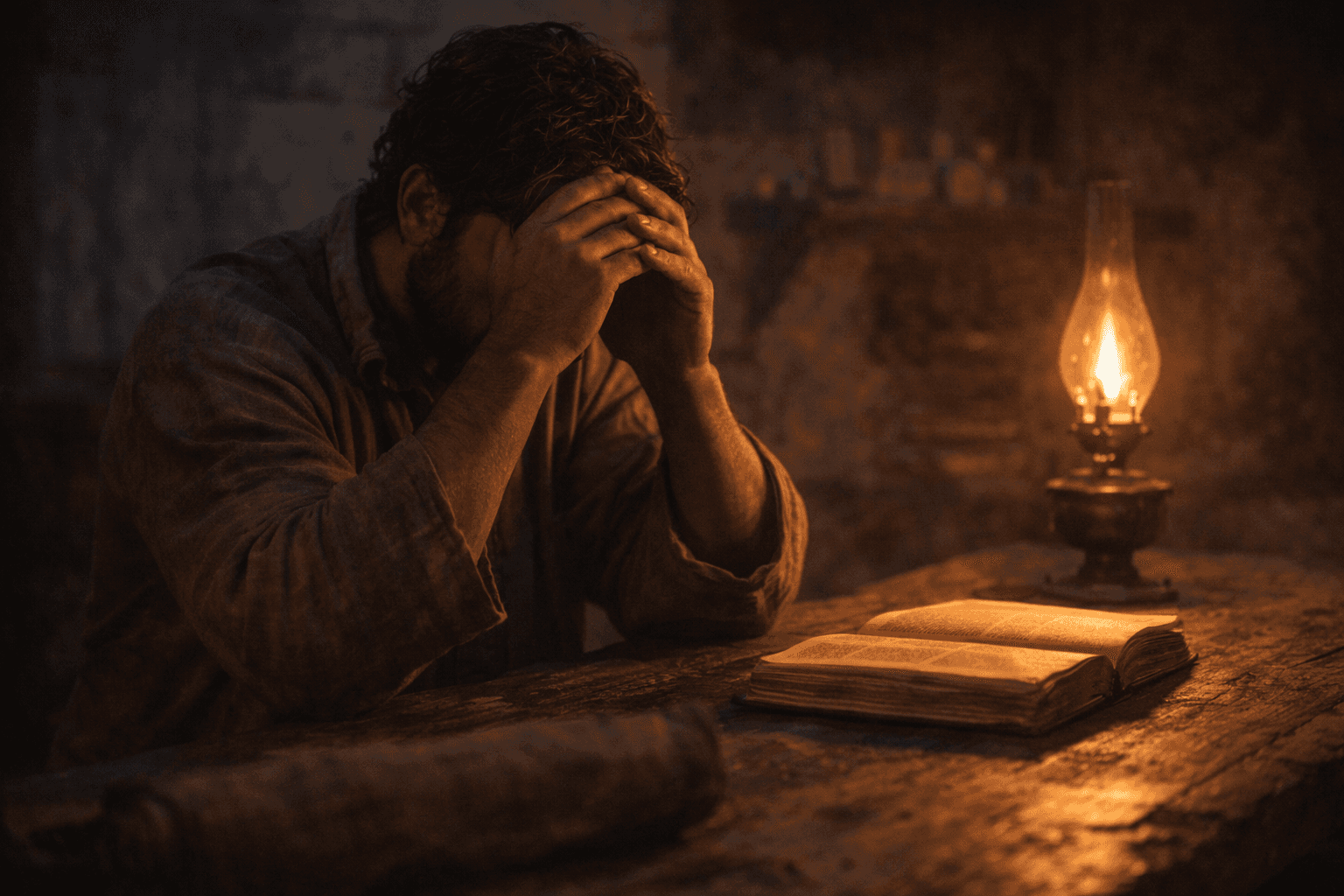
Here's the thing nobody says at the start: trusting God is not a feeling. It's not the warm certainty that everything is going to be fine. It's not the absence of fear or the removal of doubt. If it were, the Bible wouldn't need to tell us to do it. You don't instruct people to do something that comes naturally.
The instruction to trust God appears across Scripture in moments of genuine danger, genuine loss, and genuine uncertainty — which tells you exactly when it was meant to be applied. Not in the easy seasons. In the ones where the situation hasn't changed and the prayer hasn't been answered and you're still standing in the middle of it.
What the Bible Means by Trust
The Hebrew word most often translated "trust" in the Old Testament is batach — meaning to lean on, to have confidence in, to place the full weight of yourself on something. It's the image of leaning your full body weight against a wall. Not sitting near it. Not admiring it. Putting your weight on it and letting it hold you.
Proverbs 3:5-6 (NKJV): "Trust in the Lord with all your heart, and lean not on your own understanding; in all your ways acknowledge Him, and He shall direct your paths."
Two instructions and a promise. Trust with all your heart — not intellectually acknowledging God while actually relying on your own analysis. Lean not on your own understanding — which is the hard part, because your own understanding is what you have access to when the situation is bad. And then the promise: He will direct your paths. Not clarify them. Not explain them. Direct them — which implies He's already active in them, regardless of whether you can see it yet.
Psalm 56:3-4 (NKJV) is one of the most honest statements of trust in the entire Bible: "Whenever I am afraid, I will trust in You. In God I will praise His word, in God I have put my trust; I will not fear. What can flesh do to me?" David is not saying he'll trust when he isn't afraid. He's saying he'll trust specifically when he is afraid. Fear and trust are not mutually exclusive in Scripture. Fear is the moment trust becomes necessary.
Why Trusting God Is Hard — and Why That's Honest
There are specific things that make trusting God genuinely difficult — and they're worth naming rather than glossing over with spiritual language.
The first is unanswered prayer. When you've brought the same situation to God repeatedly and nothing has visibly changed, the instinct to take control back is powerful. The silence doesn't feel like trust is working. It feels like proof that a different approach is needed.
The second is past disappointment. If you trusted God in a previous situation and the outcome was still painful, trust in a new situation requires you to hold two things simultaneously: what happened before, and a God who says His purposes are good even through things that felt like loss. That tension is real and the Bible doesn't ask you to pretend it isn't.
Lamentations 3 was written in the immediate aftermath of Jerusalem's destruction — as catastrophic an outcome as the people of Israel had ever experienced. And in the middle of it, the writer says: "The Lord's mercies are new every morning; great is Your faithfulness." (Lamentations 3:23, NKJV). Not because the circumstances had improved. Because of what he knew about the character of God — which the circumstances hadn't changed. Trust, in that passage, is not an emotion. It's a conclusion drawn from theology when the evidence on the ground is going the other way.
What Trust Looks Like in Practice
Psalm 37:3-5 (NKJV) lays out the practical shape of trust with unusual clarity: "Trust in the Lord, and do good; dwell in the land, and feed on His faithfulness. Delight yourself also in the Lord, and He shall give you the desires of your heart. Commit your way to the Lord, trust also in Him, and He shall bring it to pass."
Trust in the Lord — and do good. The two things go together. Trust is not passive waiting. It is continuing to act in obedience — to do what you know is right — while releasing the outcome to God. The person who trusts God is not sitting still doing nothing. They are doing what they know to do, and releasing what they cannot control.
Commit your way to the Lord. The Hebrew image here is rolling a burden off your shoulders onto someone else. You had it. You've been carrying it. Now you are deliberately rolling it off and letting someone stronger hold it. That's a decision, made in a specific moment, that often needs to be made again the next day when the burden has somehow found its way back onto your shoulders.
Isaiah 26:3 (NKJV): "You will keep him in perfect peace, whose mind is stayed on You, because he trusts in You." The word "stayed" means fixed, set, leaning on. The peace that Scripture promises is not the product of a resolved situation. It is the product of a mind fixed on God in the middle of an unresolved one.
It's Built, Not Discovered
Trust in God is not something you find one day fully formed. It's something built — through specific moments of bringing specific fears to God, through watching Him work in ways you didn't predict, through choosing His word over your own analysis often enough that the habit forms.
Jeremiah 17:7-8 (NKJV) compares the person who trusts God to a tree planted by water — not anxious in the year of drought, still bearing fruit because its roots go somewhere the surface conditions can't touch. The roots don't grow in good seasons. They grow when the tree has to reach for water that isn't immediately visible.
The hard seasons are not interruptions to the process of learning to trust. They are the process.
FAQS
How do you trust God when things are difficult?
What does the Bible say about trusting God?
Can you trust God and still feel afraid?
What does "lean not on your own understanding" mean?
How do you build trust in God over time?
Author
Shafraz Jeal
Shafraz Jeal is the founder of By Design Ministry, created to help people discover Jesus, understand the Bible, and grow in faith. After encountering Christ in 2016, his life was radically changed, and that journey continues to shape everything he shares.
You may also like these
Related Post