Jehovah Jireh: What the Name Actually Means
Jehovah Jireh is a Hebrew name for God meaning "the Lord will provide" or "the Lord who sees." It comes from Genesis 22:14, where Abraham names a mountain after God provided a ram as a substitute sacrifice in place of his son Isaac. The Hebrew root ra'ah means to see or to perceive — suggesting that God's provision flows from His seeing the need before it is fully expressed. The name has one occurrence in Scripture but carries theological weight that runs through the entire Bible.

Author
Read Time
Updated
Most people know "Jehovah Jireh" from a worship song. Which means most people know the name without knowing the story — and the story is the entire point.
It comes from Genesis 22. And Genesis 22 is not a comfortable passage. It is God asking Abraham to do the thing no parent should ever have to consider, Abraham walking toward it for three days in silence, and a moment on a mountain that became the hinge on which the whole of biblical theology turns.
Three Days of Not Knowing
God tells Abraham to take Isaac — his son, the son of the promise, the one he waited 25 years for — to a mountain in the land of Moriah and offer him there as a burnt offering (Genesis 22:2).
The text doesn't give us Abraham's inner state. It just says he rose early in the morning, saddled his donkey, split the wood, and went. Three days' journey. Three days of walking toward the thing God was asking, with his son beside him, knowing what was waiting at the end of it.
On the third day, Abraham leaves the servants at the bottom and says something that has puzzled readers ever since: "Stay here with the donkey; the lad and I will go yonder and worship, and we will come back to you." (Genesis 22:5, NKJV). We will come back. Hebrews 11:19 tells us Abraham believed God was able to raise Isaac from the dead if necessary. He was walking toward an impossibility trusting that God had a way through it that he couldn't see yet.
Then Isaac asks the question that cuts through everything:
"Look, the fire and the wood, but where is the lamb for a burnt offering?" (Genesis 22:7, NKJV)
And Abraham answers — and this is the name before the name: "My son, God will provide for Himself the lamb for a burnt offering." (Genesis 22:8, NKJV). He said it as a statement of faith. He didn't yet know how true it was about to become.
The Ram in the Thicket
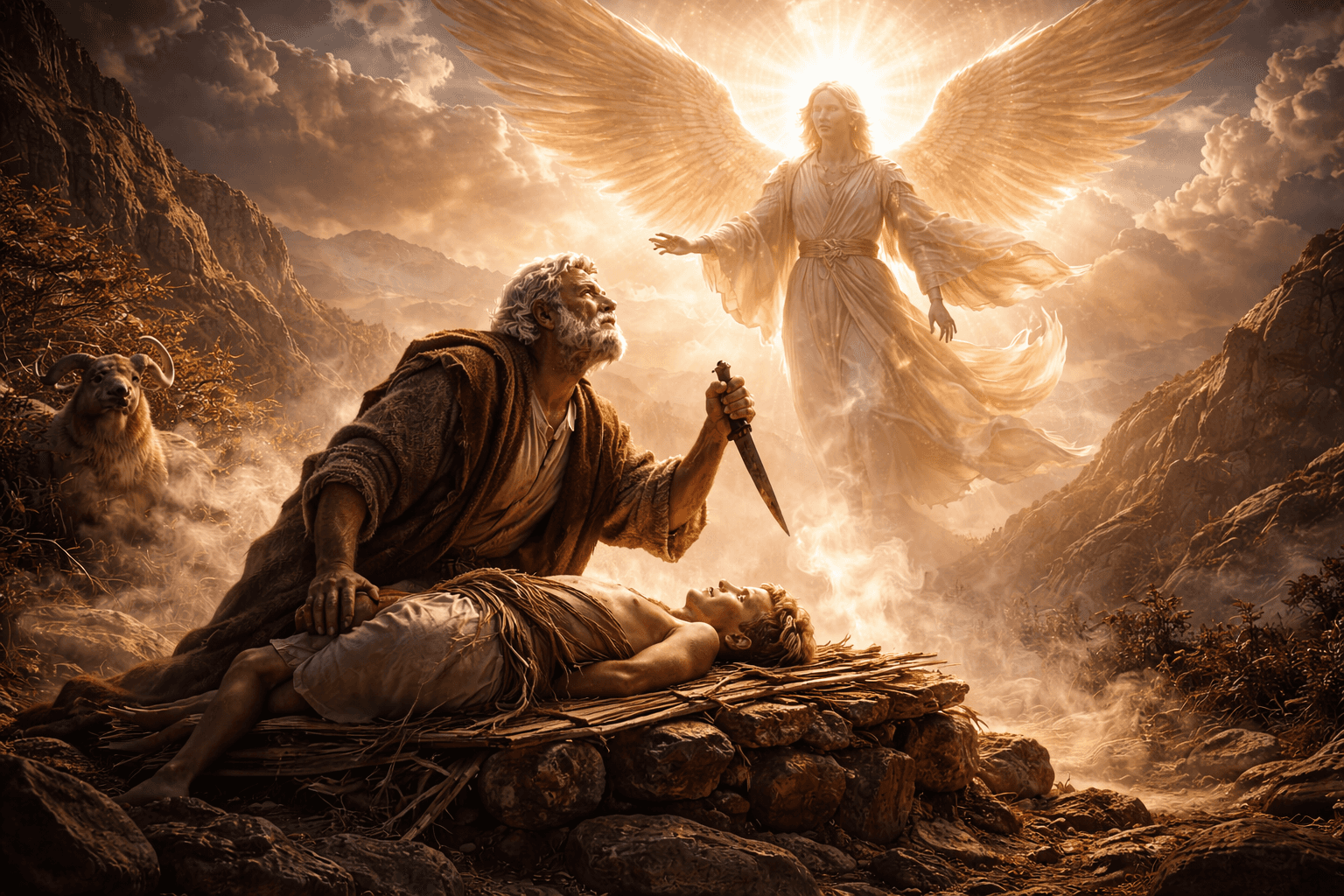
Abraham binds Isaac, places him on the altar, and raises the knife. The angel of the Lord calls out at exactly that moment and stops him. Then:
"Then Abraham lifted his eyes and looked, and there behind him was a ram caught in a thicket by its horns. So Abraham went and took the ram, and offered it up for a burnt offering instead of his son." (Genesis 22:13, NKJV)
Caught in the thicket. Already there. Not summoned in that moment, but present and waiting. And Abraham names the place:
"And Abraham called the name of the place, The-Lord-Will-Provide; as it is said to this day, 'In the Mount of the Lord it shall be provided.'" (Genesis 22:14, NKJV)
Jehovah Jireh. The Lord will provide. Or, in a more literal reading of the Hebrew root ra'ah: the Lord who sees. The provision and the seeing are the same act. God saw the need on that mountain before Abraham climbed it. The ram was already in the thicket.
What Jireh Actually Means in Hebrew
The word jireh comes from ra'ah — a verb that means to see, to perceive, to look upon. When combined with Jehovah, it carries the sense of God seeing the situation and, because He sees it, providing for it. His seeing is not passive observation. It is active attention that results in action.
This is different from the idea of simply asking God for things and hoping He agrees. Jehovah Jireh is the God who sees what you need before you articulate it — in the same way the ram was already in position before Abraham had any idea how this was going to resolve.
The Shadow of Something Bigger
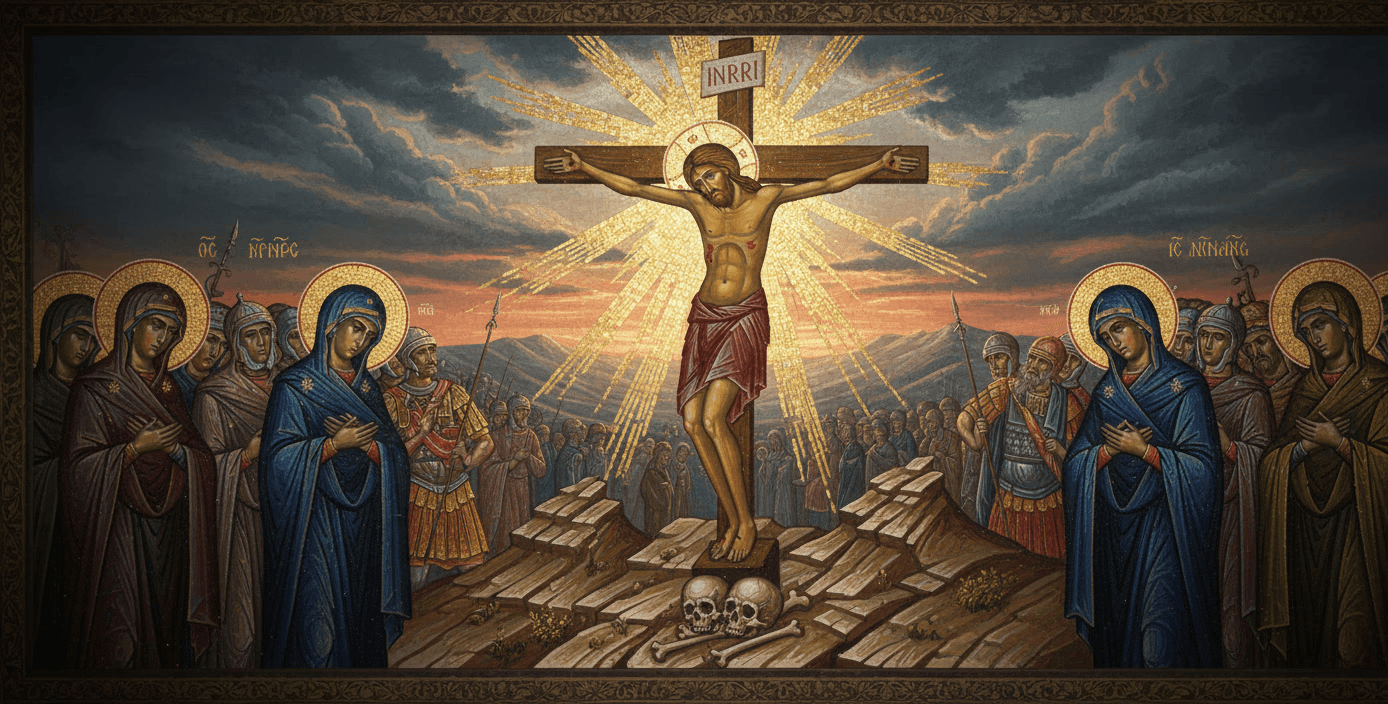
Theologians have noted for centuries that Genesis 22 reads like a shadow of the cross. A father and a son, walking to a place of sacrifice. The son carrying the wood on his back. A substitute provided at the last moment. The mountain in Moriah — the same region as Jerusalem.
Abraham said "God will provide for Himself the lamb." On that day, God provided a ram. But the fuller answer to that statement came centuries later, when God did not withhold His own Son (Romans 8:32) — the Lamb of God who takes away the sin of the world (John 1:29). John 3:16 (NKJV): "For God so loved the world that He gave His only begotten Son." Jehovah Jireh's ultimate provision was not a ram in a thicket. It was a cross on a hill.
What This Name Changes About Prayer
Philippians 4:19 (NKJV): "And my God shall supply all your need according to His riches in glory by Christ Jesus." The God who supplied a ram on Moriah, who supplied His own Son on Calvary, is the same God Paul is writing about here.
Praying to Jehovah Jireh is not a technique for getting what you want. It is addressing God by what He has demonstrated Himself to be — across thousands of years of human need — the One who sees the situation fully and provides from a position of complete knowledge of it. The provision may not look like what you expected. It rarely did for Abraham either. But it arrived. At the moment it was needed. Already waiting in the thicket.
FAQS
What does Jehovah Jireh mean?
Where does Jehovah Jireh appear in the Bible?
What is the difference between Jehovah Jireh and Jehovah Rapha?
What is the story of Jehovah Jireh in the Bible?
How do you pray to Jehovah Jireh?
Author
Shafraz Jeal
Shafraz Jeal is the founder of By Design Ministry, created to help people discover Jesus, understand the Bible, and grow in faith. After encountering Christ in 2016, his life was radically changed, and that journey continues to shape everything he shares.
You may also like these
Related Post