Islam and Christianity: The Key Differences Explained
Islam and Christianity are the world's two largest religions. Both are monotheistic Abrahamic faiths that honour God, take ethics seriously, and believe in a final judgment. Their central differences concern the identity of Jesus, the nature of God, the means of salvation, and the authority of Scripture. The key differences are: (1) God — Islam teaches one God (Allah) with no partners or son; Christianity teaches one God in three persons (Trinity). (2) Jesus — Islam: a great prophet, not divine, not crucified; Christianity: eternal Son of God, crucified for sin, risen from the dead. (3) Salvation — Islam: through submission and God's mercy on the Day of Judgment; Christianity: by grace through faith in Jesus Christ alone. (4) Scripture — Islam: the Quran is God's final and uncorrupted revelation; the Bible has been corrupted; Christianity: the Bible is God's complete and inspired Word. These are not peripheral differences. They concern the most central questions of any religious worldview.
Author | Shafraz Jeal
9
min read
Islam and Christianity are the world's two largest religions. Both are monotheistic Abrahamic faiths that honour God, take ethics seriously, and believe in a final judgment. Their central differences concern the identity of Jesus, the nature of God, the means of salvation, and the authority of Scripture. The key differences are: (1) God — Islam teaches one God (Allah) with no partners or son; Christianity teaches one God in three persons (Trinity). (2) Jesus — Islam: a great prophet, not divine, not crucified; Christianity: eternal Son of God, crucified for sin, risen from the dead. (3) Salvation — Islam: through submission and God's mercy on the Day of Judgment; Christianity: by grace through faith in Jesus Christ alone. (4) Scripture — Islam: the Quran is God's final and uncorrupted revelation; the Bible has been corrupted; Christianity: the Bible is God's complete and inspired Word. These are not peripheral differences. They concern the most central questions of any religious worldview.
Islam and Christianity are the two largest religions on earth — together accounting for over half the world's population. They share more surface-level vocabulary than most people realise: both use the word God, both honour Abraham, Moses, and Jesus, both take the moral life seriously, and both claim to represent the true revelation of the God who made the world.
Which is precisely why the differences matter so much. Shared vocabulary creates the impression of shared belief when the content of that belief is fundamentally different. The most important thing you can do when comparing these two faiths is look past the language at what each tradition is actually claiming — because what they are claiming, at the centre of each, is not compatible.
The Differences That Cannot Be Reconciled
The table above shows where Islam and Christianity diverge across many areas. But not all differences carry the same weight. The following three are the ones that make reconciliation between the two faiths impossible without one of them ceasing to be what it is.
1. The identity of Jesus. This is the central difference. Christianity teaches that Jesus is the eternal Son of God — the second person of the Trinity, who has always existed and who took on human flesh in the incarnation. John 1:1 (NKJV): "In the beginning was the Word, and the Word was with God, and the Word was God." He is not a created being. He is not a prophet. He is the Creator through whom all things were made (Colossians 1:16).
Islam explicitly and firmly rejects this. To say God has a son is shirk — associating partners with God — the most serious sin in Islamic theology. The Quran states: "He begets not, nor is He begotten, and there is none comparable to Him" (Surah 112:3-4). The Islamic Jesus (Isa) is a great and sinless prophet. The Christian Jesus is the eternal God incarnate. These are not two descriptions of the same person. They describe two fundamentally different beings.
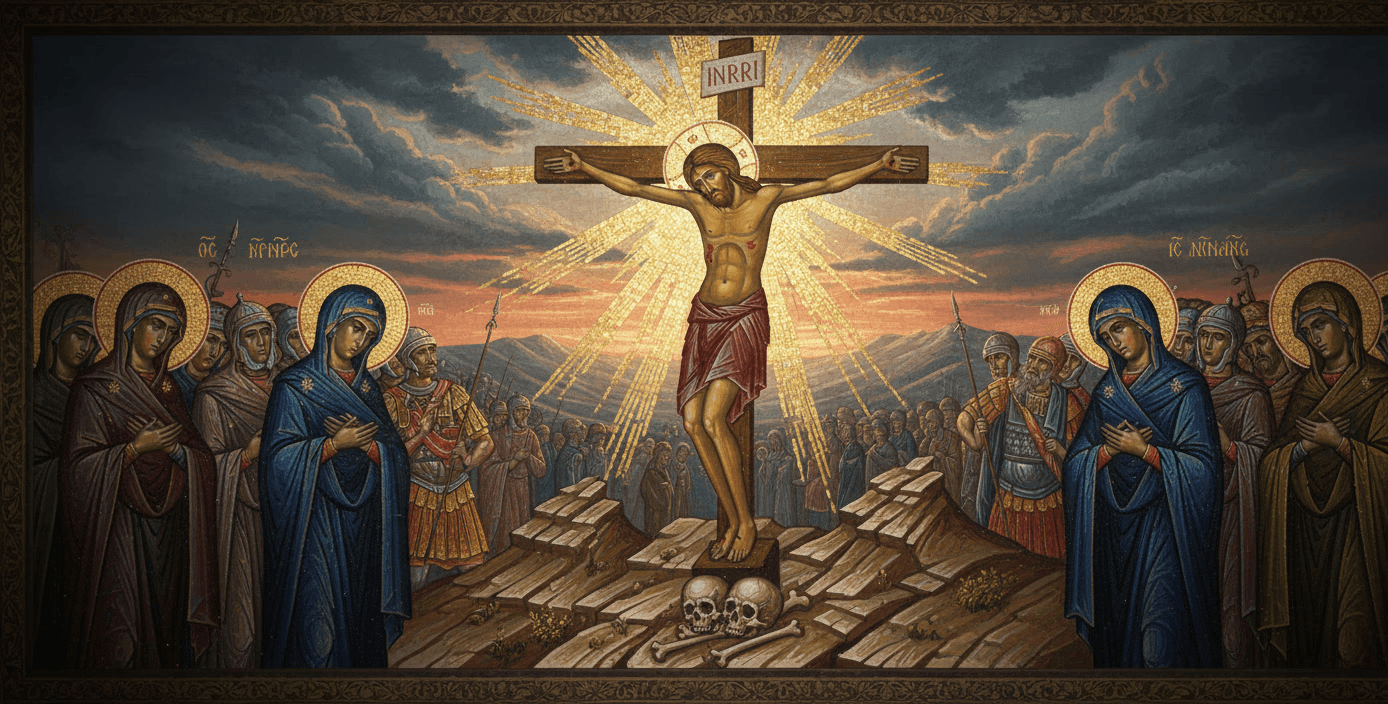
2. The crucifixion. Christianity stands on the historical reality of the crucifixion and resurrection. 1 Corinthians 15:17 (NKJV): "If Christ is not risen, your faith is futile." The cross is the mechanism of salvation — without it there is no atonement, no forgiveness, no Christianity. Islam teaches that Jesus was not crucified — that God would not have allowed His prophet to die in disgrace, and that another person was substituted in His place. Islam and Christianity therefore disagree not only on the theological meaning of the cross but on whether the event occurred. This is a disagreement about history, not interpretation.
3. The means of salvation. In Christianity, salvation is a gift received by grace through faith in Jesus Christ. Ephesians 2:8-9 (NKJV): "By grace you have been saved through faith, and that not of yourselves; it is the gift of God, not of works, lest anyone should boast." In Islam, salvation comes through faithful submission, obedience to the Five Pillars, and God's mercy at the Day of Judgment. There is no mediator, no atoning sacrifice, and no assurance of salvation. The mechanisms are irreconcilable.
What Islam and Christianity Actually Share
Before engaging with a Muslim neighbour, colleague, or friend about the differences, it is worth being clear about the genuine common ground — both as a matter of honesty and as a starting point for real conversation.
Both traditions are monotheistic — they insist there is one God, creator of everything, who is personal, holy, just, and the ultimate authority over human life. Both trace their lineage to Abraham. Both hold that human beings are accountable to God for how they live. Both believe in a final judgment and the reality of an afterlife. Both take ethics and community life seriously.
Both traditions hold Jesus in higher regard than most people realise. Islam teaches that Jesus (Isa) was one of the greatest prophets — born of a virgin, sinless, a miracle-worker, and to be raised at the end of time. The Quran mentions Jesus more times than Muhammad. A Muslim who dismisses Jesus entirely has not read the Quran carefully.
This common ground does not blur the central differences. It simply means that genuine dialogue is possible — and that it should begin from a place of accurate knowledge rather than caricature. Most Muslims in the West are not the extremists of news headlines. They are people with serious convictions about God, morality, and eternal life. They deserve to have the Gospel presented clearly and accurately by people who have taken the trouble to understand what they actually believe.
John 14:6 (NKJV): "I am the way, the truth, and the life. No one comes to the Father except through Me." Islam regards this claim as blasphemy. Christianity regards it as the most important truth in history. There is no version of those two positions that can be reconciled without one ceasing to be what it is. That is not a reason for hostility. It is a reason for clarity — and for honest, respectful engagement that takes both the differences and the person seriously.
The Question Both Faiths Centre On
Every major difference between Islam and Christianity flows from one question: who is Jesus? If He is a prophet — even the greatest of prophets — then Islam's framework is coherent. Prophets point to God. They do not die for sin. They do not rise from the dead as evidence of divinity. They do not claim to be I AM.
If He is the eternal Son of God, who died for sin and rose from the dead — then Christianity's framework is coherent. Salvation by grace through faith makes sense if Christ bore the penalty humanity owed. The cross makes sense if God Himself paid what justice required. The resurrection makes sense as the vindication of the one who claimed to be God.
Both Islam and Christianity understand that the question cannot be avoided. They have maintained clear disagreement on it for fourteen centuries. For anyone investigating the question honestly — Muslim, Christian, or neither — the starting point is to look at what Jesus Himself said, what the earliest witnesses recorded, and what the historical evidence supports. That is an investigation worth undertaking. The answer to it is the most consequential thing you will ever decide.
FAQs
What is the main difference between Islam and Christianity?
Do Muslims believe in Jesus?
Do Islam and Christianity worship the same God?
What does Islam say about salvation compared to Christianity?
What does Islam say about the Bible?

Author
Shafraz Jeal
Shafraz Jeal is the founder of By Design Ministry, created to help people discover Jesus, understand the Bible, and grow in faith. After encountering Christ in 2016, his life was radically changed, and that journey continues to shape everything he shares.
You may also like these
Related Post