Why Does God Allow Suffering?
The Bible never promises that following God means freedom from suffering. What it does offer is a God who enters suffering rather than standing outside it — who, in the person of Jesus Christ, experienced abandonment, grief, physical agony, and death. The biblical answer to why God allows suffering is not a clean philosophical formula. It involves the reality of free will, the consequences of a fallen world, the formation of character through difficulty, and above all, the cross: God's own response to evil, taken on Himself. Key passages include Romans 8:18-28, 2 Corinthians 1:3-5, James 1:2-4, Romans 5:3-5, Psalm 22, and John 11:35.
Author | Shafraz Jeal
9
min read
The Bible never promises that following God means freedom from suffering. What it does offer is a God who enters suffering rather than standing outside it — who, in the person of Jesus Christ, experienced abandonment, grief, physical agony, and death. The biblical answer to why God allows suffering is not a clean philosophical formula. It involves the reality of free will, the consequences of a fallen world, the formation of character through difficulty, and above all, the cross: God's own response to evil, taken on Himself. Key passages include Romans 8:18-28, 2 Corinthians 1:3-5, James 1:2-4, Romans 5:3-5, Psalm 22, and John 11:35.
This is the question that has ended more people's faith than almost any other. Not a gentle intellectual puzzle but an urgent, personal demand: if God is genuinely good, and genuinely powerful enough to stop suffering, why doesn't He? Why the cancer diagnosis? Why the child who didn't make it? Why the violence, the injustice, the decades of unanswered prayer?
Christianity doesn't offer a quick answer to this question. Anyone who tells you they have a clean formula for it is either not taking the question seriously or not taking the suffering seriously. What the Bible does offer is considerably more honest — and, in the end, considerably more helpful — than most of the easy answers that circulate inside and outside of churches.
The Question the Bible Itself Asks
Before we look at any answers, it is worth noticing that the Bible does not treat this question as something outsiders invented to embarrass Christians. The question is in the Bible. Repeatedly.
Psalm 22:1 opens with words Jesus later quoted from the cross: "My God, my God, why have You forsaken Me? Why are You so far from helping Me, and from the words of My groaning?" The Psalms contain more raw expressions of confusion, grief, and protest at God than most church services allow. Job spends the majority of one of the longest books in the Old Testament demanding an explanation from God for his suffering — and God does not rebuke him for asking. He rebukes the friends who supplied the easy answers.
Lamentations is an entire book of Scripture written in grief over destruction and loss. Habakkuk opens with: "O Lord, how long shall I cry, and You will not hear? Even cry out to You, 'Violence!' and You will not save." (Habakkuk 1:2, NKJV). The prophet is not gentle about it. And God does not dismiss him.
The biblical faith is not one that pretends suffering doesn't exist, or that God's people are exempt from it, or that it is always easily explained. It is a faith that holds both the reality of suffering and the goodness of God simultaneously — with enormous difficulty and enormous honesty.
The Problem Stated Fairly
The philosophical version of the problem is worth stating clearly, because Christians who have not engaged with it are not equipped to answer it. The argument goes like this: If God is all-powerful, He could prevent suffering. If God is all-good, He would want to prevent suffering. Suffering exists. Therefore an all-powerful, all-good God does not exist.
The argument is internally coherent, which is why it has weight. The Christian response is not to deny any of the premises — God is powerful, God is good, suffering is real. The response is to argue that these premises are not as simple as they appear. God being all-powerful does not mean He does everything that is physically possible. It means there is no external constraint on what He can do. But a God who has created beings with genuine freedom — real capacity to choose — has, by that decision, created a world where choices have real consequences, including devastating ones.
C.S. Lewis made the point that "a world of automata — of creatures that worked like machines — would hardly be worth creating." The love that God wants from His creatures, and the love that human beings recognise as most valuable in each other, is love that is chosen. That requires freedom. And freedom, genuinely given, includes the freedom to cause enormous harm.
What the Bible Actually Says About Why Suffering Happens
Scripture identifies several categories of suffering without collapsing them all into one formula. This is important — one of the most damaging pastoral errors is applying the wrong category to someone's specific suffering.
Suffering that results from human freedom and the fall. Genesis 3 describes the entry of sin into the world through human choice — and with it, the entry of death, disease, and the painful disruption of relationships with God, each other, and creation. Romans 5:12 (NKJV): "Through one man sin entered the world, and death through sin, and thus death spread to all men." Much of what we experience as suffering is the consequence of living in a world that is not operating according to its original design — a world that has been broken by accumulated human choice over thousands of years. This is not the same as saying any individual's suffering is punishment for their specific sin. It is the condition of the world they are born into.
Suffering that produces character. Romans 5:3-5 (NKJV): "We also glory in tribulations, knowing that tribulation produces perseverance; and perseverance, character; and character, hope." James 1:2-4 (NKJV) makes the same point: "the testing of your faith produces patience... that you may be perfect and complete, lacking nothing." The qualities that human beings most admire — resilience, compassion, genuine empathy, faith tested and found solid — are not typically produced in comfort. They are forged under pressure. God does not enjoy suffering. But He uses it.
Suffering that God works through for purposes we cannot yet see. Genesis 50:20 (NKJV) is Joseph speaking to the brothers who sold him into slavery: "But as for you, you meant evil against me; but God meant it for good." The evil was real. The intent was malicious. God's working through it was also real. Romans 8:28 — "all things work together for good" — is not a promise that everything is good, or that it will feel good, or that it will be explained to you in this life. It is a promise that God is at work in everything, including the things that are not good, purposefully toward the good He has planned.
Suffering that remains genuinely mysterious. Job's suffering is never explained to him. God does not appear at the end of the book and say: "Here is the reason, Job. It all makes sense now." He appears and says, effectively: I am God, and you are not, and there is a great deal about how the universe works that is beyond your current capacity to understand. Job is not rebuked for asking. He is not given an answer. He is given an encounter with God — and that, the book suggests, is enough.
The Answer That Changes Everything: The Cross
Every other world religion or philosophical system faces the problem of suffering from a position of distance. God observes suffering from outside it, or is indifferent to it, or is himself incapable of preventing it, or suffering is an illusion to be transcended. Christianity makes a claim that no other tradition makes: God entered suffering Himself.
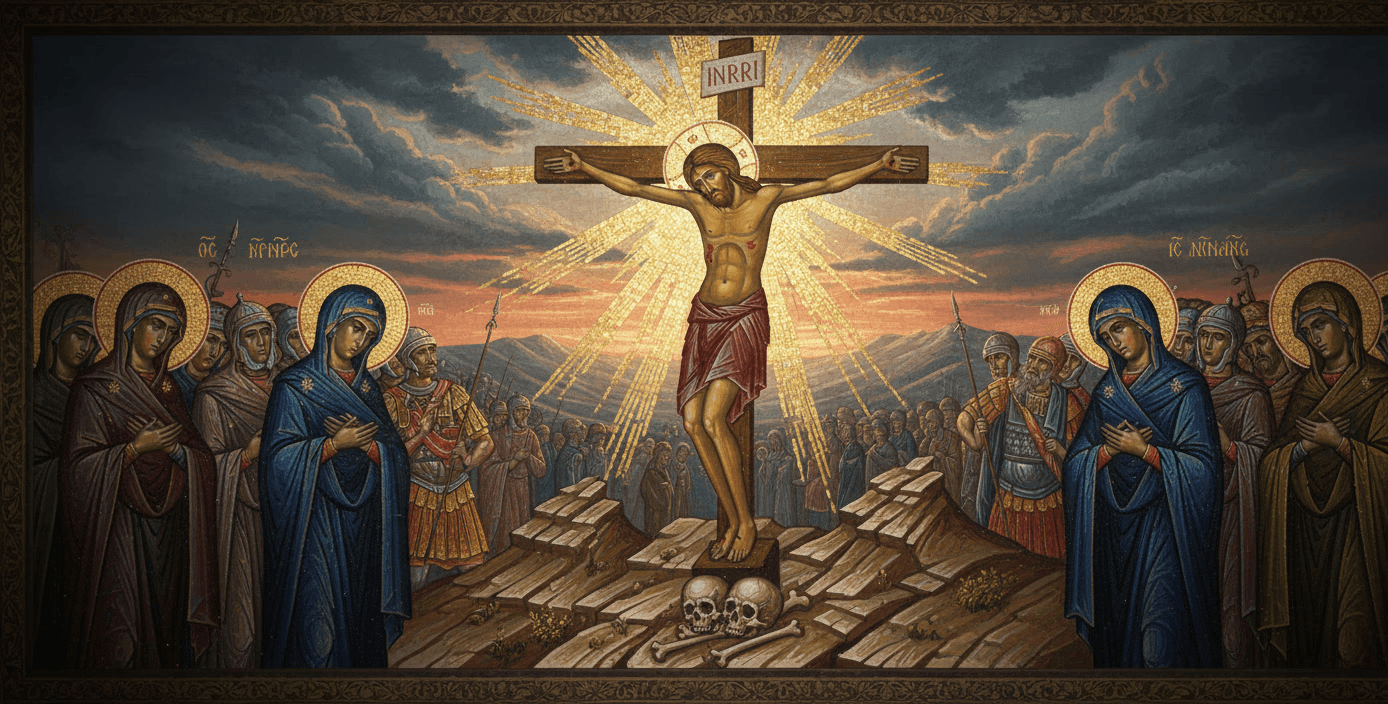
Hebrews 2:17-18 (NKJV): "Therefore, in all things He had to be made like His brethren, that He might be a merciful and faithful High Priest in things pertaining to God, to make propitiation for the sins of the people. For in that He Himself has suffered, being tempted, He is able to aid those who are tempted." Jesus was not a divine being playing at humanity. He was fully human — hungry, tired, grieved, abandoned. He experienced the death of a close friend and wept (John 11:35). He prayed in a garden with sweat like drops of blood, asking if there was another way. He was tortured and executed. He cried from the cross: "My God, my God, why have You forsaken Me?"
This changes the question. The question is not: "Why does God sit up in heaven and watch us suffer?" The question, in the light of the cross, is: "Why did God willingly enter the suffering of His creatures and take the worst of it on Himself?" The answer the New Testament gives is love — a love that would not watch from a distance but descended into the centre of it.
2 Corinthians 1:3-5 (NKJV): "Blessed be the God and Father of our Lord Jesus Christ, the Father of mercies and God of all comfort, who comforts us in all our tribulation, that we may be able to comfort those who are in any trouble, with the comfort with which we ourselves are comforted by God. For as the sufferings of Christ abound in us, so our consolation also abounds through Christ."
The comfort the Bible offers to people who are suffering is not primarily explanation. It is presence. A God who has been there. Who knows what it costs. Who does not look down from a comfortable heaven and say "trust Me" — but who descended into the darkness of death itself and came out the other side. That is what the resurrection means in the context of suffering. Not that suffering won't happen, but that it doesn't have the final word. God's response to evil was not to prevent it — but to defeat it. And the defeat is guaranteed, even when we are still in the middle of the battle.
What to Do With the Question When It's Personal
If you are asking this question right now not as a philosophical puzzle but because you are in the middle of something, a few things are worth saying.
You are not required to have it resolved before you come to God with it. The Psalms are full of people who brought their protest to God — angrily, honestly, without polishing it first. That is not a failure of faith. It is the shape of honest relationship with a God big enough to handle your questions.
Revelation 21:4 (NKJV) gives the trajectory: "And God will wipe away every tear from their eyes; there shall be no more death, nor sorrow, nor crying. There shall be no more pain, for the former things have passed away." The suffering is not permanent. It is temporary in the framework of eternity. Paul calls his own considerable suffering "light and momentary" compared to the weight of eternal glory (2 Corinthians 4:17). That is not denial — it is proportion. The account is not settled yet. But it will be.
The question "why does God allow suffering?" may not get a clean answer in this life. But the person asking it has a God who has already answered a different question — not "why?" but "what will you do about it?" — by descending into the suffering of His own creation and absorbing the worst of it at the cross. That is the God you are asking. And He is not unfamiliar with the territory you are in.
FAQs
Why does God allow suffering if He is good?
Why would a good God allow innocent people to suffer?
Does God cause suffering or just allow it?
What does the Bible say about suffering and God's plan?
How do you keep faith in God when you're suffering?

Author
Shafraz Jeal
Shafraz Jeal is the founder of By Design Ministry, created to help people discover Jesus, understand the Bible, and grow in faith. After encountering Christ in 2016, his life was radically changed, and that journey continues to shape everything he shares.
You may also like these
Related Post