What Is Grace in the Bible?
Grace in the Bible is God's unmerited favour — His freely given goodness toward those who have no right to receive it. The Hebrew hen means favour freely given; the Greek charis means gift, beauty, gratitude. In the Old Testament, grace appears in God's covenant faithfulness to Israel, His patience with human failure, and His choosing of an undeserving people. In the New Testament, grace reaches its fullest expression in the person and work of Jesus Christ — described in Ephesians 2:8-9 as the means by which sinners are saved ("by grace you have been saved through faith... it is the gift of God"). Grace is the theological thread running through the entire Bible from the first act of undeserved kindness in Genesis to the final invitation in Revelation.
Author | Shafraz Jeal
12
min read
Grace in the Bible is God's unmerited favour — His freely given goodness toward those who have no right to receive it. The Hebrew hen means favour freely given; the Greek charis means gift, beauty, gratitude. In the Old Testament, grace appears in God's covenant faithfulness to Israel, His patience with human failure, and His choosing of an undeserving people. In the New Testament, grace reaches its fullest expression in the person and work of Jesus Christ — described in Ephesians 2:8-9 as the means by which sinners are saved ("by grace you have been saved through faith... it is the gift of God"). Grace is the theological thread running through the entire Bible from the first act of undeserved kindness in Genesis to the final invitation in Revelation.
Every major world religion has a version of the same core arrangement: do enough of the right things, and you earn divine favour. Live well enough, submit faithfully enough, achieve sufficient spiritual progress — and the divine responds accordingly. Cause and effect. Performance and reward.
Christianity makes a different claim. Not that performance doesn't matter — it does. But that the favour of God is not the prize at the end of adequate performance. It is the starting point. It arrives before the performance, extends despite the failure, and produces the transformation it could have demanded instead. That is grace. And it is the most distinctive thing about the Christian faith.
The word appears over 150 times in the New Testament alone. Understanding it — what it actually means, where it comes from, and what it does — is not optional for anyone who wants to understand what Christianity is actually claiming.
The Word and Its Roots
The English word "grace" translates two primary biblical words: the Hebrew hen and the Greek charis.
Hen (חֵן) in Hebrew carries the sense of favour shown to someone by someone in a position of greater power — unearned, undeserved, freely given. When the Bible says someone "found favour in the eyes of" God or a king, the word is hen. Noah found grace in God's eyes (Genesis 6:8). Moses found grace in God's eyes (Exodus 33:13). Ruth found grace in Boaz's eyes (Ruth 2:10). In each case, what is being described is favour that flows from the giver's choice, not from the recipient's merit.
Charis (χάρις) in Greek carries similar meaning — gift, favour, beauty, gratitude — and was the common word for a generous benefaction in the Hellenistic world. The person who received charis was expected to respond with gratitude and loyalty. Paul takes this everyday concept and applies it to the relationship between God and humanity — but with a crucial inversion: the grace flows from God before any reciprocal response, not as a reward for it. Romans 5:8 (NKJV): "While we were still sinners, Christ died for us." The gift preceded the response. The grace moved first.
Grace in the Old Testament
Grace is not an exclusively New Testament concept. The entire history of Israel is a story of grace — God choosing a people not because of their size (Deuteronomy 7:7-8: "The Lord did not set His love on you nor choose you because you were more in number than any other people, for you were the least of all peoples"), not because of their righteousness (Deuteronomy 9:6: "not because of your righteousness, for you are a stiff-necked people"), but because of His own love and His promise to their fathers.
Exodus 33:19 records God's declaration to Moses: "I will make all My goodness pass before you, and I will proclaim the name of the Lord before you. I will be gracious to whom I will be gracious, and I will have compassion on whom I will have compassion." Grace is not extracted from God by human merit — it flows from His own sovereign choice. He is gracious because He chooses to be, not because the recipient has qualified for it.
The covenant itself is an act of grace. God did not enter into relationship with Israel because they were impressive. He entered into relationship with them as an expression of His own faithfulness and love. When they broke the covenant repeatedly — as they did, comprehensively — it was His grace that maintained the relationship, that sent the prophets, that promised restoration after exile, that kept the door open toward the Messiah who would fulfil what the covenant pointed toward.
The Psalms are saturated with grace. Psalm 103:8-12 (NKJV): "The Lord is merciful and gracious, slow to anger, and abounding in mercy... As far as the east is from the west, so far has He removed our transgressions from us." The removal is total. The distance is infinite. Not achieved by Israel's improved behaviour — given by God's grace.
Grace in the New Testament — Its Fullest Expression
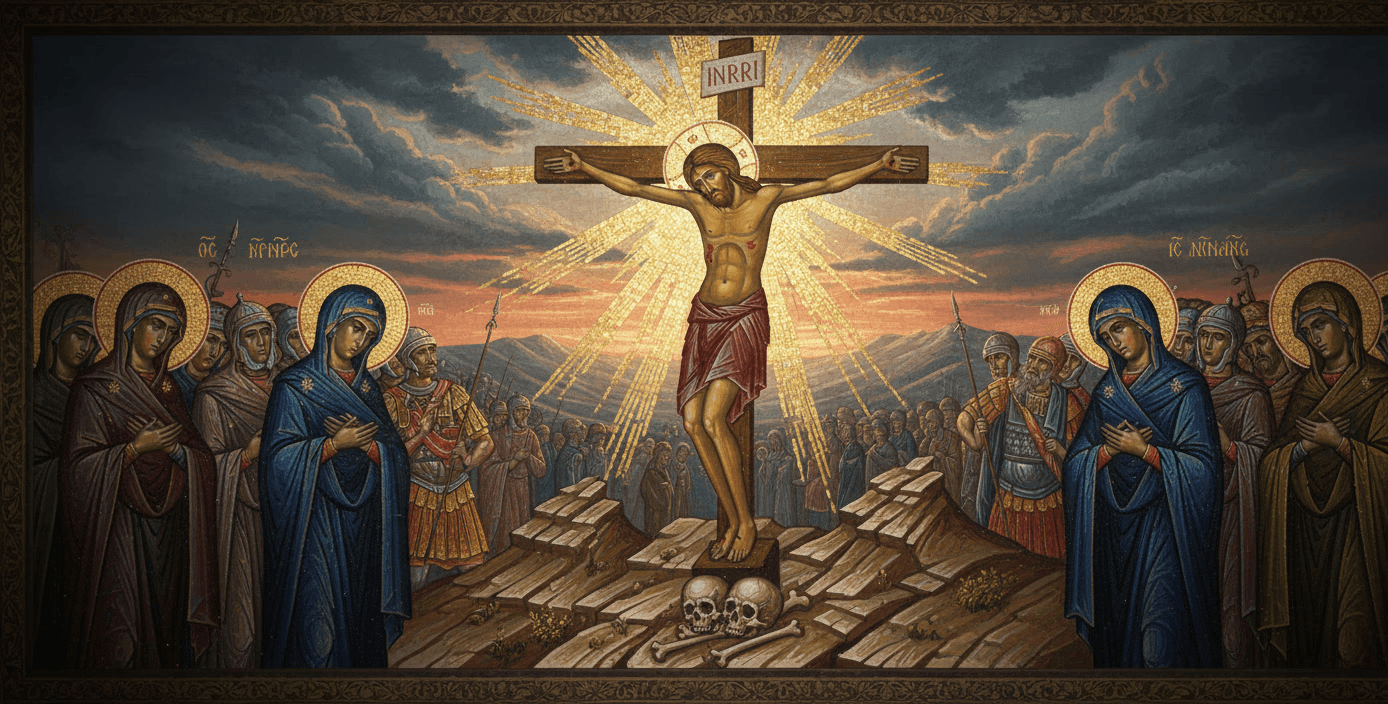
John 1:14 (NKJV): "And the Word became flesh and dwelt among us, and we beheld His glory, the glory as of the only begotten of the Father, full of grace and truth." The incarnation is the fullest expression of divine grace in history. God entering humanity in the person of Jesus Christ — not to observe, not to inspect, but to provide what no human effort could produce. Grace arrived with a person. It is not an abstract quality — it is expressed in the life, death, and resurrection of Jesus.
John 1:16-17 (NKJV): "And of His fullness we have all received, and grace for grace. For the law was given through Moses, but grace and truth came through Jesus Christ." The law revealed the standard — what God requires. Grace provided what the law revealed was needed and gave it to those who had failed to produce it themselves. This is not the abolition of the law but its fulfilment — in Christ, by grace.
Romans 3:23-24 (NKJV) is the most compressed statement of the Gospel in this framework: "For all have sinned and fall short of the glory of God, being justified freely by His grace through the redemption that is in Christ Jesus." All have sinned — universally. Justified freely — without payment from the sinner. By His grace — the source is entirely God's. Through the redemption in Christ — the mechanism is Christ's atoning work. No human contribution in the chain. Grace from beginning to end.
Ephesians 2:8-9 (NKJV) — the verse that has perhaps been quoted more often on this question than any other: "For by grace you have been saved through faith, and that not of yourselves; it is the gift of God, not of works, lest anyone should boast." Every element is given: the grace, the faith, the salvation. The exclusion of works is explicit. The exclusion of boasting follows logically: you cannot boast about a gift. Grace categorically removes the basis for religious pride.
Romans 5:1-2 (NKJV): "Therefore, having been justified by faith, we have peace with God through our Lord Jesus Christ, through whom also we have access by faith into this grace in which we stand." We stand in grace. Not enter grace occasionally, not approach it tentatively, not achieve it periodically — stand in it as the permanent territory of the justified life. Grace is not a transaction that occurred once. It is the ground on which the Christian life is lived.
What Grace Produces
Grace is not passive. It is not only the starting point — it is the engine of transformation. Titus 2:11-12 (NKJV): "For the grace of God that brings salvation has appeared to all men, teaching us that, denying ungodliness and worldly lusts, we should live soberly, righteously, and godly in the present age." Grace teaches. It is not merely the declaration of forgiveness — it is the active force that reorients a person's life. The person who has genuinely received grace does not remain unchanged by it.
1 Corinthians 15:10 (NKJV): Paul writes, "But by the grace of God I am what I am, and His grace toward me was not in vain; but I laboured more abundantly than they all, yet not I, but the grace of God which was with me." Grace is the explanation of everything Paul has become and done. Not his effort — though his effort was real. The grace that empowered the effort. This is the rhythm of Christian life: grace received, effort made, grace acknowledged as the source. Not passivity. Not self-congratulation. Grace that produces genuine labour.
2 Corinthians 12:9 (NKJV) shows grace in its most personal form — operating not in strength but in weakness: "My grace is sufficient for you, for My strength is made perfect in weakness." The thorn was not removed. The grace was given within it. That is the pattern of much of the Christian life: not the removal of difficulty, but the sufficiency of grace within it. Not comfortable resolution, but God's strength operating in the specific weakness present.
Romans 5:20-21 (NKJV) gives perhaps the most extraordinary statement about grace's scope: "where sin abounded, grace abounded much more, so that as sin reigned in death, even so grace might reign through righteousness to eternal life through Jesus Christ our Lord." Where sin is greatest, grace is greater still. Not equal — greater. The "much more" is not rhetorical. It is a theological claim about the inexhaustible supply of what God gives against the finite, however large, destruction of what sin produces.
The Thread That Runs Through Everything
Revelation 22:21 (NKJV) — the last verse of the Bible: "The grace of our Lord Jesus Christ be with you all. Amen." The Bible ends where it began in practice: with grace. Genesis showed it in God's covering of Adam and Eve after the fall, in Noah finding favour in God's eyes, in Abraham being called from Ur without any apparent qualification. The entire story of Scripture is grace in motion — God pursuing, providing, forgiving, restoring, a people who repeatedly demonstrate they have not earned any of it and who repeatedly receive it anyway.
Grace is not a doctrine for church. It is the architecture of reality as Christianity describes it. The universe exists because God chose to create it — an act of grace. Humanity was made in His image — an act of grace. When that image was broken, God moved toward rather than away — an act of grace. He provided the law to show what was needed — an act of grace. He sent the prophets when the law was ignored — an act of grace. He came Himself in Christ to accomplish what none of it could achieve — the fullest act of grace in history. He sends His Spirit to dwell in those who believe — an act of grace. He will complete what He started — an act of grace.
Hebrews 4:16 (NKJV): "Let us therefore come boldly to the throne of grace, that we may obtain mercy and find grace to help in time of need." The throne of grace. The posture of the one sitting there has been established across the entire biblical narrative. He is for you, not against you. What He has given — at the cost of His own Son — He will not now withhold. Come boldly. Receive what has already been prepared. That is what grace is. And it is, genuinely, amazing.
FAQs
What is grace in the Bible?
What does grace mean in Christianity?
What is the difference between grace and mercy in the Bible?
Is grace only a New Testament concept?
How should someone respond to God's grace?

Author
Shafraz Jeal
Shafraz Jeal is the founder of By Design Ministry, created to help people discover Jesus, understand the Bible, and grow in faith. After encountering Christ in 2016, his life was radically changed, and that journey continues to shape everything he shares.
You may also like these
Related Post