Share
Summarise with AI
What Is Salvation in Christianity?
Most of us feel the weight of things we wish we could undo—words we regret, habits we hide, hurts we’ve caused. The Bible calls that weight sin, yet it also offers the most astonishing promise: you can be rescued, forgiven, and made entirely new. That rescue is what Christians call salvation. This article explains—step by step—what salvation is, why it matters, and how you can respond today.
Author | Shafraz Jeal
12
min read
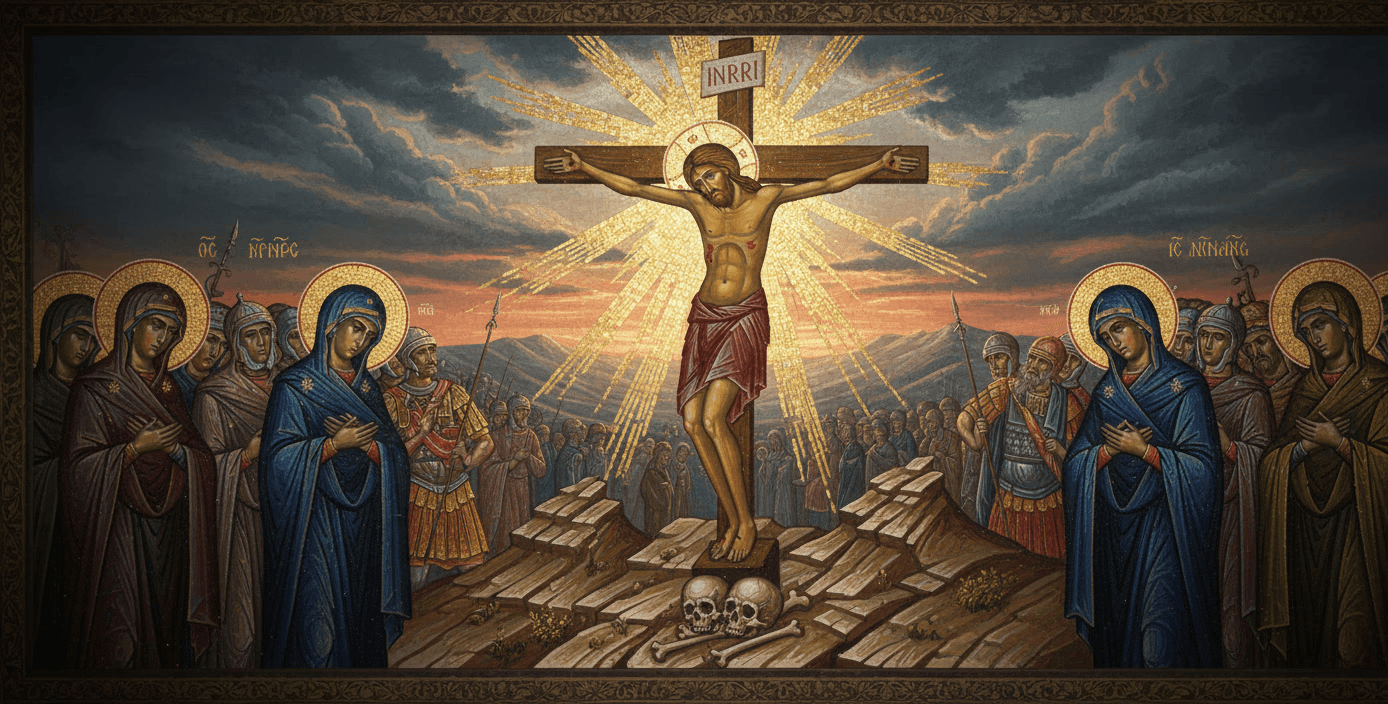
Most of us feel the weight of things we wish we could undo—words we regret, habits we hide, hurts we’ve caused. The Bible calls that weight sin, yet it also offers the most astonishing promise: you can be rescued, forgiven, and made entirely new. That rescue is what Christians call salvation. This article explains—step by step—what salvation is, why it matters, and how you can respond today.
Every one of us knows regret: the unkind word, the selfish choice, the secret habit.
The Bible names the root problem sin—falling short of the life we were made for (Romans 3:23).
Sin separates us from God (Isaiah 59:2).
It ends in death—physical and spiritual (Romans 6:23).
No rule-keeping or self-improvement can erase guilt (Psalm 49:7-8).
Yet the Bible’s plot pivots on good news: God Himself steps in to save. “While we were still sinners, Christ died for us” (Romans 5:8).
What the Bible Means by “Salvation”
Salvation (Greek sōtēria) is deliverance—being rescued from danger and brought to safety. In Christian teaching it is:
Deliverance from sin’s penalty, power and—one day—presence.
Restoration to a life-giving relationship with God (John 17:3).
Key verse: John 3:16.
What Is Salvation in Christianity? A Clear Biblical Explanation
Salvation in Christianity means being rescued from sin and restored to a right relationship with God through faith in Jesus Christ. Christians believe this rescue is a gift of grace — freely given, not earned — made possible through the death and resurrection of Jesus. |
It is one of the most important ideas in the whole of Christian faith. You will find it running through every part of the Bible, and it sits at the centre of almost everything Christians believe and practise. But many people — including those who have been around church for years — are not entirely sure what it actually means in plain terms.
This article explains what salvation is, why Christians say it is needed, how it works, and what difference it makes — including some of the questions people are often too afraid to ask out loud.
Quick Answers
Question | Short Answer |
|---|---|
What is salvation? | Rescue from sin and restored relationship with God |
Who provides it? | Jesus Christ, through his death and resurrection |
Can it be earned? | No — it is given freely by grace |
How is it received? | Through faith in Jesus and genuine repentance |
What does it lead to? | Forgiveness, peace with God, and eternal life |
Is it just about heaven? | No — it changes your life in the present too |
What Does Salvation Mean?
The English word salvation comes from the Latin salvatio, which carries the idea of being kept safe, healed, or delivered from danger. In both parts of the Bible, the idea is the same: someone in serious trouble is pulled out of it by a rescuer who is stronger than they are.
In the Old Testament, God repeatedly delivers his people from physical enemies and impossible situations. King David prays to be saved from those hunting him. The prophet Hezekiah asks God to rescue Jerusalem from the Assyrian army. Each time, God acts as the Deliverer.
By the time of the New Testament, the focus deepens. The Greek word soteria — translated as salvation — points to rescue from something more serious than any human enemy: the consequences of sin, spiritual death, and separation from God. That is the meaning that sits at the centre of Christian teaching today.
When Christians talk about being saved, they mean saved from the consequences of living at odds with God — and saved into a restored relationship with him.When Christians talk about being saved, they mean saved from the consequences of living at odds with God — and saved into a restored relationship with him.
Key Terms Explained
Term | Simple Meaning | In Context |
|---|---|---|
Salvation | Being rescued | Rescued from sin and its consequences |
Grace | Undeserved favour | God gives what cannot be earned |
Faith | Trust | Trusting Jesus is enough |
Repentance | Turning around | Turning away from sin and back to God |
Atonement | Making things right | Jesus dealing with sin at the cross |
Justification | Declared innocent | God treats the believer as righteous |
Sanctification | Becoming holy | Ongoing spiritual growth after salvation |
Why Do Christians Say Salvation Is Needed?
To understand why salvation matters, you need to understand what Christianity says went wrong in the first place.
Christians believe God made human beings to live in close, genuine relationship with him. The world he created was good — and people were made to reflect something of his character and to flourish under his care. But that relationship was broken when humanity chose to go its own way, to reject God's authority and live independently of him. The Bible calls this sin.
Sin is not just a list of bad actions. Christians understand it as a deep orientation away from God — a tendency that runs through every person and quietly shapes everything. The Bible is straightforward about it: Romans 3:23 says that all have sinned and fall short of God's standard. There are no exceptions.
Because God is just, that rebellion carries real consequences. Romans 6:23 describes the result of sin as death — a spiritual separation from God that, without intervention, would be permanent. This is the problem salvation is designed to solve. And Christians are clear: it is a problem too serious for anyone to fix on their own. No amount of good behaviour, religious activity, or personal improvement reaches far enough.
How Does Salvation Work? The Role of Jesus Christ
If the problem is separation from God caused by sin, the Christian answer is that God chose to solve it himself rather than leave humanity to struggle with something it cannot fix.
Christians believe Jesus Christ is God in human form — fully divine and fully human at once. He was born, lived a genuine human life for roughly thirty-three years, and at no point did anything wrong. He carried no sin of his own.
His death on a Roman cross was not a misfortune or the result of events getting out of hand. Christians understand it as a deliberate act of substitution: Jesus took on himself the punishment that human sin deserves. The innocent died in place of the guilty. As 1 Peter 2:24 puts it, he bore our sins in his body on the cross.
Three days later, Christians believe Jesus rose physically from the dead. This resurrection is not a side detail — it is central to everything. Without it, the cross would be a tragedy. With it, Christians see it as God's declaration that the debt for sin has been paid in full, that death itself has been overcome, and that a new kind of life is now available to anyone who wants it.
The death and resurrection of Jesus is what makes salvation possible. His death dealt with the problem of sin. His resurrection confirmed that the deal was done.
Can You Earn Salvation?
One of the most distinctive — and surprising — things about the Christian understanding of salvation is that it cannot be earned. This runs against most people's instincts.
The common assumption is that if you are broadly a decent person, that should be enough. Kind to others, honest in your dealings, reasonably fair — surely that counts for something. Christianity says it does count for something, but not for this. No amount of good behaviour cancels out the debt created by sin. It is a bit like owing someone a very large sum and handing them a few coins. The gesture is not nothing, but it does not address the actual problem.
Ephesians 2:8–9 is the clearest statement in the New Testament: it is by grace you have been saved, through faith — and this is not from yourselves, it is the gift of God — not by works, so that no one can boast.
Grace means an undeserved gift. Christians believe salvation is offered freely to everyone not because anyone has done enough to deserve it, but because God chooses to give it. It costs nothing to receive. It cost Jesus everything to make available.
How Does a Person Receive Salvation?
If salvation is a gift, it still needs to be received. The Bible points to two responses, which work together:
Repentance
Repentance is more than feeling bad. It means genuinely changing direction — turning away from a life lived on your own terms and acknowledging that things need to be different. It involves recognising that sin is real, that it has consequences, and that you want to be free of it rather than carry on in it.
Faith
Faith means trusting that what Jesus did on the cross is sufficient to deal with your sin. Not blind belief or wishful thinking — a deliberate act of putting your confidence in Christ rather than in your own efforts or goodness.
Romans 10:9 summarises the response: confess with your mouth that Jesus is Lord and believe in your heart that God raised him from the dead, and you will be saved.
Jesus described this experience in John chapter 3 as being born again — a completely fresh start, made possible not by human effort but by God's work in a person's life.
What Does Salvation Actually Include?
Salvation is not only about what happens after death.
Christians believe it brings a real change right now as well as eternal hope for the future.
When someone receives salvation, the Bible describes several things happening at once:
What Salvation Brings | What It Means in Real Life | Key Bible Verse |
|---|---|---|
Forgiveness | Your sins are fully forgiven. God no longer holds your past against you. | 1 John 1:9 |
Peace with God | The broken relationship with God is restored and replaced with peace. | Romans 5:1 |
Adoption into God’s Family | You become a child of God and belong to Him. | John 1:12 |
The Holy Spirit | God’s Spirit comes to live within you, guiding, strengthening, and changing you. | Ephesians 1:13 |
New Identity | You are no longer defined by your old life but become a new creation in Christ. | 2 Corinthians 5:17 |
Freedom from Sin’s Control | Sin may still tempt you, but it no longer has mastery over your life. | Romans 6:14 |
Eternal Life | The promise of life with God that continues beyond physical death. | John 3:16 |
Ongoing Transformation | A lifelong process of becoming more like Jesus in character and conduct. | Romans 8:29 |
The key thing to grasp is this: salvation is not only rescue from something — it is rescue into relationship with someone.
Christianity teaches that the greatest gift of salvation is not simply avoiding judgement, but knowing God personally.
Can I Be Saved If I've Done Terrible Things?
This is probably the question most people are actually asking when they first search for what salvation means.
Christianity's answer is direct: yes. No one is beyond the reach of God's grace. The Bible does not present salvation as a reward for people who have broadly behaved themselves. It presents it as a rescue operation for people who have not. Paul, one of the most important writers in the New Testament, described himself as the worst sinner he knew — and that was after his conversion (1 Timothy 1:15).
Jesus did not spend his time with people who had it together. He was consistently found with people who knew they did not — tax collectors considered traitors to their community, women who had been publicly shamed, fishermen with quick tempers, a criminal dying on a cross beside him. In each case the message was the same: it is not too late.
If you are reading this and wondering whether what you have done puts you beyond God's forgiveness, Christianity says no — it does not. Salvation is offered to every person, regardless of their past. The only thing that puts it out of reach is refusing to receive it. Romans 10:13 puts it plainly: everyone who calls on the name of the Lord will be saved. |
Is Salvation a Once-and-Done Thing?
The Bible speaks of salvation in three timeframes, and different Christian traditions emphasise them differently.
Tense | Bible Language | What it means |
Past | "He has saved us" (2 Tim 1:9) | When a person puts their faith in Christ, they are saved — the transaction is complete. |
Present | "Those being saved" (1 Cor 1:18) | The Christian life is an ongoing process of growth and change. Salvation is not just a ticket — it is a journey. |
Future | "We shall be saved" (Rom 5:9) | At the end of all things, God will complete what he has started — a renewed creation with no more suffering or death. |
These three tenses are not contradictions. They are three stages of the same reality, the way a seed, a growing plant, and a mature tree are all the same life at different points.
What Happens After Salvation? Practical Next Steps
Salvation is not the finish line. Christians describe it as the starting point. If someone has received salvation, the Bible is clear that the expectation is a changed life — not perfectly, but genuinely.
Most Christian traditions encourage new believers to take certain practical steps:
Prayer — talking to God regularly, not as a religious duty but as you would a person you now have a relationship with.
Reading the Bible — the primary way Christians believe God speaks to them. Even a few minutes a day makes a significant difference over time.
Baptism — most Christian traditions practice baptism as the public marker of having received salvation. The form varies by tradition.
Church — joining a community of other Christians for support, teaching, and shared worship. Christianity was never meant to be a solo endeavour.
Discipleship — learning how to live as a Christian, which is a lifelong process rather than something mastered overnight.
None of these earn salvation — that remains a gift already given. But Christians believe they are the natural response to having received it, and the means by which a person grows into what salvation has made them.
What Is Salvation in Christianity? A Clear Biblical Explanation
Salvation in Christianity means being rescued from sin and restored to a right relationship with God through faith in Jesus Christ. Christians believe this rescue is a gift of grace — freely given, not earned — made possible through the death and resurrection of Jesus. |
It is one of the most important ideas in the whole of Christian faith. You will find it running through every part of the Bible, and it sits at the centre of almost everything Christians believe and practise. But many people — including those who have been around church for years — are not entirely sure what it actually means in plain terms.
This article explains what salvation is, why Christians say it is needed, how it works, and what difference it makes — including some of the questions people are often too afraid to ask out loud.
Quick Answers
Question | Short Answer |
|---|---|
What is salvation? | Rescue from sin and restored relationship with God |
Who provides it? | Jesus Christ, through his death and resurrection |
Can it be earned? | No — it is given freely by grace |
How is it received? | Through faith in Jesus and genuine repentance |
What does it lead to? | Forgiveness, peace with God, and eternal life |
Is it just about heaven? | No — it changes your life in the present too |
What Does Salvation Mean?
The English word salvation comes from the Latin salvatio, which carries the idea of being kept safe, healed, or delivered from danger. In both parts of the Bible, the idea is the same: someone in serious trouble is pulled out of it by a rescuer who is stronger than they are.
In the Old Testament, God repeatedly delivers his people from physical enemies and impossible situations. King David prays to be saved from those hunting him. The prophet Hezekiah asks God to rescue Jerusalem from the Assyrian army. Each time, God acts as the Deliverer.
By the time of the New Testament, the focus deepens. The Greek word soteria — translated as salvation — points to rescue from something more serious than any human enemy: the consequences of sin, spiritual death, and separation from God. That is the meaning that sits at the centre of Christian teaching today.
When Christians talk about being saved, they mean saved from the consequences of living at odds with God — and saved into a restored relationship with him.When Christians talk about being saved, they mean saved from the consequences of living at odds with God — and saved into a restored relationship with him.
Key Terms Explained
Term | Simple Meaning | In Context |
|---|---|---|
Salvation | Being rescued | Rescued from sin and its consequences |
Grace | Undeserved favour | God gives what cannot be earned |
Faith | Trust | Trusting Jesus is enough |
Repentance | Turning around | Turning away from sin and back to God |
Atonement | Making things right | Jesus dealing with sin at the cross |
Justification | Declared innocent | God treats the believer as righteous |
Sanctification | Becoming holy | Ongoing spiritual growth after salvation |
Why Do Christians Say Salvation Is Needed?
To understand why salvation matters, you need to understand what Christianity says went wrong in the first place.
Christians believe God made human beings to live in close, genuine relationship with him. The world he created was good — and people were made to reflect something of his character and to flourish under his care. But that relationship was broken when humanity chose to go its own way, to reject God's authority and live independently of him. The Bible calls this sin.
Sin is not just a list of bad actions. Christians understand it as a deep orientation away from God — a tendency that runs through every person and quietly shapes everything. The Bible is straightforward about it: Romans 3:23 says that all have sinned and fall short of God's standard. There are no exceptions.
Because God is just, that rebellion carries real consequences. Romans 6:23 describes the result of sin as death — a spiritual separation from God that, without intervention, would be permanent. This is the problem salvation is designed to solve. And Christians are clear: it is a problem too serious for anyone to fix on their own. No amount of good behaviour, religious activity, or personal improvement reaches far enough.
How Does Salvation Work? The Role of Jesus Christ
If the problem is separation from God caused by sin, the Christian answer is that God chose to solve it himself rather than leave humanity to struggle with something it cannot fix.
Christians believe Jesus Christ is God in human form — fully divine and fully human at once. He was born, lived a genuine human life for roughly thirty-three years, and at no point did anything wrong. He carried no sin of his own.
His death on a Roman cross was not a misfortune or the result of events getting out of hand. Christians understand it as a deliberate act of substitution: Jesus took on himself the punishment that human sin deserves. The innocent died in place of the guilty. As 1 Peter 2:24 puts it, he bore our sins in his body on the cross.
Three days later, Christians believe Jesus rose physically from the dead. This resurrection is not a side detail — it is central to everything. Without it, the cross would be a tragedy. With it, Christians see it as God's declaration that the debt for sin has been paid in full, that death itself has been overcome, and that a new kind of life is now available to anyone who wants it.
The death and resurrection of Jesus is what makes salvation possible. His death dealt with the problem of sin. His resurrection confirmed that the deal was done.
Can You Earn Salvation?
One of the most distinctive — and surprising — things about the Christian understanding of salvation is that it cannot be earned. This runs against most people's instincts.
The common assumption is that if you are broadly a decent person, that should be enough. Kind to others, honest in your dealings, reasonably fair — surely that counts for something. Christianity says it does count for something, but not for this. No amount of good behaviour cancels out the debt created by sin. It is a bit like owing someone a very large sum and handing them a few coins. The gesture is not nothing, but it does not address the actual problem.
Ephesians 2:8–9 is the clearest statement in the New Testament: it is by grace you have been saved, through faith — and this is not from yourselves, it is the gift of God — not by works, so that no one can boast.
Grace means an undeserved gift. Christians believe salvation is offered freely to everyone not because anyone has done enough to deserve it, but because God chooses to give it. It costs nothing to receive. It cost Jesus everything to make available.
How Does a Person Receive Salvation?
If salvation is a gift, it still needs to be received. The Bible points to two responses, which work together:
Repentance
Repentance is more than feeling bad. It means genuinely changing direction — turning away from a life lived on your own terms and acknowledging that things need to be different. It involves recognising that sin is real, that it has consequences, and that you want to be free of it rather than carry on in it.
Faith
Faith means trusting that what Jesus did on the cross is sufficient to deal with your sin. Not blind belief or wishful thinking — a deliberate act of putting your confidence in Christ rather than in your own efforts or goodness.
Romans 10:9 summarises the response: confess with your mouth that Jesus is Lord and believe in your heart that God raised him from the dead, and you will be saved.
Jesus described this experience in John chapter 3 as being born again — a completely fresh start, made possible not by human effort but by God's work in a person's life.
What Does Salvation Actually Include?
Salvation is not only about what happens after death.
Christians believe it brings a real change right now as well as eternal hope for the future.
When someone receives salvation, the Bible describes several things happening at once:
What Salvation Brings | What It Means in Real Life | Key Bible Verse |
|---|---|---|
Forgiveness | Your sins are fully forgiven. God no longer holds your past against you. | 1 John 1:9 |
Peace with God | The broken relationship with God is restored and replaced with peace. | Romans 5:1 |
Adoption into God’s Family | You become a child of God and belong to Him. | John 1:12 |
The Holy Spirit | God’s Spirit comes to live within you, guiding, strengthening, and changing you. | Ephesians 1:13 |
New Identity | You are no longer defined by your old life but become a new creation in Christ. | 2 Corinthians 5:17 |
Freedom from Sin’s Control | Sin may still tempt you, but it no longer has mastery over your life. | Romans 6:14 |
Eternal Life | The promise of life with God that continues beyond physical death. | John 3:16 |
Ongoing Transformation | A lifelong process of becoming more like Jesus in character and conduct. | Romans 8:29 |
The key thing to grasp is this: salvation is not only rescue from something — it is rescue into relationship with someone.
Christianity teaches that the greatest gift of salvation is not simply avoiding judgement, but knowing God personally.
Can I Be Saved If I've Done Terrible Things?
This is probably the question most people are actually asking when they first search for what salvation means.
Christianity's answer is direct: yes. No one is beyond the reach of God's grace. The Bible does not present salvation as a reward for people who have broadly behaved themselves. It presents it as a rescue operation for people who have not. Paul, one of the most important writers in the New Testament, described himself as the worst sinner he knew — and that was after his conversion (1 Timothy 1:15).
Jesus did not spend his time with people who had it together. He was consistently found with people who knew they did not — tax collectors considered traitors to their community, women who had been publicly shamed, fishermen with quick tempers, a criminal dying on a cross beside him. In each case the message was the same: it is not too late.
If you are reading this and wondering whether what you have done puts you beyond God's forgiveness, Christianity says no — it does not. Salvation is offered to every person, regardless of their past. The only thing that puts it out of reach is refusing to receive it. Romans 10:13 puts it plainly: everyone who calls on the name of the Lord will be saved. |
Is Salvation a Once-and-Done Thing?
The Bible speaks of salvation in three timeframes, and different Christian traditions emphasise them differently.
Tense | Bible Language | What it means |
Past | "He has saved us" (2 Tim 1:9) | When a person puts their faith in Christ, they are saved — the transaction is complete. |
Present | "Those being saved" (1 Cor 1:18) | The Christian life is an ongoing process of growth and change. Salvation is not just a ticket — it is a journey. |
Future | "We shall be saved" (Rom 5:9) | At the end of all things, God will complete what he has started — a renewed creation with no more suffering or death. |
These three tenses are not contradictions. They are three stages of the same reality, the way a seed, a growing plant, and a mature tree are all the same life at different points.
What Happens After Salvation? Practical Next Steps
Salvation is not the finish line. Christians describe it as the starting point. If someone has received salvation, the Bible is clear that the expectation is a changed life — not perfectly, but genuinely.
Most Christian traditions encourage new believers to take certain practical steps:
Prayer — talking to God regularly, not as a religious duty but as you would a person you now have a relationship with.
Reading the Bible — the primary way Christians believe God speaks to them. Even a few minutes a day makes a significant difference over time.
Baptism — most Christian traditions practice baptism as the public marker of having received salvation. The form varies by tradition.
Church — joining a community of other Christians for support, teaching, and shared worship. Christianity was never meant to be a solo endeavour.
Discipleship — learning how to live as a Christian, which is a lifelong process rather than something mastered overnight.
None of these earn salvation — that remains a gift already given. But Christians believe they are the natural response to having received it, and the means by which a person grows into what salvation has made them.
FAQs
What is salvation in Christianity in simple terms?
What do Christians need saving from?
How do you receive salvation?
What do justification, sanctification, and glorification mean?
What are the key beliefs about salvation in Christianity?

Author
Shafraz Jeal
Shafraz Jeal is the founder of By Design Ministry, created to help people discover Jesus, understand the Bible, and grow in faith. After encountering Christ in 2016, his life was radically changed, and that journey continues to shape everything he shares.
You may also like these
Related Post
6
min read
Best Spiritual Growth Courses to Transform Your Faith in 2026
Written by
Shafraz Jeal
Posted on
Apr 6, 2026
12
min read
What Is Salvation in Christianity?
Written by
Shafraz Jeal
Posted on
Apr 6, 2026

6
min read
What Does the Bible Say About Anxiety?
Written by
Shafraz Jeal
Posted on
Apr 6, 2026
6
min read
Best Spiritual Growth Courses to Transform Your Faith in 2026
Written by
Shafraz Jeal
Posted on
Apr 6, 2026
6
min read
What Does the Bible Say About Anxiety?
Written by
Shafraz Jeal
Posted on
Apr 6, 2026
12
min read
What Is Salvation in Christianity?
Written by
Shafraz Jeal
Posted on
Apr 6, 2026
5
min read
How to Pray When You Feel Nothing
Written by
Shafraz Jeal
Posted on
Apr 6, 2026
By Design
You were not made for religion — you were made for God.
By Design exists for the people who sense that difference but haven't found the words for it yet. The Gospel is not a system to perform. It is a Person to know.
Get biblical clarity in your inbox.
Subscribe for biblical insight, honest answers, and practical encouragement to help you know Jesus, understand Scripture, and live with clarity.
Start Here
Understand the Bible
Big Questions
Help & Support
© 2026 By Design Ministry
By Design
You were not made for religion — you were made for God.
By Design exists for the people who sense that difference but haven't found the words for it yet. The Gospel is not a system to perform. It is a Person to know.
Get biblical clarity in your inbox.
Subscribe for biblical insight, honest answers, and practical encouragement to help you know Jesus, understand Scripture, and live with clarity.
Start Here
Understand the Bible
Big Questions
Help & Support
© 2026 By Design Ministry
By Design
You were not made for religion — you were made for God.
By Design exists for the people who sense that difference but haven't found the words for it yet. The Gospel is not a system to perform. It is a Person to know.
Get biblical clarity in your inbox.
Subscribe for biblical insight, honest answers, and practical encouragement to help you know Jesus, understand Scripture, and live with clarity.
Start Here
Understand the Bible
Big Questions
Help & Support
© 2026 By Design Ministry