Psalm 23 — Meaning, Verse by Verse
Psalm 23, written by King David, is one of the most recognised passages in the Bible. Using the metaphor of a shepherd caring for sheep, it describes God's provision, guidance, protection, and presence — including through 'the valley of the shadow of death.' It is widely used at funerals, in times of fear, and as a declaration of trust in God.
Author | Shafraz Jeal
6
min read
Psalm 23, written by King David, is one of the most recognised passages in the Bible. Using the metaphor of a shepherd caring for sheep, it describes God's provision, guidance, protection, and presence — including through 'the valley of the shadow of death.' It is widely used at funerals, in times of fear, and as a declaration of trust in God.
"The Lord is my shepherd; I shall not want."
Six words in the original Hebrew. Probably the most quoted, most memorised, most read lines in the history of literature. Psalm 23 has been read at funerals and in foxholes, in hospitals and in prison cells. People who wouldn't call themselves religious find themselves returning to it when things get hard.
That's not an accident. There's something in this psalm that touches something true about human experience — the need for a guide who actually knows the way, who stays when things get dark, who doesn't abandon you in the worst of it.
Here's what it's actually saying, line by line.
Verse 1-3 — The Shepherd's Provision
"The Lord is my shepherd; I shall not want. He makes me to lie down in green pastures; He leads me beside the still waters. He restores my soul; He leads me in the paths of righteousness for His name's sake." (NKJV)
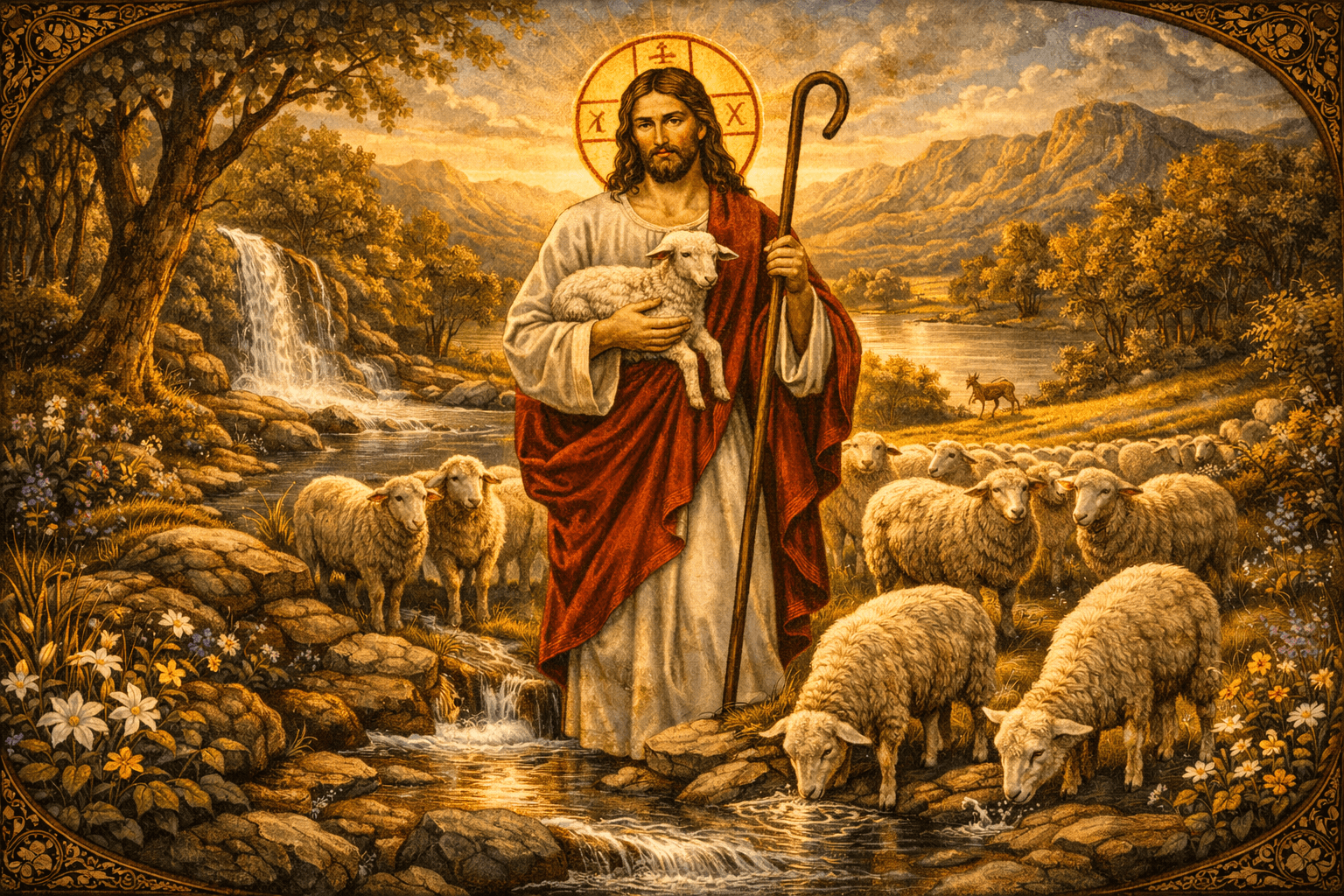
David wrote this as a king, but he was first a shepherd — and he knew exactly what this image meant. A shepherd's job is total: feed, water, protect, guide, heal. The sheep don't have to figure out where to go. They trust the shepherd knows.
"I shall not want" doesn't mean you'll never have problems. It means under the care of this shepherd, you will lack nothing essential. He provides what you need.
"Green pastures" and "still waters" — sheep are notoriously difficult to water. They won't drink from fast-moving streams (they're afraid of being swept away). A good shepherd finds the still, safe water. This is the God who knows how to meet you where you actually are, not where you're supposed to be.
"He restores my soul" — the Hebrew word is shub, which means to return or turn back. Like a sheep that's wandered and been brought home. Restoration after lostness is built into the nature of this relationship.
Verse 4 — The Dark Valley
"Yea, though I walk through the valley of the shadow of death, I will fear no evil; for You are with me; Your rod and Your staff, they comfort me." (NKJV)
This is the theological heart of the psalm, and it's honest in a way that shallow religion never is. The psalm doesn't say you avoid the dark valley. It says you walk through it — and you're not alone.
Notice the shift in grammar. In verses 1-3, David talks about God in the third person: "He makes me", "He leads me." In verse 4, it becomes "You are with me." As the valley darkens, the address becomes intimate. You get closer to God when you need Him most, not further away.
The rod was used to fight off predators. The staff to guide and rescue. Both are instruments of the shepherd's care — active protection and active rescue. Comfort in Psalm 23 is not a feeling. It's the reality of what the shepherd is doing.
Verse 5 — The Table in the Presence of Enemies
"You prepare a table before me in the presence of my enemies; You anoint my head with oil; My cup runs over." (NKJV)
The metaphor shifts here — from shepherd and sheep to host and guest. In ancient Near Eastern culture, to be given hospitality was to be placed under the protection of your host. If your enemies were present and your host seated you and fed you, you were untouchable. The host's honour was bound up with your safety.
God sets a table in the presence of your enemies. Not after they've gone. While they're still there. The feast happens in the middle of the conflict, not after it's resolved.
Anointing with oil was a mark of honour and welcome — and also, practically, a treatment for wounds. The cup running over means abundance beyond what's needed. This is extravagant hospitality from a God who is not stingy.
Verse 6 — The Conclusion
"Surely goodness and mercy shall follow me all the days of my life; and I will dwell in the house of the Lord forever." (NKJV)
The Hebrew word translated "follow" is radaph — which actually means to pursue or chase. Goodness and mercy aren't passively tagging along. They're actively pursuing you. All the days of your life — not just the good days.
The psalm ends where it begins: with the Lord. "I will dwell in the house of the Lord forever" is the ultimate destination. The whole journey — green pastures, dark valleys, feast tables — is leading somewhere permanent.
Why This Psalm Works — Even in Darkness
Psalm 23 doesn't work because it's sentimental. It works because it's true. David wasn't writing from a comfortable palace moment — scholars believe this psalm may have been written during the period when Absalom, his own son, was trying to kill him and had driven him from Jerusalem. If so, the dark valley was real. The enemies were real. And the declaration of trust was a choice, not a feeling.
That's what makes it powerful. Faith that costs nothing isn't really faith. The most honest thing about Psalm 23 is that it acknowledges you will walk through the valley — and then makes the argument, from experience, that God is in the valley with you.
Jesus picks up this exact imagery in John 10:11 (NKJV): "I am the good shepherd. The good shepherd gives His life for the sheep." The shepherd David trusted in Psalm 23 is the same shepherd who would eventually go into the darkest valley — death itself — on behalf of His sheep. And come out the other side.
The Shepherd Who Knows Your Name
Psalm 23 is not a magic charm or a comforting cliché. It's a theological statement about the character of God — specific, personal, and costly.
The Lord is my shepherd. Not a shepherd in general. Not a distant deity who manages things from afar. The one who knows your specific valley, who fights off your specific predators, who finds the still water that works for how you're made.
If you've never read Psalm 23 slowly, read it today. If you're in a dark valley right now, it was written for exactly this moment.
You can also submit a prayer request here if you'd like someone to pray with you specifically.
FAQs
Who wrote Psalm 23 and when?
What does 'the valley of the shadow of death' mean?
Why is Psalm 23 read at funerals?
What does 'I shall not want' mean?
How does Psalm 23 connect to Jesus?

Author
Shafraz Jeal
Shafraz Jeal is the founder of By Design Ministry, created to help people discover Jesus, understand the Bible, and grow in faith. After encountering Christ in 2016, his life was radically changed, and that journey continues to shape everything he shares.
You may also like these
Related Post