Maranatha: What This Ancient Word Actually Means
Maranatha is an Aramaic phrase that appears in 1 Corinthians 16:22 (NKJV) and is reflected in Revelation 22:20. It means either "our Lord has come" or "our Lord, come" — the ambiguity is intentional, holding together both a declaration of Christ's first coming and a prayer for His return. It is one of the oldest documented prayers in Christian history, used in early church worship as an expression of longing for Christ's return, and preserved in Aramaic within a Greek text because it was already too established in the church's vocabulary to translate.
Author | Shafraz Jeal
6
min read
Maranatha is an Aramaic phrase that appears in 1 Corinthians 16:22 (NKJV) and is reflected in Revelation 22:20. It means either "our Lord has come" or "our Lord, come" — the ambiguity is intentional, holding together both a declaration of Christ's first coming and a prayer for His return. It is one of the oldest documented prayers in Christian history, used in early church worship as an expression of longing for Christ's return, and preserved in Aramaic within a Greek text because it was already too established in the church's vocabulary to translate.
At the very end of 1 Corinthians, Paul is wrapping up one of the most theologically dense letters in the New Testament. He gives greetings, a benediction, and then — without explanation, without translation, in the middle of a Greek letter — drops a single Aramaic phrase: maranatha.
He doesn't translate it. He doesn't explain it. He just writes it and moves on. Which tells you something important: every person reading that letter already knew exactly what it meant. It was already part of the fabric of how the early church spoke about the thing they were most waiting for.
What Maranatha Actually Means
Maranatha is Aramaic — the everyday language of first-century Palestine, the language Jesus almost certainly spoke in daily life. It's made of two words: maran (our Lord) and atha (come, or has come).
The ambiguity in that second word is real and scholars have genuinely debated it for centuries. If atha is read as a perfect tense — "has come" — then maranatha is a declaration: our Lord has come. A statement of faith in the incarnation. If it's read as an imperative — "come!" — then maranatha is a prayer: our Lord, come. A cry of longing for His return.
Most scholars lean toward the prayer reading. The context of 1 Corinthians 16:22 sits alongside a curse on those who don't love the Lord, which creates the sense of urgency — come, Lord Jesus, and set things right. The Didache, an early Christian document from around the end of the first century, uses maranatha at the close of the Eucharist as a prayer for return. The earliest Christians were using it as a liturgical expression of longing.
But the declaration reading isn't wrong. It may be that the word deliberately held both meanings — the Lord has come, and we are asking Him to come again. First advent and second advent in a single word.
Why It Was Said in Aramaic
Paul's letters are written in Greek. Almost every other phrase he uses is Greek. The fact that maranatha appears untranslated tells you it had a life in the church's worship that preceded his letter. It wasn't a phrase Paul coined — it was a phrase he knew his readers would recognise immediately because they had been saying it together.
The same thing happened with hallelujah and amen — Hebrew words so embedded in the vocabulary of worship that translating them would have broken something. Maranatha joined that company. It was the prayer of the gathered church, said aloud together, expressing the most fundamental longing of Christian existence: that the one who left would come back.
The Last Words of the Bible
Revelation ends with an exchange that echoes maranatha directly:
"He who testifies to these things says, 'Surely I am coming quickly.' Amen. Even so, come, Lord Jesus!" (Revelation 22:20, NKJV)
Jesus speaks. John responds. Come, Lord Jesus — which is maranatha in Greek. The last human words in the entire Bible are a prayer for Christ's return. That's not an accident of organisation. The whole of Scripture is moving toward a moment, and the final word of the final human voice in the text is a request for that moment to arrive.
Titus 2:13 (NKJV) calls the return of Christ "the blessed hope." 2 Timothy 4:8 (NKJV) describes "a crown of righteousness" for all who have "loved His appearing." The early church didn't just believe in the second coming as a doctrine — they prayed for it, they worshipped with it in their mouths, they ordered their lives around it. Maranatha was the word that held all of that in two syllables.
What Maranatha Has to Say to Us
The modern church has, in many quarters, largely stopped talking about the return of Christ with the same intensity the early church did. It has become a point of theological speculation — debated in terms of timing and tribulation and millennia — rather than a prayer said with genuine longing in the room.
Maranatha is a corrective to that. It's not a theological position. It's a prayer. Come, Lord Jesus. Said by people who had watched Him leave, who were living in a world that had crucified Him, who were being persecuted for saying His name — and who genuinely, urgently, wanted Him to come back and make everything right.
Philippians 4:5 (NKJV): "The Lord is at hand." That awareness — not theoretical, not far off — is what produced maranatha. A church that lives with that awareness prays differently. It worships differently. It holds the present world differently.
The Oldest Prayer Still Worth Praying
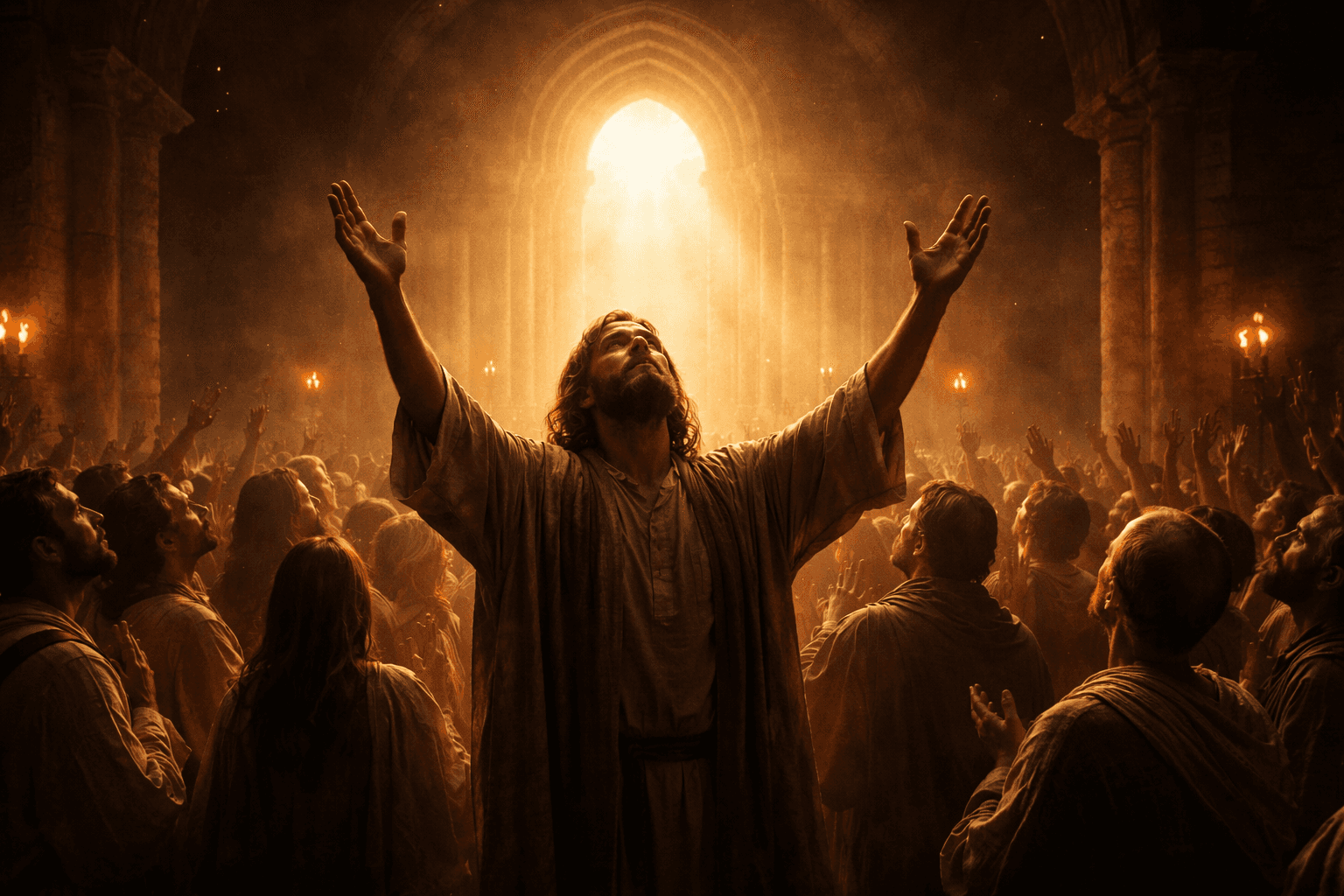
Maranatha has been said in Christian worship for nearly two thousand years. The people who first said it were living under Roman occupation, meeting in homes, risking arrest for their faith — and they ended their gatherings with a word that meant: we believe You're coming back, and we want You to.
Nothing about the world makes that prayer less relevant now than it was then. Come, Lord Jesus. Maranatha. It's still the right thing to want.
FAQs
What does maranatha mean?
Where does maranatha appear in the Bible?
What language is maranatha?
Is maranatha a prayer or a declaration?
How did the early church use maranatha?

Author
Shafraz Jeal
Shafraz Jeal is the founder of By Design Ministry, created to help people discover Jesus, understand the Bible, and grow in faith. After encountering Christ in 2016, his life was radically changed, and that journey continues to shape everything he shares.
You may also like these
Related Post