Share

Summarise with AI

What Does Amen Mean? More Than You Think

Amen is a Hebrew word meaning "so be it," "truly," or "let it be established." It comes from the root aman, meaning to be firm, faithful, or certain. In the Bible, amen functions as a verbal declaration of agreement with what has just been said — an affirmation that the speaker is aligning themselves with what was declared as true. Jesus used amen in a way found nowhere else in Jewish tradition, placing it before His own statements as a direct claim to divine authority.

Author | Shafraz Jeal

5

min read
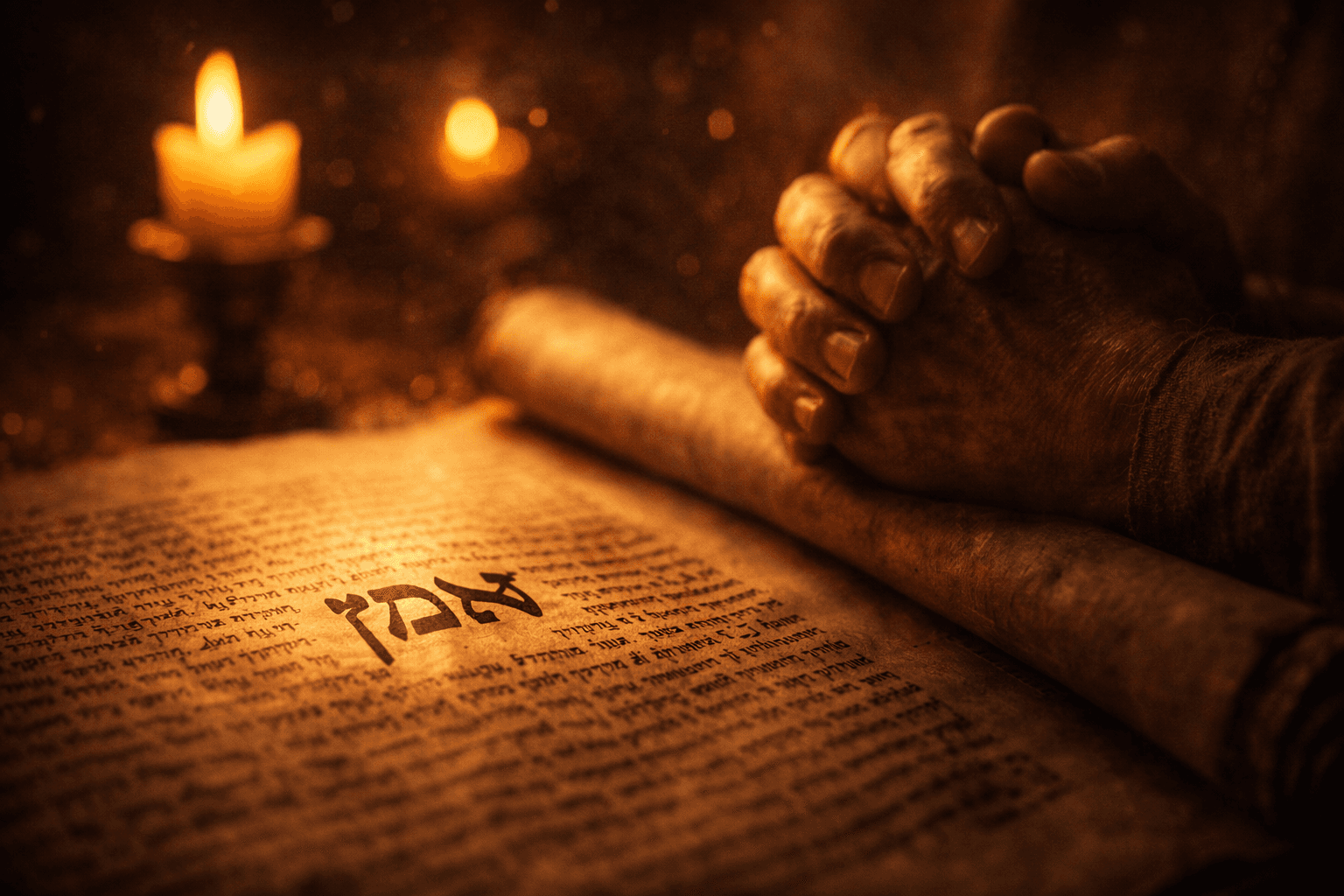
Cinematic close-up of an ancient Hebrew scroll with the word Amen illuminated by candlelight beside folded hands in prayer

Amen is a Hebrew word meaning "so be it," "truly," or "let it be established." It comes from the root aman, meaning to be firm, faithful, or certain. In the Bible, amen functions as a verbal declaration of agreement with what has just been said — an affirmation that the speaker is aligning themselves with what was declared as true. Jesus used amen in a way found nowhere else in Jewish tradition, placing it before His own statements as a direct claim to divine authority.

Most of us have said it thousands of times. End of a prayer. End of a hymn. Someone says something in church and a few people murmur it in agreement. It's the most common word in the history of Christian worship — and most people, if asked, would struggle to explain what it means beyond "the end."

But amen has a history and a meaning that goes far deeper than punctuation. Understanding it changes how you use it.

Where Amen Comes From

Amen is a Hebrew word — one of a small number that crossed directly from Hebrew into Greek, and then from Greek into virtually every language in the Christian world, without being translated. English, French, Arabic, Swahili — amen sounds nearly the same in all of them. That tells you something about how fundamental it is.

The root word is aman — meaning to be firm, to be certain, to be faithful. It's the same root behind the Hebrew word for faithfulness, emunah, and the word for truth, emet. At its core, amen is a declaration of firmness. When you say it, you are staking yourself on the truth of what was just said.

Its earliest appearances in Scripture use it exactly this way. In Deuteronomy 27, God gives Moses a series of declarations about His law — and after each one, the people respond: amen. They are not agreeing to terms and conditions. They are binding themselves to what was just declared. It's closer to an oath than a formality.

How Amen Is Used Through the Bible

In the Old Testament, amen appears after prayers, after blessings, and after declarations of God's character. When Nehemiah led the people in prayer and worship, "all the people answered, 'Amen, Amen!' while lifting up their hands. And they bowed their heads and worshiped the Lord." (Nehemiah 8:6, NKJV). The doubling — amen, amen — was an intensification: absolute, total agreement.

In the New Testament, Paul picks up on this in the context of congregational worship. In 1 Corinthians 14:16 (NKJV), he writes: "how will he who occupies the place of the uninformed say 'Amen' at your giving of thanks, since he does not understand what you say?" Amen was the congregation's verbal participation — their way of making the prayer their own. Not polite applause. Ownership.

What Jesus Did With Amen That Nobody Else Did

This is the part most people don't know.

In the entire Jewish tradition up to Jesus, amen was used the same way it had always been — as a response. Said after a statement. A confirmation of what was just declared. Nobody used amen to introduce their own words.

Then Jesus begins saying things like: "Truly, truly, I say to you..." (John 1:51, NKJV). That word "truly" in the original Greek is amen. And He says it before His own statements — not after someone else's. Sometimes doubled for emphasis: amen, amen.

This was radical. It was a claim to authority that no rabbi would make. Prophets would say "thus says the Lord" — attributing what followed to God. Jesus says "amen I say to you" — as if His own word carried the same weight as divine declaration. The religious leaders understood exactly what He was doing. That's part of what made Him so controversial.

Revelation 3:14 (NKJV) calls Jesus Himself "the Amen, the Faithful and True Witness" — connecting His identity directly to the word's deepest meaning: the one who is certain, faithful, and true. 2 Corinthians 1:20 (NKJV) puts it this way: "For all the promises of God in Him are Yes, and in Him Amen." Every promise God has ever made finds its confirmation in Christ.

So What Are You Actually Saying When You Say It?

More than a full stop. When you say amen at the end of a prayer, you are declaring that what was just prayed is true — and that you are aligning yourself with it. You're not passive. You're participating.

Which means saying it automatically, without thinking about what was just said, misses the point entirely. The word was designed to be said with intention — to mark the moment you make someone else's prayer your own, or stake yourself on what was just declared about God.


A Word Worth Meaning

Amen has survived thousands of years, crossed every major language barrier, and ended more prayers than any of us could count. That it still sounds the same in Swahili and English and Arabic is a remarkable thing — a thread connecting Christians across centuries and continents.

But the word was never meant to be automatic. It was a stake in the ground. A moment of binding yourself to what is true. The next time you say it, it's worth meaning it.

FAQs

What does amen mean in English?

Where does the word amen come from?

Why did Jesus say "verily" or "truly" before His statements?

What does it mean to say amen in church?

Is amen a prayer in itself?

Shafraz Jeal, founder and author of By Design Ministry

Author

Shafraz Jeal

Shafraz Jeal is the founder of By Design Ministry, created to help people discover Jesus, understand the Bible, and grow in faith. After encountering Christ in 2016, his life was radically changed, and that journey continues to shape everything he shares.

You may also like these

Related Post

6

min read

Best Spiritual Growth Courses to Transform Your Faith in 2026

The best courses to genuinely transform your faith are those rooted strictly in Scripture rather than generic self-help. For seekers and new believers, By Design: The Gospel Explained and the Alpha Course offer excellent, free foundations. To understand biblical narratives, BibleProject Classroom is highly recommended, while mature believers seeking deeper theological grounding should look to Ligonier Connect or seminary-backed courses on Coursera. Ultimately, the most effective course is one that helps you conform to the image of Christ and drives you back to your Bible, not just one that fills your head with information.

Written by

Shafraz Jeal

Posted on

Apr 6, 2026

12

min read

What Is Salvation in Christianity?

Most of us feel the weight of things we wish we could undo—words we regret, habits we hide, hurts we’ve caused. The Bible calls that weight sin, yet it also offers the most astonishing promise: you can be rescued, forgiven, and made entirely new. That rescue is what Christians call salvation. This article explains—step by step—what salvation is, why it matters, and how you can respond today.

Written by

Shafraz Jeal

Posted on

Apr 6, 2026

Image of a tablet
Jesus crucifixion Byzantine icon showing Christ on the cross with Mary, mourners and Roman soldiers, sacred Christian art illustrating the death of Jesus at Calvary.

6

min read

What Does the Bible Say About Anxiety?

The Bible addresses anxiety directly in passages like Philippians 4:6-7, 1 Peter 5:7, and Matthew 6:25-34. Rather than dismissing anxious feelings, Scripture acknowledges them while pointing to God's peace, presence, and provision as the foundation for a calmer mind and heart.

Written by

Shafraz Jeal

Posted on

Apr 6, 2026

Image of a tablet
What does the Bible say about anxiety Byzantine Christian image of Jesus holding Scripture while angels comfort distressed people, symbolising biblical peace, fear, worry and trust in God.

6

min read

Best Spiritual Growth Courses to Transform Your Faith in 2026

The best courses to genuinely transform your faith are those rooted strictly in Scripture rather than generic self-help. For seekers and new believers, By Design: The Gospel Explained and the Alpha Course offer excellent, free foundations. To understand biblical narratives, BibleProject Classroom is highly recommended, while mature believers seeking deeper theological grounding should look to Ligonier Connect or seminary-backed courses on Coursera. Ultimately, the most effective course is one that helps you conform to the image of Christ and drives you back to your Bible, not just one that fills your head with information.

Written by

Shafraz Jeal

Posted on

Apr 6, 2026

6

min read

What Does the Bible Say About Anxiety?

The Bible addresses anxiety directly in passages like Philippians 4:6-7, 1 Peter 5:7, and Matthew 6:25-34. Rather than dismissing anxious feelings, Scripture acknowledges them while pointing to God's peace, presence, and provision as the foundation for a calmer mind and heart.

Written by

Shafraz Jeal

Posted on

Apr 6, 2026

Image of a tablet
What does the Bible say about anxiety Byzantine Christian image of Jesus holding Scripture while angels comfort distressed people, symbolising biblical peace, fear, worry and trust in God.

12

min read

What Is Salvation in Christianity?

Most of us feel the weight of things we wish we could undo—words we regret, habits we hide, hurts we’ve caused. The Bible calls that weight sin, yet it also offers the most astonishing promise: you can be rescued, forgiven, and made entirely new. That rescue is what Christians call salvation. This article explains—step by step—what salvation is, why it matters, and how you can respond today.

Written by

Shafraz Jeal

Posted on

Apr 6, 2026

Image of a tablet
Jesus crucifixion Byzantine icon showing Christ on the cross with Mary, mourners and Roman soldiers, sacred Christian art illustrating the death of Jesus at Calvary.

5

min read

How to Pray When You Feel Nothing

Praying when you feel nothing — no emotion, no sense of God's presence, no confirmation that anyone is listening — is one of the most common and least talked-about struggles in Christian life. Scripture, church history, and the Psalms all address this experience, which theologians sometimes call spiritual dryness or desolation.

Written by

Shafraz Jeal

Posted on

Apr 6, 2026

Image of a tablet
How to pray when you feel nothing Byzantine Christian painting of a man kneeling in prayer before an icon of Jesus in a candlelit church, symbolising spiritual dryness, faith and prayer.

By Design

You were not made for religion — you were made for God.

By Design exists for the people who sense that difference but haven't found the words for it yet. The Gospel is not a system to perform. It is a Person to know.

Get biblical clarity in your inbox.

Subscribe for biblical insight, honest answers, and practical encouragement to help you know Jesus, understand Scripture, and live with clarity.

© 2026 By Design Ministry

By Design

You were not made for religion — you were made for God.

By Design exists for the people who sense that difference but haven't found the words for it yet. The Gospel is not a system to perform. It is a Person to know.

Get biblical clarity in your inbox.

Subscribe for biblical insight, honest answers, and practical encouragement to help you know Jesus, understand Scripture, and live with clarity.

© 2026 By Design Ministry

By Design

You were not made for religion — you were made for God.

By Design exists for the people who sense that difference but haven't found the words for it yet. The Gospel is not a system to perform. It is a Person to know.

Get biblical clarity in your inbox.

Subscribe for biblical insight, honest answers, and practical encouragement to help you know Jesus, understand Scripture, and live with clarity.

© 2026 By Design Ministry