How Do I Know God's Will For My Life?
The Bible addresses God's will in two distinct ways: His sovereign will (what He has decreed will happen) and His moral will (how He calls us to live). Most of the specific guidance Christians seek — career, relationships, location — falls into a third category the Bible calls wisdom, which we develop through Scripture, prayer, counsel, and discernment.
Author | Shafraz Jeal
7
min read
The Bible addresses God's will in two distinct ways: His sovereign will (what He has decreed will happen) and His moral will (how He calls us to live). Most of the specific guidance Christians seek — career, relationships, location — falls into a third category the Bible calls wisdom, which we develop through Scripture, prayer, counsel, and discernment.
At some point, almost every Christian asks the same question. Which job should I take? Should I move? Is this the right person? What am I supposed to be doing with my life?
And somewhere underneath all those specifics is the same deeper question: how do I know what God wants?
Here's the honest answer — we've often been asking for the wrong thing. Not because the desire to follow God is wrong. Because we're expecting a kind of specific, personalised roadmap that the Bible rarely promises. What it does offer is something better.
The Problem With Waiting for a Sign
Most people trying to "find God's will" are waiting for a clear signal — a feeling, a circumstance that lines up, a door opening or closing. And sometimes God does work that way. But making this your primary method creates a problem: feelings are unreliable, circumstances are ambiguous, and open doors don't always mean go.
Proverbs 14:12 (NKJV) says: "There is a way that seems right to a man, but its end is the way of death."
Our gut feeling about what God wants can be wrong. Which means we need something more stable than intuition to build on.
What the Bible Actually Says About Knowing God's Will
Romans 12:1-2 (NKJV) is probably the clearest single passage on this:
"I beseech you therefore, brethren, by the mercies of God, that you present your bodies a living sacrifice, holy, acceptable to God, which is your reasonable service. And do not be conformed to this world, but be transformed by the renewing of your mind, that you may prove what is that good and acceptable and perfect will of God."
Notice what comes before knowing God's will: surrender and transformation. The renewing of the mind — shaped by Scripture over time — is what produces the capacity to discern. It's not a one-time download. It's a lifelong recalibration.
Three Things the Bible Consistently Links to God's Will
While the Bible doesn't often tell us which job to take, it's very clear about certain categories of God's will that apply to everyone:
Sanctification. 1 Thessalonians 4:3 (NKJV) says plainly: "For this is the will of God, your sanctification." God's will for you, unambiguously, is that you become more like Christ. If a decision moves you away from that, the answer is probably no.
Thanksgiving. 1 Thessalonians 5:18 (NKJV): "In everything give thanks; for this is the will of God in Christ Jesus for you." A posture of gratitude toward God is His will — and it shapes how we see every circumstance.
Doing good. 1 Peter 2:15 connects doing good with the will of God. Acting justly, loving mercy, serving others — this is always within God's will, regardless of the specifics of your situation.
For the things the Bible doesn't specify — career, location, relationships — James 1:5 (NKJV) gives a clear instruction: "If any of you lacks wisdom, let him ask of God, who gives to all liberally and without reproach, and it will be given to him." Ask for wisdom. Not just signs.
Proverbs 3:5-6 — What It Actually Means
"Trust in the Lord with all your heart, and lean not on your own understanding; in all your ways acknowledge Him, and He shall direct your paths." (NKJV)
This is one of the most quoted but least understood verses on guidance. The promise isn't that God will hand you a map. It's that if you trust Him fully and acknowledge Him in your decisions — not just some of them — He will direct your paths. Direction comes as you walk, not before you move.
A Practical Framework for Making Decisions
Based on what Scripture teaches — not a formula, but a set of guardrails:
Does it contradict Scripture? If yes, it's not God's will. This eliminates a huge category of decisions immediately.
Does it move you toward or away from Christlikeness? This is 1 Thessalonians 4:3 applied practically.
Have you sought wise counsel? Proverbs 11:14 says safety is in a multitude of counsellors. Not crowd-sourcing your decisions — but getting input from people who know God and know you.
Have you prayed with specificity? Not "God, tell me what to do" — but naming the specific decision and asking for wisdom and peace.
Is there peace? Philippians 4:7 talks about the peace of God that guards hearts and minds. This isn't the absence of difficulty — it's an internal settledness even amid uncertainty. It's not the only factor, but it matters.
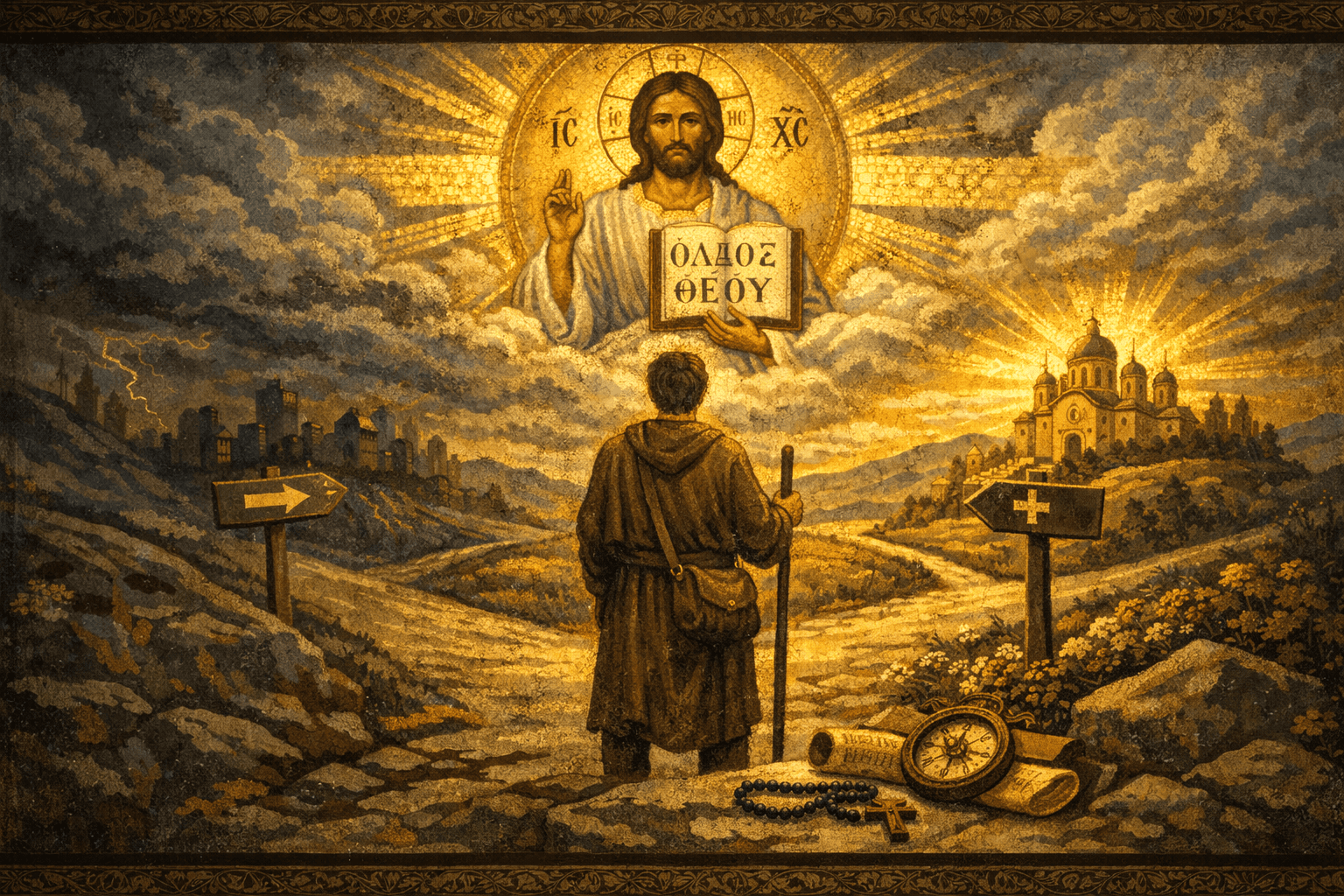
And then — move. Don't wait for certainty that this side of heaven you will never have. Walk in the best direction you can see, trust that God is sovereign over your steps, and be willing to course-correct if He closes a door.
The Goal Is a Person, Not a Plan
The deepest answer to "how do I know God's will" is this: spend time with God Himself. John 10:27 (NKJV): "My sheep hear My voice, and I know them, and they follow Me." The capacity to discern God's direction grows in proportion to your relationship with Him — through Scripture, prayer, and walking with other believers.
God is less interested in you finding the perfect plan than in you finding Him. And often, the person who is genuinely seeking God finds that the decisions sort themselves out along the way.
If you're in the middle of a big decision right now and want someone to pray with you, submit a prayer request here.
FAQs
Does God have a specific plan for every person's life?
What does Jeremiah 29:11 mean — 'plans to prosper you'?
How do open and closed doors relate to God's will?
What if I made the wrong decision — is God's will ruined?
How do I hear from God?

Author
Shafraz Jeal
Shafraz Jeal is the founder of By Design Ministry, created to help people discover Jesus, understand the Bible, and grow in faith. After encountering Christ in 2016, his life was radically changed, and that journey continues to shape everything he shares.
You may also like these
Related Post