Is Jesus God?
The Bible teaches that Jesus Christ is fully God and fully human — the eternal Son of God who took on human flesh. This is expressed in John 1:1 ("the Word was God"), John 10:30 ("I and the Father are one"), Colossians 1:15-17, Hebrews 1:3, and confirmed by Jesus's own statements throughout the Gospel of John. The doctrine is called the hypostatic union — one person with two natures, divine and human. It is the foundational claim of Christianity, and its truth or falsehood determines the meaning of everything else the New Testament asserts.
Author | Shafraz Jeal
8
min read
The Bible teaches that Jesus Christ is fully God and fully human — the eternal Son of God who took on human flesh. This is expressed in John 1:1 ("the Word was God"), John 10:30 ("I and the Father are one"), Colossians 1:15-17, Hebrews 1:3, and confirmed by Jesus's own statements throughout the Gospel of John. The doctrine is called the hypostatic union — one person with two natures, divine and human. It is the foundational claim of Christianity, and its truth or falsehood determines the meaning of everything else the New Testament asserts.
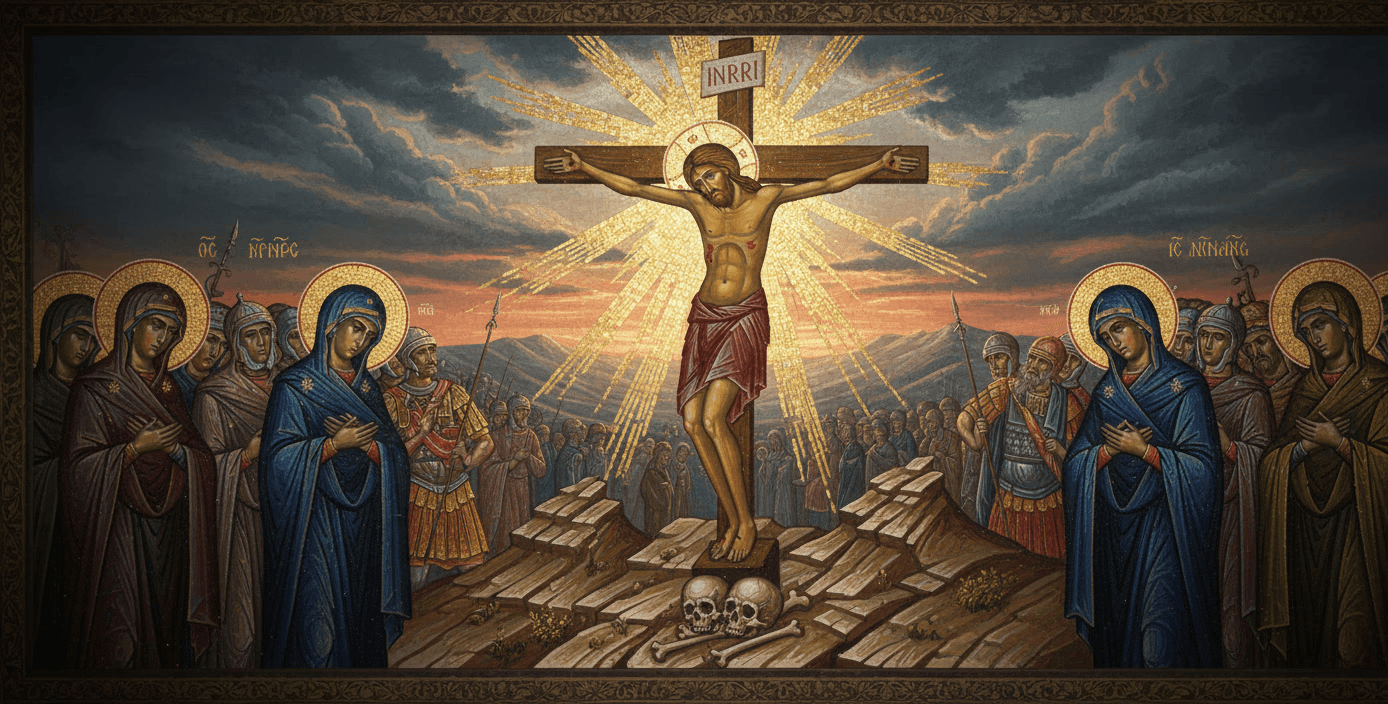
It is the question that everything in Christianity depends on. Every other claim the New Testament makes — about salvation, about eternal life, about what happened on the cross — stands or falls based on the answer to this one. If Jesus is not God, the crucifixion is the death of a good man. If He is God, it is the most significant event in the history of the universe.
C.S. Lewis made the point that this question does not allow for a comfortable middle position. A man who claimed to be God is either telling the truth, or he is either a liar or a lunatic. Those are the only three options. What Lewis did not allow for — and what the evidence does not support — is the popular fourth option: Jesus was a great moral teacher but not divine. Great moral teachers do not claim to be God.
What Jesus Said About Himself
The Gospel of John contains the most direct statements Jesus made about His own identity. Seven "I Am" declarations — each echoing the divine name God gave Moses at the burning bush in Exodus 3:14. But the clearest statement of all is in John 10:30 (NKJV):
"I and the Father are one."
The Jewish religious leaders knew exactly what He was claiming. Their immediate response was to pick up stones to throw at Him. John 10:33 (NKJV): "For a good work we do not stone You, but for blasphemy, and because You, being a Man, make Yourself God." They were not confused about what He meant. They understood the claim and considered it blasphemy — which, if Jesus were merely a man, it would have been.
John 8:58 (NKJV) is equally striking. In a debate with the Pharisees, Jesus says: "Most assuredly, I say to you, before Abraham was, I AM." The "I AM" — the divine name itself — applied to Himself. Not "I was" — the past tense you would use for a human who predated Abraham. "I AM" — the eternal present tense of the God who spoke to Moses. Again, the response: they took up stones.
John 14:9 (NKJV): Jesus says to Philip, "He who has seen Me has seen the Father." Not "someone who resembles the Father" or "a representative of the Father." Seen the Father. The two are not separate. To encounter Jesus is to encounter God.
What the New Testament Writers Said
The claim is not only Jesus's own. Every major New Testament writer affirms it.
John opens his Gospel with deliberate echoes of Genesis 1: "In the beginning was the Word, and the Word was with God, and the Word was God." (John 1:1, NKJV). The Word — the Greek Logos — was with God (distinct from the Father) and simultaneously was God (sharing the divine nature). Verse 14 identifies the Word as Jesus: "the Word became flesh and dwelt among us." The eternal God took on humanity. Not a god among gods — the same God who made everything, now present in a human body.
Colossians 1:15-17 (NKJV): Paul writes that Jesus is "the image of the invisible God" — the exact visible expression of the invisible divine nature — and that "by Him all things were created that are in heaven and that are on earth... all things were created through Him and for Him. And He is before all things." The Creator. Not a creature with unusual powers but the one through whom everything that exists came into being.
Hebrews 1:3 (NKJV): Jesus is described as "the brightness of His glory and the express image of His person" — the radiance of God's own glory, the exact representation of His being. Not a copy or reflection — the radiance itself. And He "upholds all things by the word of His power."
Philippians 2:6-7 (NKJV) approaches it from a different angle — describing what Jesus gave up: He "did not consider it robbery to be equal with God, but made Himself of no reputation, taking the form of a bondservant." He was equal with God. He chose to lay aside the visible expression of that equality by becoming human. The equality was not something He grasped for — it was His already, and He set aside its expression in the incarnation.
Thomas provides the New Testament's most direct confession. Touching the risen Jesus, he says in John 20:28 (NKJV): "My Lord and my God!" Two divine titles, addressed directly to Jesus, in the presence of Jesus. Jesus does not correct him. He affirms the faith: "Thomas, because you have seen Me, you have believed."
Why the Humanity Matters Too
The biblical claim is not that Jesus was God wearing a human disguise — a divine being play-acting at humanity. The claim is that He was fully both simultaneously. Hebrews 2:17 (NKJV): "He had to be made like His brethren in all things." Not most things. All things — including weariness, hunger, grief, temptation, and death.
This matters for salvation. Hebrews 4:15 (NKJV): "We do not have a High Priest who cannot sympathise with our weaknesses, but was in all points tempted as we are, yet without sin." A purely divine being who was never genuinely human could not be our high priest in the way Hebrews describes. The incarnation was not theatre. It was God genuinely entering the human condition from the inside.
And it matters for the cross. If Jesus were merely human, His death would have atoned for no one but Himself — one life for one life. The weight of what the cross accomplished — bearing the sin of the world — required someone of infinite worth to bear it. That worth comes from the divine nature. Only God dying could accomplish what the cross claims to have accomplished.
The Question You Cannot Avoid
Isaiah 9:6 (NKJV) calls the coming child "Mighty God, Everlasting Father, Prince of Peace." Revelation 1:8 (NKJV) records Jesus saying: "I am the Alpha and the Omega, the Beginning and the End, who is and who was and who is to come, the Almighty." The Almighty. The name of God.
Is Jesus God? The Bible's answer — from the testimony of Jesus Himself, from every major New Testament writer, from the reaction of those who heard Him claim it — is yes. Unambiguously, thoroughly, at the cost of His life and at the centre of the entire New Testament's argument about who He is and what He came to do.
The claim demands a response. If He is God, then what He said about Himself, about salvation, about how to live — none of it can be treated as optional or cherry-picked for its inspirational value. The person who is God does not issue suggestions. He makes claims. And the evidence that He rose from the dead is the evidence that those claims were true.
FAQs
Is Jesus God according to the Bible?
Did Jesus claim to be God?
How can Jesus be both God and human?
Why does it matter whether Jesus is God?
What did Jesus mean when He said "I and the Father are one"?

Author
Shafraz Jeal
Shafraz Jeal is the founder of By Design Ministry, created to help people discover Jesus, understand the Bible, and grow in faith. After encountering Christ in 2016, his life was radically changed, and that journey continues to shape everything he shares.
You may also like these
Related Post