What Is the Gospel?
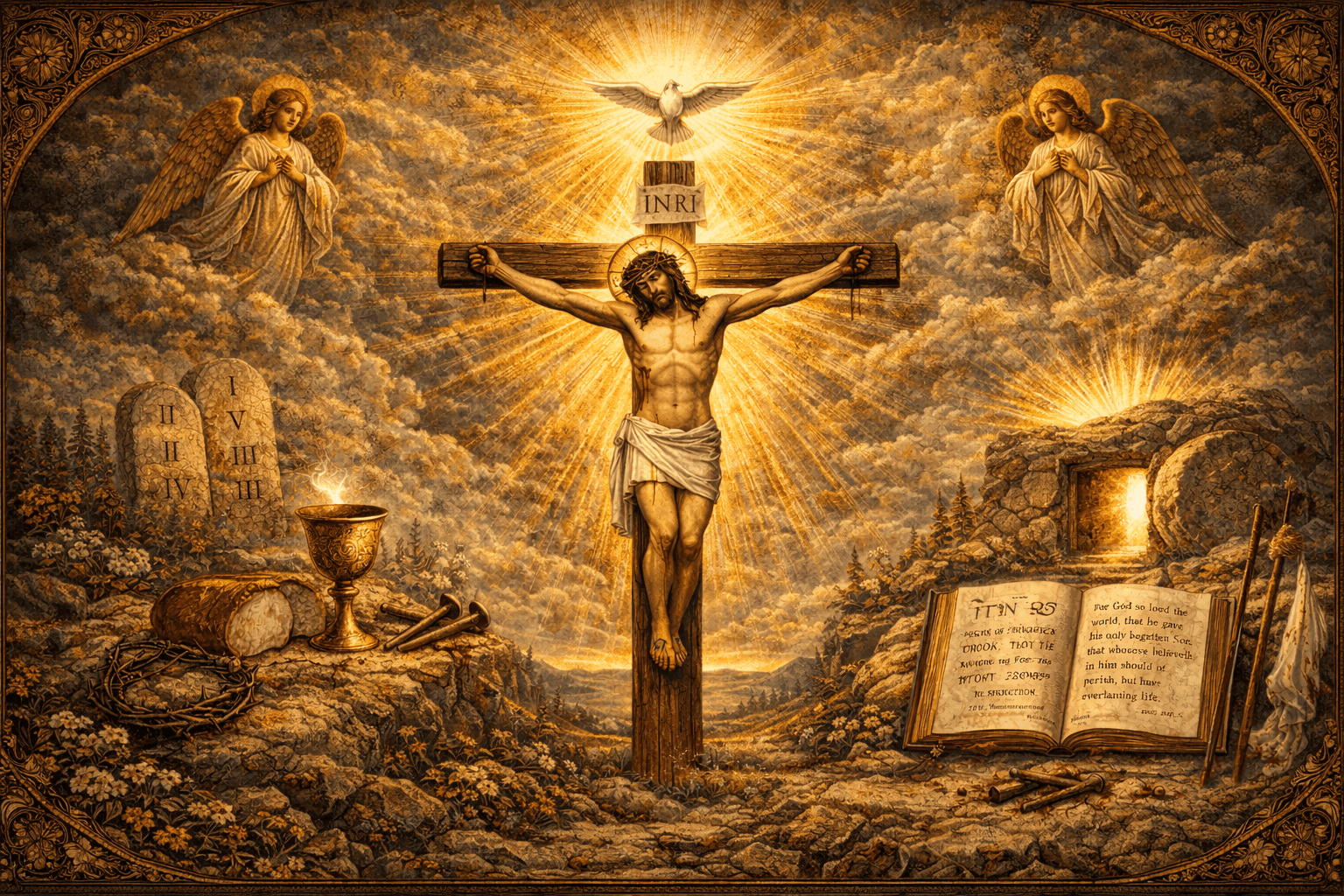
The Gospel — from the Greek euangelion meaning 'good news' — is the message that Jesus Christ, the Son of God, died for human sin, was buried, and rose from the dead on the third day, making it possible for people to be reconciled to God through faith. It is the foundational message of Christianity, summarised most concisely in 1 Corinthians 15:1-4 and John 3:16.
Author | Shafraz Jeal
6
min read
The Gospel — from the Greek euangelion meaning 'good news' — is the message that Jesus Christ, the Son of God, died for human sin, was buried, and rose from the dead on the third day, making it possible for people to be reconciled to God through faith. It is the foundational message of Christianity, summarised most concisely in 1 Corinthians 15:1-4 and John 3:16.
The word "gospel" gets thrown around a lot in religious settings — but ask most people what it actually means and you get a vague answer about being good, or loving each other, or going to church.
None of that is wrong exactly. But none of it is the gospel.
The gospel is a specific announcement. A news bulletin, not a to-do list. And once you understand what it's actually saying, it's either the most important thing you've ever heard — or it isn't. But you need to know what it actually is to decide.
The Word Means "Good News" — But Good News About What?
The Greek word is euangelion — good news, or glad tidings. In the Roman world, this word was used for announcements of victory, of a king's birth, of something that changes the situation for everyone. It's not a feeling or a philosophy. It's a report of something that happened.
The earliest, most compressed version of the gospel is in 1 Corinthians 15:3-4 (NKJV):
"For I delivered to you first of all that which I also received: that Christ died for our sins according to the Scriptures, and that He was buried, and that He rose again the third day according to the Scriptures."
Four facts: died, for our sins, buried, rose. That's the core. Everything else expands on this.
Why It's News at All — The Problem It Solves
News only makes sense against a backdrop. The good news of the gospel only makes sense against the backdrop of the bad news — which is that something is fundamentally wrong between human beings and God.
Romans 3:23 (NKJV): "For all have sinned and fall short of the glory of God." This is universal — not pointing fingers at particularly terrible people. All of us have chosen our own way over God's. All of us have fallen short of what we were made to be.
Romans 6:23 (NKJV): "For the wages of sin is death, but the gift of God is eternal life in Christ Jesus our Lord." The consequence of that separation from God is death — not just physical death, but spiritual separation from the source of life.
That's the problem. The gospel is the answer to it.
What Jesus Did — and Why It Works
Romans 5:8 (NKJV): "But God demonstrates His own love toward us, in that while we were still sinners, Christ died for us."
The logic of the gospel is substitution. We owed a debt we couldn't pay. Jesus paid it. 2 Corinthians 5:21 (NKJV) puts it with striking precision: "For He made Him who knew no sin to be sin for us, that we might become the righteousness of God in Him."
The sinless one became sin — took on the full weight of human failure — so that we could receive His righteousness. It's an exchange. Your guilt for His innocence. Your separation for His relationship with the Father.
And then the resurrection. The resurrection isn't an afterthought — it's the confirmation that the exchange worked. Death could not hold someone who had not sinned. When Jesus rose, He demonstrated that everything He said was true, and that the penalty for sin had been fully paid.
How You Receive It
Ephesians 2:8-9 (NKJV) is the clearest statement of how this becomes yours:
"For by grace you have been saved through faith, and that not of yourselves; it is the gift of God, not of works, lest anyone should boast."
Grace — God's undeserved favour. Faith — trusting that what Jesus did is enough. Not religious performance. Not moral improvement first, then God. You come as you are, and the gospel meets you there.
Romans 10:9-10 gives the practical shape: confess with your mouth that Jesus is Lord, believe in your heart that God raised Him from the dead, and you will be saved.
What the Gospel Is Not
It's worth being clear about what the gospel isn't, because plenty of things get sold under that label that aren't it:
It's not "be a good person." If goodness was the mechanism, the cross was pointless. The gospel exists precisely because our goodness is not enough.
It's not "God loves everyone so everything's fine." God does love everyone — John 3:16. But love without justice isn't love; it's permissiveness. The cross is where God's love and His justice meet.
It's not primarily about your best life now. The prosperity gospel — the idea that following Jesus guarantees health, wealth, and comfort — is not the gospel of the New Testament. Jesus promised His followers trouble in this world (John 16:33). He also promised peace, presence, and ultimate restoration.
It's not complicated. Theologians have written millions of words about it, but the essence is simple enough for a child: you're separated from God, Jesus fixed it, trust Him.
The Most Important News You'll Ever Hear
Romans 1:16 (NKJV): "For I am not ashamed of the gospel of Christ, for it is the power of God to salvation for everyone who believes."
The gospel is not a self-improvement programme. It's not a moral philosophy. It's the announcement that God entered history as a human being, dealt with the thing that separates us from Him, and offers the result as a gift to anyone who will receive it.
If you want to understand what it means to respond to this, visit our Get To Know Jesus page. If you have questions or want someone to pray with you, send a prayer request.
FAQs
What does 'gospel' literally mean?
Is the gospel the same as the whole Bible?
What is the difference between the gospel and religion?
Do you have to understand the gospel fully to be saved?
What is the Social Gospel?

Author
Shafraz Jeal
Shafraz Jeal is the founder of By Design Ministry, created to help people discover Jesus, understand the Bible, and grow in faith. After encountering Christ in 2016, his life was radically changed, and that journey continues to shape everything he shares.
You may also like these
Related Post